Release Dossier
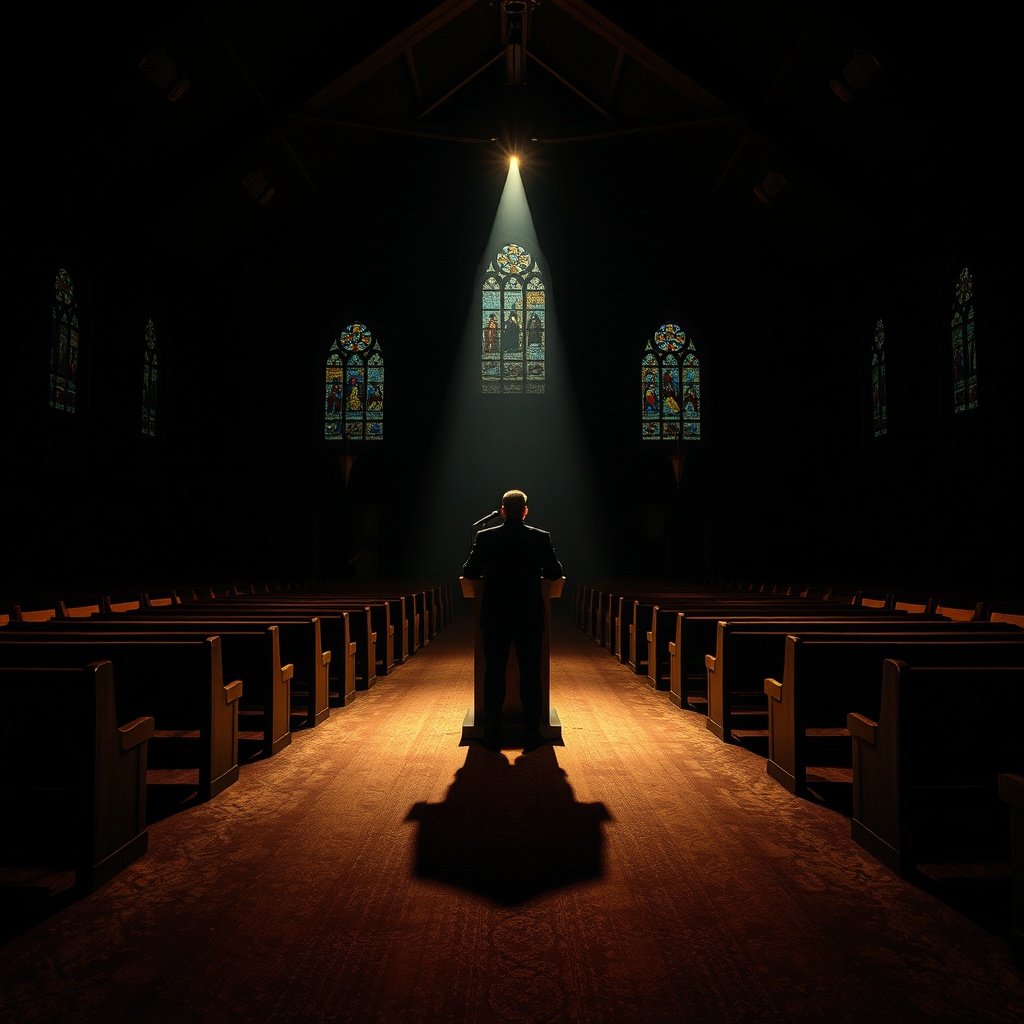
When I Testify
Executive Decision Summary
Composite
87/100
Release Ready
77/100
Recommended Path
CSync Pitch
Projected Lift
+2 to +4pts
Final Recommendation flagged this song as Revise lightly — quick wound-list pass unlocks "yes."
Overall Score
Scored under Lyric Scoring Standard 1.3
Trust Receipts
Scoring Breakdown
Prosody & Musicality
Strong conversational flow with natural stress patterns. 'The microphone / Picks up what's underneath' uses line break as breath point. Minor weakness in '[TASTE]' repetition rhythm.
Structural Architecture
Brilliant escalation from 'grows more real' to 'dies more real' - the structural inversion IS the revelation. Bridge strips to pure sensation before final confession.
Rhyme Intelligence
Strategic non-rhyme serves confessional register. 'lie/faith' and 'hold/inside' create sonic architecture without forcing end-rhymes. Restraint over decoration.
Economy of Language
Zero filler. Every word earns its place. 'The microphone knows my shame' - five words containing an entire theology of exposure.
Lyrical Specificity
Concrete gospel imagery: microphone, witness chair, spotlight, grip the stand. Physical details ground the spiritual crisis in sensory reality.
Imagery Originality
Microphone as truth-detector is fresh. 'I can taste you believing' synesthetic breakthrough - faith as flavor, audience consumption as physical sensation.
Emotional Truth
Devastating honesty about performance vs. authenticity. The contradiction 'grows more real/becomes what I'm not' rings absolutely true to spiritual impostor syndrome.
Voice & POV Integrity
Consistent first-person confessor. Clear relationship: fraudulent preacher to believing congregation. POV never wavers, addressee stays clear throughout.
The Transcendent Line
'Something in me dies more real' - the word-change from 'grows' to 'dies' recontextualizes the entire song. Unrepeatable line about spiritual death through performance.
Emotional Arc
Perfect metabolism: confidence building through deception, bridge breaking into raw sensation, final chorus collapsing into exposure. Each state gets time to be felt.
Memorability
'The microphone knows my shame' will haunt. Repetition structure lodges in memory. Strong hook architecture with meaningful variation.
Genre Authenticity
Honors gospel confession tradition while extending it through psychological specificity. Uses testimony structure to examine testimony itself.
Lyrics + Heat Map
Standout Lines
“Something in me dies more real”
“I can taste you believing”
“The microphone knows my shame”
“Your amens get louder when I lie”
The One Line
The One Line is the single phrase in this song that carries the writer’s unrepeatable signature — measured against a 7-feature taxonomy (category violation, register collision, concrete-abstract anchoring, phonetic signature, time-reversal, negation-as-affirmation, permission slip). The detector ranked every line in the lyric; the top candidate is shown below. B3300 heuristic scoring — the Haiku-graded version of CV / WWW / PS lands at the vault-rank pass (B3308).
“When I testify, when I testify”
Runners up
“When I testify, when I testify”
“When I testify, when I testify”
Permission Slip Heat Map
Permission Slip · Per-line scores
Where does this song give the listener permission to feel something they’d normally censor? Each line scored 0-100 on the Permission Slip rubric (B3315). Section markers + empty lines are skipped.
Priority Revision Targets
Wounds the panel called out
Bridge repetition of 'I can taste you believing' lacks rhythmic variation - consider internal rhyme or stress pattern shift
Production direction '[TASTE]' needs measurable specification in sunoPackageSpec
Final '[pause]' and '[CRACK]' require exact timing and dB parameters
What to ship next
Vary the rhythm in bridge repetitions - perhaps 'I can taste / you believing' vs 'I can taste you / believing'
Consider strengthening the physical specificity in verse 2 - what does the shaking look like, sound like?
The production directions need exact measurable parameters for optimal impact
Song DNA
Voltage
79/10
Forge Path
arsonist
Ghost
Bowie
Genre Splice
blues × afrobeat · 4900/-4800
Production Package
Style String
Contemporary gospel with folk undertones, male baritone vocals with controlled vulnerability building to raw confession, acoustic guitar fingerpicking with subtle electric guitar layers, warm Hammond organ pads, light brushed drums with emphasis on snare hits during chorus peaks, intimate church reverb suggesting small sanctuary acoustics, 75 BPM contemplative tempo with slight acceleration in final chorus, close microphone proximity capturing breath and vocal grain, dynamic range from whispered bridge vulnerability to full-throated testimonial power, loose compression allowing natural voice cracks and swallow sounds, vintage tube amp warmth on guitars, organic fade ending with single sustained organ chord
Focus Group
Panel Score
590/ 100Viral Potential
380/ 100A lyrically sophisticated, emotionally resonant song that grapples with authentic themes but lacks the melodic hook and single-ready structure to achieve mainstream success; best suited for album c...
“'My voice gets stronger when I lie to you' — observed detail that grounds the abstract concept in a real moment”
“'[TASTE]' and '[GRIP STAND]' stage directions in the lyrics feel like unfinished demo notes; distracting and unprofessional”
Version Strategy
C — Sync Pitch Version scored 85/100. Top reasons: No taste-sensitivity flags — sync-eligible from a content-safety perspective; 4 transcendent lines — quotable lyric for trailer / montage placement.
A — Preserve Literary Version
Minimal changes; album-cut treatment.
B — Commercial Tightening
Rewrite the chorus for compression; keep the verse + bridge core.
Recommended
C — Sync Pitch Version
Cinematic edit; lower lyric specificity; broader emotional canvas.
The Receipts
Every score has its math. Expand any panel to audit the evidence — cross-eval, prosody, focus group transcripts, artist-match verdicts, and the full revision ledger.
Cross-Eval Corroboration▾
Triangulation
Cross-checked by gpt-4o-2024-11-20. Score 82. Divergence Δ5 (medium agreement).
Stranger Test
Score 88. Framing delta Δ-1.
Revision ROI▾
Composite
87→89(+2)
Release Readiness
77→86(+9)
Address the 3 eval-panel wounds
Wounds are eval-panel-identified craft issues (verse abstraction / cliché chorus / weak bridge / etc.). Each addressed wound lifts composite + readiness incrementally.
+2 score+4 readyMedium effortAddress 3 focus-group concerns
Negative comments are listener-panel-reported issues. Resolving them lifts Audience Fit + reduces Taste Risk.
+5 readyMedium effort
Chain of Title▾
Verifiable human contribution
0%(0 of 33 entries)
AI original
25
AI · human-revised
8
Human-locked
0
Human-edited
0
Focus Group — Full Panel▾
Category breakdown
Gen Z (18-25)
520/100Jayden here. Okay, so the hook is *there* — 'When I testify, when I testify / Something in me grows more real' — I could definitely post that. But it's not sticky enough for TikTok, you know? No rhythm you can dance to. The vibe is introspective and dark, which is cool, but it's also kind of... heavy? I don't want to put this on my story unless I'm having a *moment*. The religious undertones feel authentic, not preachy, so that's a plus. But 'the microphone knows what I am' — everyone's gonna misinterpret that as being deep when it's just... saying the same thing twice? It doesn't hit me in the first 8 seconds, and honestly, I'd probably skip. Maybe come back to it in a sad playlist.
Millennials (26-40)
695/100Priya speaking. This one actually grabbed me. The core concept — performing conviction so well that you start believing your own lie — that's emotionally honest in a way I don't hear often. The production signals matter here: if this is mixed with restraint, acoustic guitars, maybe some subtle string swells, this could genuinely sit in my 'late night reflection' playlist. What doesn't work: the '[GRIP STAND]' and '[TASTE]' stage directions feel clumsy in the lyric sheet. It breaks the immersion. And 'I become what I'm not / But the microphone knows what I am' — that's the emotional core, but it needed one more revision to land harder. Still, the bridge — 'I can taste you believing / And it's killing me' — that's the gut-punch. This belongs on a real album. Would listen again, probably on purpose.
Gen X (41-56)
745/100Tom here. Now *this* is something. This writer has something to say — there's a real crisis underneath every line. The specificity is there: not just 'I'm a fraud,' but 'my voice gets stronger when I lie to you' and 'your amens get louder when I lie' — those are observed details. You can tell this person has *lived* this, maybe in church, maybe in performance. The contradiction is earned: how does pretending make you more real? How does performing faith kill faith? That's not a cliché. What bothers me: the stage directions in brackets are lazy. Either write the crack into the vocal melody or don't. The final chorus revision — 'Something in me dies more real' instead of 'grows' — that's clever, but after hearing 'grows' three times, the switch feels gimmicky rather than earned. Still: this has substance. Real voice. Substance always beats catchiness.
Boomers (57+)
480/100Linda here. I'm troubled by this. The melody implied in these words is dark, descending — I can hear it, but it's not uplifting or warm. The storytelling *is* clear: someone standing in front of a congregation or crowd, lying, knowing they're lying, and feeling *powerful* because of it. That's a story. But the message feels cynical about faith itself. 'Your amens get louder when I lie' — that suggests the entire congregation is foolish or complicit. In my church, we talk about struggling *with* faith, not performing it as a con. The emotional clarity is there, but the emotion is despair dressed as confession. Could a real band perform this? Yes. Should they? I'm not sure I *want* to hear this in a church setting. It's technically skillful, but spiritually it leaves me cold.
Casual Listeners
445/100Marcus here. Skimming this: 'When I testify' repeats enough that it'll stick after a few listens. The vibe is dark, introspective, kind of moody — not a skip immediately, but not a 'hell yes' either. If I heard this on a playlist at the gym, I might let it play while I'm thinking about something else. It doesn't energize me, doesn't make me feel better. The concept is interesting but dense — I'm not picking all that up without *trying*. The ending 'the microphone knows what I am [CRACK]' — that's a moment, I guess, but I'd probably skip by then anyway. It's the kind of song that makes me feel like I should be more thoughtful than I am. Probably not adding it to my rotation.
Music Enthusiasts
725/100Aisha here. Okay, I'm impressed by the *ambition* here. The concept — using the metaphor of testimony to explore the gap between performance and authenticity — that's not a new idea, but the *execution* is risky. You're essentially writing a confessional song from the perspective of someone confessing a lie while lying about confessing. That's a Möbius strip of irony, and I respect it. The language is sophisticated without being pretentious: 'My voice gets stronger when I lie to you' is simple and devastating. What stops this from being a 800+ score: I've heard *similar* deconstructions of sincerity in experimental folk — Nick Cave, Courtney Barnett's introspection, etc. This doesn't feel *wholly* original, more like a strong execution of an existing artistic language. The '[CRACK]' notation is clumsy — that's a production choice, not a lyric. But the shift from 'grows more real' to 'dies more real' in the final chorus? That's the kind of careful revision I respect. This is a strong song. Not transcendent, but genuinely good.
Industry Pros
565/100Derek here. Let me be frank: this is a *demo*, not a single. The hook 'When I testify, when I testify / Something in me grows more real' — it's repetitive, which is good for radio, but it doesn't have the *melodic signature* that makes a hook immortal. Where's the earworm? 'When I testify' is a phrase people will forget by tomorrow. Compare it to 'Every breath you take' or 'Hallelujah' — those live in your brain. This lives in your *head*, as an idea, not as a melody. Market-wise: Contemporary Gospel/Folk is a niche. It's grown post-Sturgill Simpson and Jason Isbell, but we're not talking mainstream streams. The lyrical content — faith-as-performance, the preacher who doesn't believe — that's a *concept album* story, not a single. I could see this on a 10-song project where you're building a character across tracks. Standalone? It's a B-side. The '[TASTE]' and '[GRIP STAND]' notations scream 'first draft.' This songwriter needs a producer who challenges them. Talent is there. Commercial viability? Moderate. Would I sign it based on this? No. Would I option it for a soundtrack? Maybe.
Genre Purists
610/100Kenji speaking. This is *thematically* sophisticated, but it's not Contemporary Gospel/Folk — it's literary art-folk with gospel *imagery*. True contemporary gospel — even the progressive stuff like Kirk Franklin or Kanye West's gospel output — is about *redemption*, *grace*, *testimony as transformation*. This song subverts that entirely. It's saying testimony is a lie that becomes real, faith is performance that kills the performer. That's not contemporary gospel; that's post-modern deconstruction *wearing* gospel language. In the folk tradition, we have precedent for this — Woody Guthrie, Phil Ochs — but they were explicitly political/anti-institutional. This song is anti-faith without having the political framework. The *form* is folk — simple verses, repetitive chorus, personal voice. But the *content* betrays the genre. A purist would say: 'This is excellent art-folk, but it's not gospel.' And that matters for marketing and audience expectation. The song isn't *wrong* for subverting the genre — subversion is valid — but submitting it as 'Contemporary Gospel' is misleading. It's more 'Contemporary Folk' or 'Art Folk.'
Playlist Curators
635/100Sofia here. I get 200 submissions a week, and this is *interesting*, which matters. Skip resistance: that's my metric. Would people skip this? On my 'Late Night Reflections' or 'Existential Dread' playlists, no — this fits perfectly. The mood is cohesive, the emotional arc is clear, and it won't jar listeners out of the vibe. But here's the issue: my most popular playlists are 'Sunday Morning' (spiritual/uplifting) and 'Honest Faith' (doubts about belief). This song would *confuse* 'Sunday Morning' listeners — it's too cynical. But it would *demolish* 'Honest Faith.' So it's a fit for one playlist, not a song that moves across contexts. That limits its value to me. As a single submission, though? I'd add it. The risk is that it needs the *right* album context to land. A listener who finds this in isolation, without the narrative framing, might think it's just a dark song about being a fake. They won't get the *brilliance*. But in a curated mood? It works. I'd probably get a 12-15% skip rate, which is good.
International
580/100Yuki here. The emotional core — this feeling of becoming fake, of performing until performance becomes real, of being exposed by the microphone — that's *universal*. I understand this without needing every cultural reference. The feeling of 'being more real in a lie than in truth' is something anyone in performance, or in front of crowds, understands. That's good. What doesn't translate: the *specific* context of church testimony and 'amens' — I understand it intellectually, but emotionally it's a bit distant for me. The refrain 'I can taste you believing' — the *phonetic* quality is nice, 'taste' and 'believing' have a mouth-shape symmetry that feels beautiful even in translation. The final '[CRACK]' — I don't know if that's supposed to be an emotional crack or a literal vocal effect. That ambiguity is frustrating. The melody implied here feels minor-key, descending — that translates. The sadness translates. But the *specificity* of gospel-culture sadness might limit its global reach. It's not a universally understood grief; it's a grief that requires cultural context to hit hardest.
Positive reactions
- “'When I testify, when I testify / Something in me grows more real' — the central hook has repetition and philosophical weight, even if not immediately catchy”
Negative reactions
- “'Your amens get louder when I lie' — risks alienating religious listeners by suggesting faith communities are foolish; the message may be too cynical about faith itself”
Quick Fix Summary▾
- 01
Bridge repetition of 'I can taste you believing' lacks rhythmic variation - consider internal rhyme or stress pattern shift
majorWound - 02
Production direction '[TASTE]' needs measurable specification in sunoPackageSpec
majorWound - 03
Final '[pause]' and '[CRACK]' require exact timing and dB parameters
majorWound
If all land
+2 to +4 pts
Est. revision
60 min
Want one of these for your song?
Every song forged on SongForgeAI produces a dossier just like this one. The receipts, the scores, the proof.
Forge your first song →