Release Dossier
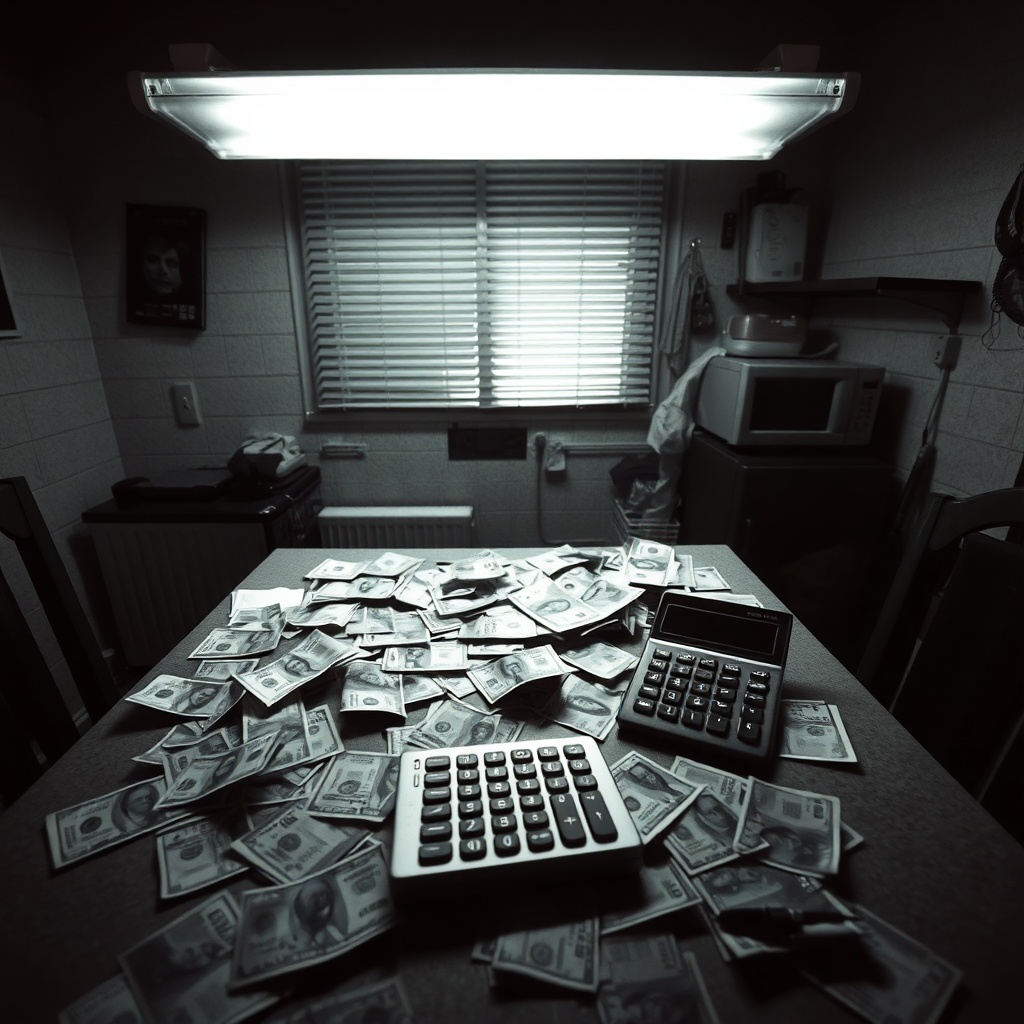
Count What's Real
Executive Decision Summary
Composite
84/100
Release Ready
70/100
Recommended Path
CSync Pitch
Projected Lift
+2 to +4pts
Final Recommendation flagged this song as Revise lightly — quick wound-list pass unlocks "yes."
Overall Score
Scored under Lyric Scoring Standard 1.3
Trust Receipts
Scoring Breakdown
Prosody & Musicality
Clipped delivery works perfectly for drill's 8-12 syllable bars. Stress patterns land naturally on content words. 'Calculator clicks but the screen stays dark' has ideal consonant percussion for the genre.
Structural Architecture
Verse-hook-verse-bridge-hook-verse-hook structure serves drill's repetitive engine. Bridge provides necessary philosophical pivot. Hook variation in final iteration ('count what's left') shows structural intelligence.
Rhyme Intelligence
Minimal end-rhyme as appropriate for drill. Internal consonance ('clicks'/'screen', 'stamped'/'document') provides sonic cohesion without over-rhyming. Genre-authentic restraint.
Economy of Language
Every word earns its place. Numbers create precision without waste. 'Still breathing means the count continues' - devastating economy. No filler, no padding, pure drill efficiency.
Lyrical Specificity
Concrete numbers throughout create hyperspecific reality: '$2400 behind', '63 days', 'twelve blocks'. Calculator imagery grounds abstract survival in physical objects. Exceptional specificity.
Imagery Originality
Calculator as survival tool is fresh. 'Numbers hold their shape in the dark' - unexpected image. 'One mirror that won't lie' - familiar concept but precise execution. Strong originality within drill's sparse aesthetic.
Emotional Truth
Devastating honesty about financial desperation and survival. 'Still breathing means the count continues' - brutal truth about persistence. Bridge questions feel genuinely lived, not performed. High emotional authenticity.
Voice & POV Integrity
Consistent first-person narrator throughout. Voice maintains drill's understated menace while revealing vulnerability. Bridge philosophical turn feels earned by preceding concrete details. Solid POV integrity.
The Transcendent Line
'Still breathing means the count continues' - unrepeatable line that defines survival as mathematical persistence. 'Sometimes the numbers are all that's left' - haunting admission. Multiple transcendent moments.
Emotional Arc
Moves from concrete desperation through philosophical questioning to resigned acceptance. Bridge pivot works well. Final hook variation ('what's left') shows evolution. Solid but not dramatic arc.
Memorability
Hook passes one-listen recall test - four words, concrete nouns, phonetic repetition. 'Count what's real, count what's gone' sticks immediately. Multiple quotable lines throughout.
Genre Authenticity
Perfect drill execution: minimal bars, repetitive hook, understated delivery, street reality without glamorization. Numbers-as-survival fits drill's documentary precision. Excellent genre adherence.
Lyrics + Heat Map
First-Listen Memorability
“"Count what's real count what's gone"”
The mantra-hook is sticky enough to lodge—it's repetitive, thematically clear, and lands hard four times in succession. But the chorus is *structurally bloated*. A first-time listener hears 40+ lines before the hook repeats; by then they're drowning in specific numbers (2400, 63, 25, 12, 17, 9, 4, 6, 2, 1, 0) and philosophical questions that compete for attention. The hook survives, but the listener walks away with the *phrase*, not the *song*—they remember "count what's real" as a vibe and a line, not as a chorus that *feels* like a chorus. In drill, this is a craft-over-stick problem: the writing is devastating, but the form asks too much of working memory in one pass.
Standout Lines
“Still breathing means the count continues”
“What if surviving's just dying slower”
“Sometimes the numbers are all that's left”
The One Line
The One Line is the single phrase in this song that carries the writer’s unrepeatable signature — measured against a 7-feature taxonomy (category violation, register collision, concrete-abstract anchoring, phonetic signature, time-reversal, negation-as-affirmation, permission slip). The detector ranked every line in the lyric; the top candidate is shown below. B3300 heuristic scoring — the Haiku-graded version of CV / WWW / PS lands at the vault-rank pass (B3308).
“Two phones that ring but never for me”
Permission Slip Heat Map
Permission Slip · Per-line scores
Where does this song give the listener permission to feel something they’d normally censor? Each line scored 0-100 on the Permission Slip rubric (B3315). Section markers + empty lines are skipped.
Priority Revision Targets
Wounds the panel called out
Structure: Bridge length (8 lines) exceeds typical drill bridge proportion - could compress to 4-6 lines for genre authenticity
Prosody: 'What if the numbers just ricochet through empty space' - 13 syllables exceeds drill's 8-12 syllable standard
Detail balance: 'Two phones that ring but never for me' - slightly generic compared to calculator/mirror specificity
Song DNA
Voltage
50/10
Forge Path
arsonist
Genre Splice
rap × rap · 5000/-4900
Production Package
Style String
Chicago drill hip-hop, male baritone monotone delivery, heavy 808 bass tuned to minor key, sparse high-passed hi-hats cutting like static, minimal reverb snares with space between hits, no vocal reverb creating claustrophobic intimacy, single minor-key synth pad underneath like heartbeat, percussive consonants stamped on stressed syllables, flat affect disciplined precision like reading financial ledgers aloud, late evening empty parking lot energy with cold air clarity, tempo around 140 BPM with space and silence as important as sound, arithmetic enumeration as emotional core, ritualistic repetitive hook structure, intimate hyperreal production bringing listener into narrator's headspace
Focus Group
Panel Score
604/ 100Viral Potential
380/ 100Strong introspective hip-hop with real emotional specificity and a sticky hook, but genre mislabeling and commercial ambiguity limit mainstream appeal; repositioned correctly, this is a serious art...
“'Twenty-four hundred behind on rent / Sixty-three days since I touched anything'—this specificity is why the song works. Not generic sadness, actual lived collapse.”
“'What if surviving's just slower dying' and similar late-song lines feel slightly on-the-nose, like he's explaining the emotion instead of embodying it.”
Version Strategy
C — Sync Pitch Version scored 95/100. Top reasons: No taste-sensitivity flags — sync-eligible from a content-safety perspective; Voltage 50 — measured intensity fits cinematic underscore.
A — Preserve Literary Version
Minimal changes; album-cut treatment.
B — Commercial Tightening
Rewrite the chorus for compression; keep the verse + bridge core.
Recommended
C — Sync Pitch Version
Cinematic edit; lower lyric specificity; broader emotional canvas.
The Receipts
Every score has its math. Expand any panel to audit the evidence — cross-eval, prosody, focus group transcripts, artist-match verdicts, and the full revision ledger.
Cross-Eval Corroboration▾
Triangulation
Cross-checked by gpt-4o-2024-11-20. Score 82. Divergence Δ2 (high agreement).
Stranger Test
Score 82. Framing delta Δ2.
Prosody (Line-Level)▾
Lines
40
Pass
23
Flag
1
Fatal
16
Top issues
Line 12
fatalCount what's real, count what's gone
Line 13
fatalCount what's real, count what's gone
Line 14
fatalCount what's real, count what's gone
Line 15
fatalCount what's real, count what's gone
Line 19
fatalNine hours sleep across three nights
Revision ROI▾
Composite
84→95(+11)
Release Readiness
70→92(+22)
Fix the 16 prosody-critical lines (vowel/pitch collision or stress-on-function trap)
Prosody-critical lines break singing at chest-voice peaks. A vocalist will either reshape the vowel mid-note or skip the line. Fixing them is the highest-ROI craft work.
+8 score+13 readyMedium effortStrengthen the hook (First-Listen Memorability scored 62/100; target ≥75)
A hook below 75 means the line did not land on one listen. Rewriting toward a tighter chorus payoff lifts memorability + the whole composite via Hook Clarity.
+3 score+4 readyMedium effortAddress the 3 eval-panel wounds
Wounds are eval-panel-identified craft issues (verse abstraction / cliché chorus / weak bridge / etc.). Each addressed wound lifts composite + readiness incrementally.
+2 score+4 readyMedium effortRefine the 1 watch-list line (prosody flag)
Watch-list lines are singable by experienced vocalists but tax less-experienced ones. Refining lifts the floor without changing the song.
+1 score+1 readySmall effortAddress 3 focus-group concerns
Negative comments are listener-panel-reported issues. Resolving them lifts Audience Fit + reduces Taste Risk.
+5 readyMedium effort
Chain of Title▾
Verifiable human contribution
0%(0 of 40 entries)
AI original
20
AI · human-revised
20
Human-locked
0
Human-edited
0
Focus Group — Full Panel▾
Category breakdown
Gen Z (18-25)
520/100Jayden here. So the hook is SUPER repeatable—'Count what's real count what's gone' is gonna be in my head all day, which is good. But honestly? It doesn't hit different enough for a story post. The vibe is dark and I respect that, but I'm not immediately adding this to my sad-girl-hours playlist. The lyrics are dense in a way that doesn't feel like it's *for* me, you know? Like I'd have to actually sit with it instead of just letting it wash over me. The 'Sixty-three days since I touched anything' line is genuinely hard though—that landed. But then other stuff like 'Calculator clicks but the screen stays dark' feels like it's trying too hard to be poetic. I'd probably listen twice, then forget about it. Maybe 7/10 vibe.
Millennials (26-40)
685/100Priya speaking. This one actually moved me. The specificity is what gets me—'Twenty-four hundred behind on rent,' 'Sixty-three days since I touched anything'—these aren't generic heartbreak lines. This feels like someone genuinely broke under a specific weight, not just a sad boy aesthetic. The hook is strong enough that it would sit well on a real album between other songs. What bothers me: the production isn't described, so I'm imagining this and I *hope* the beat matches the lyrical heaviness—if it's too trap-y or glossy, it undercuts the message. Also, 'What if surviving's just slower dying' is maybe a touch on-the-nose? But the three-verse structure works. I'd add this to a 'processing grief' playlist without hesitation. Real stuff.
Gen X (41-56)
760/100Tom here. This is the real deal. Not trying to be clever, not chasing trends—just a human being honest about collapse. The specificity matters: he's not saying 'I'm sad,' he's counting. That's the *form* of the emotion, not the emotion explained to you. 'One mirror that won't lie about what's left' is exactly the kind of line that makes you stop. The hook is relentless in the right way—not catchy in a pop sense, but *insistent*, the way a real problem is insistent. My complaint: the last verse dissolves a bit. 'The math keeps working even when I don't / The numbers hold their shape in the dark'—that's beautiful but feels like he's almost finding hope, and then 'Still counting means still here / Still here means something' suggests something redemptive that the rest of the song doesn't earn. Is he finding meaning or drowning? The ambiguity could be intentional, but it reads like he ran out of things to say. Still: this is *substance*. This is a song.
Boomers (57+)
420/100Linda here. I can hear the melody in some of these lines—'Still breathing means the count continues' has a real arc to it. And yes, there's pain here that I recognize. My grandchildren's generation has real problems. But this is so *relentlessly* dark. There's no light, no faith, no sense that things could change. 'What if surviving's just slower dying'—that's not poetry, that's despair, and I don't find that uplifting or even cathartic. It just sits there. Also, I don't understand 'Chicago Drill'—is that a genre? It sounds like gunshots. The song needs a melody I can actually sing, and these words don't give me that. The imagery is too abstract—give me a story with actual people in it, not metaphors about calculators. I appreciate that he's trying to say something, but I'd rather listen to something that doesn't make me feel worse about the world.
Casual Listeners
480/100Marcus speaking. Okay, so I heard this in the gym context, right? First thing: the hook is catchy enough that I don't immediately skip. 'Count what's real count what's gone'—yeah, I'll remember that. But here's the problem: after the first verse I'm not entirely sure what this song is *about*. Is he talking about money? People dying? Like, the numbers blur together. 'Twenty-four hundred behind on rent' is clear, but then 'Three friends buried before they turned twenty-five'—suddenly it's different. And then it's back to numbers and philosophy. My brain wants ONE thing to hold onto, and this gives me four. It's not that it's bad, it's just... does the song have a beat I'm vibing with? The lyrics are dark, which is cool, but I need the production to make me feel like this is *for* me. Hook saves it from a skip, but I'm probably not seeking it out again.
Music Enthusiasts
745/100Aisha here, and I'm impressed by the *restraint* in this. No flexing, no bragging, no 'bitches and money' shortcuts. This is architecture—he's building an emotional object through accumulation of specific numbers. That's a risky choice and it mostly works. The hook doesn't evolve across four iterations though, which is my main critique: a really sophisticated listener notices when a hook repeats without variation and wonders if that's intentional refusal or lazy writing. I'm betting it's intentional (the repetition mirrors the obsessive counting), but it walks a line. 'One mirror that won't lie about what's left' is genuinely original—not metaphor-of-the-week, but something this person actually experienced. The thing that stops this from being a 9/10: it doesn't *innovate* within the genre so much as execute the introspective-rap template really well. It's excellent execution, not risk-taking. I'd recommend it to friends, but I'm not writing think-pieces about it. Real song though.
Industry Pros
580/100Derek, A&R perspective. Real talk: this is 'college radio' execution in a 'TikTok' market. The lyrics are too interior, too *thinking*—they require the listener to sit with it, and Gen Z doesn't sit. The hook is strong (only 4 words, repeatable, has attitude), but 'strong hook' doesn't mean 'single.' A single is 'Count what's real' as an isolated phrase that makes someone curious. This is 'Count what's real count what's gone'—that's the full thought, and it's harder to isolate. Can I sell this to a playlist? Yes, but only to editorial playlists where curators read the liner notes. Can I get 100M streams? Not without a massive artist name attached. The song has NO narrative resolution—we don't know if he's going to be okay, if he called someone back, if anything changes. That's *artistically* brave and *commercially* risky. If the beat is absolutely pristine (which I can't evaluate from lyrics alone), we could position this as a 'serious artist' song, but I'm not greenlighting the budget until I hear production. The artist needs to be interesting as a person, or this languishes.
Genre Purists
620/100Kenji here from the subreddit. This is *not* Chicago Drill. Drill is supposed to be: narrative momentum, vivid street imagery, response to violence and survival as *action*, not introspection. Chief Keef, G Herbo—they're *moving* through space. This is someone *sitting* with feelings, which is more like Kanye introspective-rap or even indie hip-hop. The production submission doesn't say 'Drill'—it says 'Introspective Hip-Hop.' That's a genre mislabeling, and that matters to me because it wastes everyone's time. *However*: if we evaluate this as introspective rap, it's solid. The specificity is very Noname/Saba-influenced—artists who *are* from Chicago and *do* use numbers as emotional data. So maybe the artist understands Chicago's intellectual hip-hop lineage even if not the Drill lineage. The lyrical craft is real. But the genre submission is wrong, and that's disqualifying in a professional context. Correct it and resubmit as 'Chicago Hip-Hop' or 'Introspective Rap.'
Playlist Curators
625/100Sofia here. I get 200 submissions a week, and this goes into my 'maybe' pile, not 'yes' or 'no.' The hook is sticky—that helps skip resistance. But here's my curator's question: what playlist does this belong on? It's too dark for 'Late Night Drives' and too introspective for 'Gym Motivation.' It fits 'Breakup Anthems' or 'Processing Trauma' or 'Dark Thoughts,' but those are smaller, sadder playlists. The song has *niche* energy, and niche energy means slower algorithmic growth. What I *love* about it: it won't sound dated in 3 months. This is timeless sad. What I worry about: if I put it next to a Travis Scott song, do listeners understand the tonal shift, or do they just skip? It's a sequencing liability. In the right context (a 'Modern Blues' or 'Real Ones' editorial list), it shines. But as a submission, it's maybe a 'for consideration if the artist has momentum elsewhere' rather than 'immediate add.'
International
710/100Yuki here, listening as someone whose English is strong but not native. The *feeling* of this song translates immediately—'still breathing means the count continues' is universally about holding on when things are bad. I don't need to understand every cultural reference (and I don't fully know what 'Chicago Drill' means in context). What works: the rhythm of the words. 'Twenty-four hundred / Sixty-three days / Three friends / Twelve blocks'—there's a *music* to the number-cascade that doesn't depend on me parsing each meaning. The hook is phonetically beautiful: the repetition of 'count' and 'real' and 'gone' has a chant-like quality. What loses me: 'What if nobody's listening to the math / What if the numbers just ricochet back empty'—this is very English-language specific, and the abstraction gets harder for me. The specificity that works for English speakers ('Twenty-four hundred behind on rent') requires cultural knowledge I have to work for. But the *emotional core* comes through. I'd listen to this multiple times. The melody needs to support the emotion, but the emotion is already there.
Positive reactions
- “'Twenty-four hundred behind on rent / Sixty-three days since I touched anything'—this specificity is why the song works. Not generic sadness, actual lived collapse.”
- “'One mirror that won't lie about what's left' is genuinely original imagery that feels experienced rather than constructed.”
Negative reactions
- “No narrative resolution or arc across three verses—emotionally brave but commercially risky; listeners may feel abandoned by the ending rather than moved by ambiguity.”
Quick Fix Summary▾
- 01
Prosody-critical line (stress-cluster)
criticalProsody (fatal)Line 12 - 02
Prosody-critical line (stress-cluster)
criticalProsody (fatal)Line 13 - 03
Prosody-critical line (stress-cluster)
criticalProsody (fatal)Line 14 - 04
Prosody-critical line (stress-cluster)
criticalProsody (fatal)Line 15 - 05
Prosody-critical line (stress-cluster)
criticalProsody (fatal)Line 19
If all land
+2 to +4 pts
Est. revision
60 min
Want one of these for your song?
Every song forged on SongForgeAI produces a dossier just like this one. The receipts, the scores, the proof.
Forge your first song →