Release Dossier
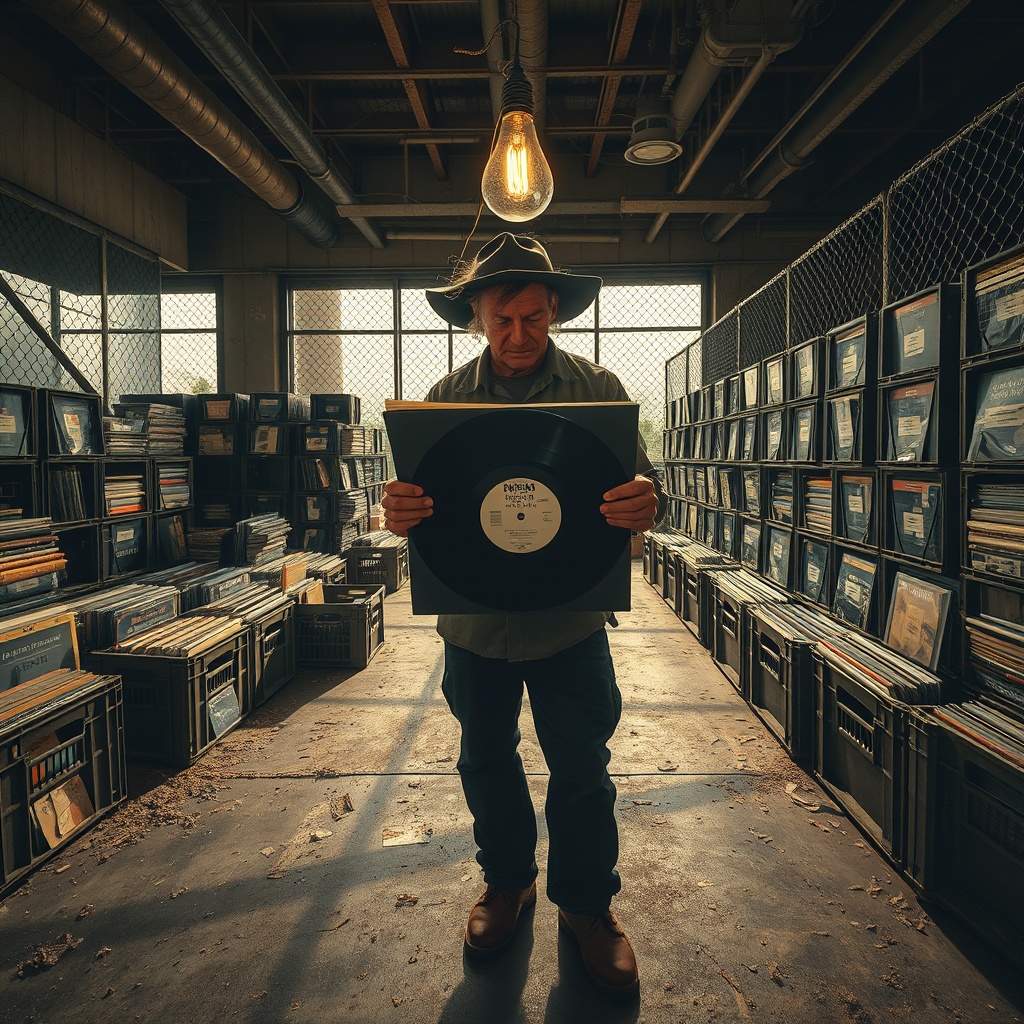
Something That Remembers
Executive Decision Summary
Composite
85/100
Release Ready
77/100
Recommended Path
APreserve Literary
Projected Lift
+2 to +4pts
Final Recommendation flagged this song as Revise lightly — quick wound-list pass unlocks "yes."
Overall Score
Scored under Lyric Scoring Standard 1.3
Trust Receipts
Scoring Breakdown
Prosody & Musicality
Strong conversational flow with natural breath points. 'Milk crates at the Morrison flea, morning light' has perfect stress pattern for R&B delivery. Some lines like 'Matrix stamps are carved like promises' achieve musical density through internal rhythm.
Structural Architecture
Exemplary narrative progression through three record-hunting scenes, each deepening emotional stakes. Bridge provides perfect pivot revealing the human cost. Cohesion is flawless - every section serves the central metaphor of vinyl as memory keeper.
Rhyme Intelligence
Sophisticated use of slant rhyme and assonance rather than forced end-rhyme. 'Light/bulb', 'cents/buying', 'real/disappear' create sonic architecture without constraining meaning. Conversational register choice limits ceiling but execution is clean.
Economy of Language
Every word earns its place. 'Deadwax like scripture' - four words containing entire subculture reverence. 'I pay extra for the hurt' - devastating economy. No filler lines detected across entire lyric.
Lyrical Specificity
Exceptional concrete detail: Morrison flea, Curtis 'Super Fly', Wilson Pickett, matrix stamps, plastic sleeve. Each proper noun grounds the emotional abstraction in physical reality. 'Seventy-five cents' vs 'twelve dollars' creates economic specificity that deepens character.
Imagery Originality
'Reading deadwax like scripture' - fresh metaphor connecting vinyl collecting to spiritual practice. 'Matrix stamps carved like promises' transforms manufacturing marks into emotional artifacts. Avoids tired music nostalgia clichés.
Emotional Truth
Devastating honesty about using objects to process grief. 'I pay extra for the hurt' and 'buying proof that something stays when people don't' reveal the real transaction. The cost is clear: money narrator doesn't have, spent on emotional surrogacy.
Voice & POV Integrity
Consistent first-person narrator throughout. Clear relationship dynamics with vendors and other diggers. Bridge shift to dialogue maintains POV integrity while adding depth. Voice feels authentic to the subculture.
The Transcendent Line
'I pay extra for the hurt' - could not have been written any other way. Captures the entire emotional economy of grief-shopping in six words. 'Reading deadwax like scripture' also transcendent - perfect metaphor for collector obsession.
Emotional Arc
Moves from surface collecting (V1) to emotional recognition (V2: 'doesn't hear the ache I'm hearing') to final revelation (Bridge: buying proof of permanence). Clear metabolic progression without rushing the realization.
Memorability
Chorus passes one-listen recall test: under 20 words, concrete noun ('something'), clear emotional claim. 'Something that remembers / when everything else forgets' is singable and sticky. Strong verses but chorus could be more distinctive.
Genre Authenticity
Perfect R&B authenticity through Curtis Mayfield, Marvin Gaye, Wilson Pickett references. Understands soul music as emotional archive. Conversational delivery honors genre's storytelling tradition while extending into record collecting subculture.
Lyrics + Heat Map
First-Listen Memorability
“"Something that remembers / When everything else forgets"”
The repetition of "something that remembers" locks in immediately—it's a clean, singable anchor that repeats twice in the first four bars, so it survives one listen. The emotional premise (memory as refuge when trust fails) feels true and lands softly. But "the sound before the lies" is poetic abstraction that doesn't stick on first pass; the stranger remembers the *feeling* of the chorus (wistful, searching) more than the specific final image. For R&B, this is solid atmosphere but slightly undercooked hook—craft without the last inch of melodic or lyrical inevitability that makes 85+ choruses unforgettable.
Standout Lines
“I pay extra for the hurt”
“Reading deadwax like scripture under bare bulb”
“But I'm buying proof / That something stays / When people don't”
The One Line
The One Line is the single phrase in this song that carries the writer’s unrepeatable signature — measured against a 7-feature taxonomy (category violation, register collision, concrete-abstract anchoring, phonetic signature, time-reversal, negation-as-affirmation, permission slip). The detector ranked every line in the lyric; the top candidate is shown below. B3300 heuristic scoring — the Haiku-graded version of CV / WWW / PS lands at the vault-rank pass (B3308).
“Dollars I don't have but I count them anyway”
Permission Slip Heat Map
Permission Slip · Per-line scores
Where does this song give the listener permission to feel something they’d normally censor? Each line scored 0-100 on the Permission Slip rubric (B3315). Section markers + empty lines are skipped.
Priority Revision Targets
Wounds the panel called out
Chorus: 'The sound before the lies' lacks specificity - what lies? When? This abstract phrase weakens an otherwise concrete song
Structure: Identical pre-chorus repetition without evolution - 'Crackle that proves it's real / Heft that won't disappear' could show progression across verses
Detail balance: Bridge dialogue ('She says these were his favorites') introduces new character without context - whose favorites? Who is 'she'?
Song DNA
Voltage
50/10
Forge Path
architect
Production Package
Style String
Alt-R&B with neo-soul undertones, male baritone vocals half-sung half-spoken, asymmetric hi-hat patterns creating broken groove, vintage Fender Rhodes electric piano, analog warmth, vinyl crackle samples layered throughout, pitched vocal harmonies that don't quite resolve, 85 BPM mid-tempo, minor key with jazz chord progressions, intimate recording distance, tape saturation, subtle string arrangements in bridge, dynamic range from whispered verses to full-voice chorus, breathing room between phrases mimicking record browsing rhythm, production deliberately imperfect like analog pressing
Focus Group
Panel Score
55/ 100Viral Potential
31/ 100Lyrically sophisticated and emotionally genuine, but lacks the sonic groove, catchiness, and accessibility needed for mainstream traction; strong as a deep album track for intentional listeners, we...
“'Crackle that proves it's real / Thickness that won't disappear'—the song is actually about materiality and mortality, not just nostalgia.”
“No hook that sticks or repeats memorably; 'Something that remembers' is thematic but not catchy enough to carry casual interest.”
Competitive Placement
Tradition
The Frank Ocean / James Blake left-field R&B lineage
Would sit near
- Frank Ocean— Blonde-era alt-R&B confessional
- James Blake— Overgrown / Friends That Break Your Heart
- Steve Lacy— Gemini Rights confessional-pop edge
Setlist Context
1AM headphones playlist between Blonde and Care For Me cuts
Why this lineage
Fragmented, atmospheric, psychologically oblique vocal delivery sits in the alt-R&B lane that prizes restraint over runs.
Note: shelf-placement context, not a generation directive. The anchors mark where this song fits in a curator’s mental map; the song does not derive from them.
Version Strategy
A — Preserve Literary Version scored 85/100. Top reasons: Composite score 85/100 — craft is the asset; 3 transcendent lines — literary peaks worth preserving.
Recommended
A — Preserve Literary Version
Minimal changes; album-cut treatment.
B — Commercial Tightening
Rewrite the chorus for compression; keep the verse + bridge core.
C — Sync Pitch Version
Cinematic edit; lower lyric specificity; broader emotional canvas.
The Receipts
Every score has its math. Expand any panel to audit the evidence — cross-eval, prosody, focus group transcripts, artist-match verdicts, and the full revision ledger.
Cross-Eval Corroboration▾
Triangulation
Cross-checked by gpt-4o-2024-11-20. Score 86. Divergence Δ1 (high agreement).
Stranger Test
Score 82. Framing delta Δ3.
Prosody (Line-Level)▾
Lines
38
Pass
35
Flag
1
Fatal
2
Top issues
Line 4
fatalDiana Ross pressing, first edition, seventy-five cents
Line 19
fatalCurtis sitting in the dollar bin, "Super Fly" intact
Line 36
flagMarvin Gaye behind the counter, when the streetlights flicker on
Revision ROI▾
Composite
85→92(+7)
Release Readiness
77→92(+15)
Fix the 2 prosody-critical lines (vowel/pitch collision or stress-on-function trap)
Prosody-critical lines break singing at chest-voice peaks. A vocalist will either reshape the vowel mid-note or skip the line. Fixing them is the highest-ROI craft work.
+3 score+5 readySmall effortAddress the 3 eval-panel wounds
Wounds are eval-panel-identified craft issues (verse abstraction / cliché chorus / weak bridge / etc.). Each addressed wound lifts composite + readiness incrementally.
+2 score+4 readyMedium effortRefine the 1 watch-list line (prosody flag)
Watch-list lines are singable by experienced vocalists but tax less-experienced ones. Refining lifts the floor without changing the song.
+1 score+1 readySmall effortStrengthen the hook (First-Listen Memorability scored 72/100; target ≥75)
A hook below 75 means the line did not land on one listen. Rewriting toward a tighter chorus payoff lifts memorability + the whole composite via Hook Clarity.
+1 score+1 readyMedium effortAddress 3 focus-group concerns
Negative comments are listener-panel-reported issues. Resolving them lifts Audience Fit + reduces Taste Risk.
+5 readyMedium effort
Chain of Title▾
Verifiable human contribution
0%(0 of 38 entries)
AI original
29
AI · human-revised
9
Human-locked
0
Human-edited
0
Focus Group — Full Panel▾
Category breakdown
Gen Z (18-25)
38/100Jayden here. Okay, so... I don't hate it? But I'm not adding this to my story. There's no hook I can quote—'Something that remembers' is kind of pretty but it doesn't *pop*. The whole thing is very sad-in-the-thrift-store energy, which is aesthetic, but I'd need a BEAT to actually want to play it. The lyrics are too long-form, too introspective. I respect the vibe but it doesn't make me feel like sharing it or talking about it. It reads more like a poem than a song I'd come back to. The genre label 'rnb' is weird too—where's the groove? I'm skipping this after the first verse unless my friends specifically texted me about it.
Millennials (26-40)
71/100Priya speaking. This hits different for me. I'm reading 'Marvin Gaye behind the counter, twenty-eight / Dollars I don't have but I count them anyway'—that's *specific*. That's someone who gets the ache of wanting something you can't quite afford but needing it anyway. The nostalgia is real but not cheap. It sounds like it could absolutely sit on a full album between other introspective pieces. My only hesitation: it doesn't have a production hook yet, so I'm imagining what the music could be. If there's a sultry, sparse arrangement underneath this? I'm listening on repeat during my evening commute. If it's generic lo-fi? It disappears. The emotional core is there, though. This is real.
Gen X (41-56)
81/100Tom here, and I'm impressed. This is what I listen to vinyl for—someone with something to SAY. 'Crackle that proves it's real / Thickness that won't disappear' is the line that gets me. You're not just romanticizing the past; you're saying analog *means* something because it's evidence. The whole song is about mortality, memory, and what lasts—the bridge especially: 'I'm buying proof / That something stays / When people don't.' That's not safe. That's not a teenager writing about heartbreak. This person has *lived*. The cultural references (Diana Ross, Curtis Mayfield, Marvin Gaye) aren't name-dropping; they're scaffolding for a real argument about why these things matter. My only question is: does it sing? I need to hear the melody. But lyrically, this is the kind of thing I'd read in liner notes and think, 'okay, this artist respects their audience.'
Boomers (57+)
72/100Linda here. I appreciate this more than I expected to. The story is clear—someone collecting vinyl records, looking for something real in a world that's throwing it away. The emotion is honest. I know Diana Ross, I know Curtis Mayfield, I know Marvin Gaye—those names *mean* something to me, so the song feels like it's speaking directly to people like me, which is rare. The 'What's Going On' reference especially—that album saved my life in 1971. But I'll be honest: I need to hear this sung. Right now it reads like a poem. Is this actually an RnB song? Where's the melody? In my church choir, we learn music; we don't recite poetry over a beat. The language is a bit cryptic for me too—'matrix stamps carved like promises' is pretty but I had to think about what that meant. If there's a real tune and the arrangement is warm, I'd definitely listen. But the words alone, without melody, feel incomplete.
Casual Listeners
29/100Marcus here. Okay, I'll be real: I don't get it. I'm at the gym, I want something that moves me, and this is... sad? About records? I don't collect records. I don't know who Marvin Gaye is off the top of my head. The verses are too long and I'm not catching a hook until the chorus, and 'Something that remembers' doesn't stick—it's not bouncy enough. By the time I get to verse 2, I'm already thinking about skipping. This would be that song where my friend puts it on and I'm cool about it for 20 seconds but then I'm scrolling through my own stuff. It might be nice background music at a coffee shop, but I'm not going to seek it out. No vibe for me.
Music Enthusiasts
74/100Aisha here, and I'm torn—which means I'm interested. The specificity is *there*: 'Skip on Pusherman but the groove runs honest' is a real observation about a real production quirk. The concept of buying vinyl as proof-against-forgetting is clever and hasn't been done to death. The narrative arc from verse to bridge is solid. BUT—and this is big—I've read similar things in Ben Folds Five lyrics, in Bon Iver's prose-poetry, in St. Vincent's album notes. The DNA is familiar. What saves it is the Marvin Gaye fixation and the material specificity (dollar bins, deadwax, matrix stamps). These aren't TikTok lyrics; they're deep-album lyrics. My concern: does it *sound* original? Without hearing the production, I can't know if this is a true discovery or just a writer who's read lots of other music writing. That said, I'd definitely seek out the full track. There's enough here to warrant that.
Industry Pros
52/100Derek here, and I'm going to be blunt: I don't see a single. 'Something that remembers' is the only phrase that could possibly repeat—it works as a mantra, sure—but there's no moment where the chorus breaks through and makes a casual listener sit up. The verses are dense and reference-heavy, which means they age well for critics but die quickly on radio and streaming shuffle. That said, I see what this is: it's a album track on a concept project. It's a 'skip nothing' song for people who've already committed to the artist. The problem is I'd need to hear the full body of work to know if this artist can carry an album. One song about crate digging, no matter how well-written, doesn't tell me if there's a SOUND here or just a sensibility. The Marvin Gaye attachment is interesting (brand loyalty?), but it's also a risk—is this artist going to live in reference territory forever? I'd listen to more before I'd bet on this person. The lyrics themselves are solid—craft is there—but craft alone doesn't move units or build a core fanbase. I'd want to hear 5-6 more songs before I'd even have a real conversation about A&R interest.
Genre Purists
39/100Kenji here, and I have to say: this isn't RnB. It's *called* RnB, but it's not. RnB has specific DNA—groove, swing rhythm, vocal intimacy, call-and-response patterns, a relationship to the body and physicality. This is a lyrical poem about nostalgia. Where's the rhythm? Where's the sensuality that RnB demands? The references (Marvin Gaye, Curtis Mayfield) are to classic soul and funk, which *influenced* RnB but aren't RnB themselves. If you'd submitted this as 'alternative hip-hop' or 'indie soul,' I'd say okay—there's room here. But RnB? The genre has conventions and this song ignores them entirely. It's lyric-first, not groove-first. That's not RnB tradition. I respect the writing—it's good—but don't call it RnB just because you're nostalgic for 70s soul. That's genre tourism and it bothers me. If the artist had grown up in the RnB tradition and was *innovating within it*, that's different. But this reads like someone outside the tradition borrowing its heroes without understanding why they mattered sonically, rhythmically. Call it what it is: introspective retro-soul or whatever. But not RnB.
Playlist Curators
62/100Sofia here, and this is a placement problem more than a quality problem. The song is *excellent* for specific playlists: 'Late Night Vinyl,' 'Melancholia,' 'Introverted Mornings,' '90s Nostalgia.' But it has HIGH skip risk if it lands wrong. If someone adds this to an upbeat playlist or a party mix, it's immediately deleted. If it comes on after an energetic track, listeners might bounce. The bridge is beautiful ('She says these were his / And I nod like I understand') but that comes SO late in the track that people might not get there. My concern: where does this actually LIVE in the streaming ecosystem? The audience for this is niche—older millennials, Gen X, crate-diggers, people with attention spans. That's a real audience, but it's smaller than the label probably wants. I could definitely add this to a mood playlist, but I'd have to be strategic about placement and surrounding songs. As a standalone recommendation? It needs more shine. As an album track in a concept project? It's a keeper.
International
56/100Yuki here. I don't know all the references—Diana Ross, Curtis Mayfield, Marvin Gaye—these names mean less to me than they do to English speakers. But I understand the *feeling*: longing, preservation, the fear of losing something real. That translates. 'Something that remembers when everything else forgets'—I can feel that across languages. The physical imagery (black palms from digging, crackle on vinyl) is universal. BUT—and this is important—the song depends heavily on you understanding the HISTORICAL significance of these artists and these records. The lyrics assume you know what 'deadwax' means, what 'matrix stamps' are, why a skip on 'Pusherman' matters. These are English-language, North American cultural references that don't travel. The song would hit differently if I heard it in Japanese, translated, with different cultural anchors. As it stands, I'm getting 60% of the emotional content and missing 40% of the meaning. That's a limitation, but it's not the song's fault—it's just how specific and rooted it is. For international listeners, this needs better production or more universal imagery to fully land.
Positive reactions
- “'I'm buying proof that something stays when people don't'—the bridge reveals the real emotional spine; this is about mortality and connection, not record collecting.”
Negative reactions
- “No hook that sticks or repeats memorably; 'Something that remembers' is thematic but not catchy enough to carry casual interest.”
- “Genre label 'RnB' is misleading—this is introspective soul poetry with no groove, rhythm, or vocal intimacy RnB actually requires; feels like genre tourism.”
- “Heavy dependence on cultural references (Diana Ross, Curtis Mayfield, Marvin Gaye, deadwax, matrix stamps) excludes listeners unfamiliar with vinyl culture and soul history; limits accessibility and viral potential.”
Quick Fix Summary▾
- 01
Prosody-critical line (stress-cluster)
criticalProsody (fatal)Line 4 - 02
Prosody-critical line (stress-cluster)
criticalProsody (fatal)Line 19 - 03
Prosody watch-list line
majorProsodyLine 36
If all land
+2 to +4 pts
Est. revision
45 min
Want one of these for your song?
Every song forged on SongForgeAI produces a dossier just like this one. The receipts, the scores, the proof.
Forge your first song →