Case study · Working Nashville songwriter
How a Nashville pro shaped SongForgeAI.
Two rigorous reviews, six weeks apart. Roughly seventy-five builds between them. The verbatim feedback that changed real code is pinned inside the codebase to this day.
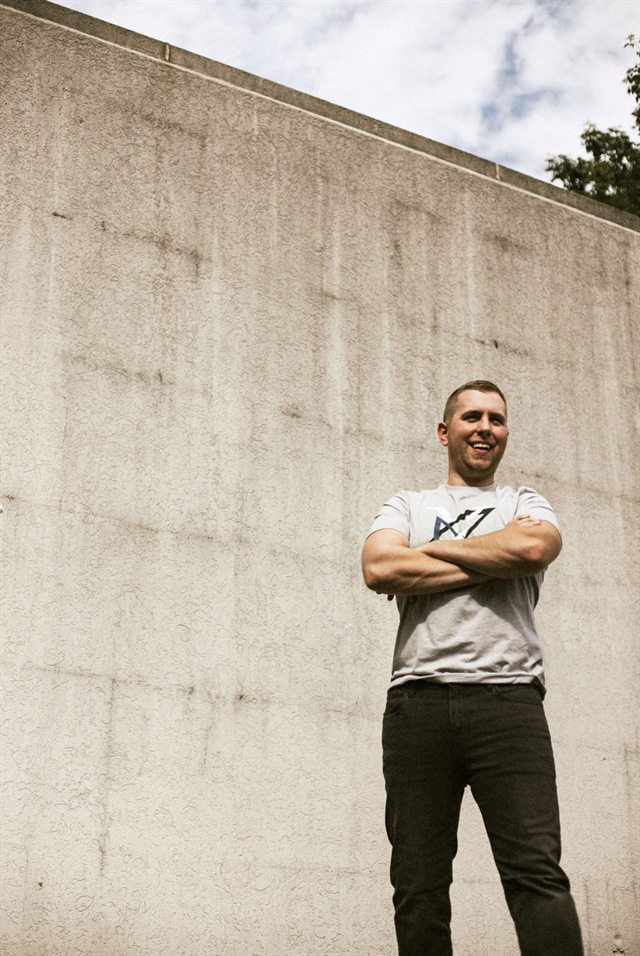
“SongForgeAI feels less like software and more like having a Nashville writers room on demand. It won't replace your creativity or write the song for you, but it will challenge your ideas, expose your blind spots, and help you write stronger songs.”
Brett The Writer
Professional Songwriter & Producer · Nashville
Award-winning · 10+ years · cuts with Straight No Chaser · Kygo's Masterclass contributor
Watch the review
Hypothesis
A working Nashville songwriter will find specific, actionable flaws that internal audits and self-criticism cannot reach. The product improves fastest when those flaws are converted into shipped builds inside one cycle — not filed for later.
Method
- 01A working Nashville songwriter is engaged via SoundBetter. Compensation flows through the platform; no NDA, no steering. Brutal-is-useful is the explicit ask.
- 02Round 1 — a guided 60-minute tour with a ten-section checklist. The reviewer writes free-form notes and verbatim quotes; no rubric is imposed on the response.
- 03Every actionable finding is converted to a build. Verbatim quotes get pinned into the codebase's
SACRED-ACCIDENTS.mdwhen the finding reveals a load-bearing truth the room wasn't looking for. - 04Round 2 — same reviewer, same tour, six weeks later. The product the reviewer touches is the cumulative result of every fix shipped in between.
- 05Any new findings from Round 2 get the same treatment within hours, not weeks. The cycle is the product.
Before — Round 1, May 5, 2026
“As it stands, it's not for me. I'm not into the theme — it comes across a bit silly. I didn't find it as helpful as ChatGPT. I'd want it more human and less character-based before I'd use it seriously.”
Brett spent two hours running through a ten-section tour and returned a detailed write-up. The verdict was honest: the product wasn't ready for a working Nashville room. The most-cited problem became a permanent commit-message reference:
“The eight voices all kind of read as fortune cookies — like I'd flip them over and find the winning Powerball numbers. A Nashville room would not speak this way. We speak in conversation, and these responses are not conversational.”
That exact line is now pinned inside the codebase's Sacred Accidents log as the founding statement of how Crucible voices should speak. Build numbers across the subsequent two weeks still cite it by name.
What shipped in response — Round 1 → 2 (14 days, ~75 builds)
Not every Round-1 finding became a fix; some were product- philosophy opinions the team chose to defend rather than change. The actionable subset:
"The eight Crucible voices all read as fortune cookies — like I'd flip them over and find the winning Powerball numbers."
Crucible voice differentiation: The Poet now defends CRAFT (sound / image / surprise); The Prophet defends STAKES (cost / risk). Each voice carries explicit "do NOT critique" lanes so they stop converging on the same bumper-sticker line.
"A Nashville room would not speak this way. We speak in conversation."
New "The Working Room" Crucible mode — eight industry-archetype voices (The Hookwriter, The Co-Writer, The Track Writer, The A&R Ear, The Demo Listener, The Live-Show Test, The Radio DJ, The Pitch-Meeting) that speak room-talk. Toggle live next to the Literary panel.
"An intuitive pro writer would paste in hit song lyrics to create a baseline. If the engine doesn't recognize what makes a hit lyric a hit lyric, there is a high chance it's putting out bad advice."
Hit-Song Calibration Corpus infrastructure shipped. The operator-side curation continues (the operator started populating with "Last Night" by Morgan Wallen as the first country entry). Closes when ≥15 verified hits per genre score above the genre floor.
"When I clicked refine, it started playing the ON AIR music. This would be a problem for someone using this at work."
Auto-play music removed from all paid actions. Opt-in via the radio play button only.
"Something is miscommunicating. The first song I forged was given a score of 81. On this page it shows 75."
Score-discrepancy diagnostic shipped on /admin/system-health. Defensive Math.round at result emit so the forge score + dashboard score reconcile.
After — Round 2, May 19, 2026
“Todd — overall this is a massive upgrade, and the Nashville approach is something I personally love. I really don't see many issues, brother.”
The specific surfaces Brett validated, verbatim:
Overall verdict
“This is a massive upgrade, and the Nashville approach is something I personally love. I really don't see many issues, brother.”
Persona Forge — Luke Combs
“I did Luke Combs and this was on the money. This is great.”
Persona Forge — Cody Johnson
“I also did Cody Johnson, and that was perfect as well, dude!”
Persona Forge — perspective layer
“The How They See was perfect for these!”
Perspective Atlas
“I spent a lot of time here, enjoying it. It's really great, Todd. I don't see any issues at all.”
The Working Room (Nashville Crucible)
“This was perfect. It was right on the money actually!”
Forge — batch mode
“They all need personal human rewrites, with life experience, but they all set the stage for decent song ideas. Bridges were all fine.”
Dashboard — wounds tab
“Wounds are great. They are accurate.”
Forge — Toby Keith × Phoebe Bridgers × Pop Punk persona
“The lyrics were surprisingly good. It'd be a song I'd need to rewrite to my standard. But it was a great start.”
What Round 2 still surfaced — and what shipped in response
A working pro doesn't stop finding things on the second look. Brett surfaced nine fresh actionable issues in Round 2. Every one closed within hours of receiving his notes — the Brett P0/P1 sweep landed as builds B2734–B2742 inside a single afternoon:
"The Poet and the Prophet both said something similar — both leaned on 'you're using this like a bumper sticker.' They're still converging."
Voice-lane sharpening: explicit "do NOT critique stakes — that's The Prophet's lane" / "do NOT critique craft — that's The Poet's lane" guardrails in each voice's system prompt.
"You should consider renaming the country radio ear. Nashville shouldn't be pigeonholed to just country. Make it more 'The Radio DJ' — would I spin this?"
Renamed "Country-Radio Ear" → "The Radio DJ" with commercial radar across pop / country / rock / hip-hop / R&B / CCM / AC / top-40. Mode label "Nashville" also renamed to "The Working Room" so non-country pros stop reading themselves out of the panel.
"I tried CoJo (Cody Johnson's nickname) and it didn't recognize it. Perhaps I'd type in CoJo, and it would say 'Do you mean Cody Johnson?'"
Fuzzy-match alias suggester ships with a curated nickname table + camelCase initialism heuristic. "CoJo" → "Cody Johnson"; "The Boss" → "Bruce Springsteen"; "TayTay" → "Taylor Swift". Wired into the artist-inspired batch input.
"Toby Keith + Phoebe Bridgers + Pop Punk style — Perspective layer unavailable on this synth (productiveSilence + productiveInsistence collide on 'people')."
Perspective-layer collision auto-resolution. When the productiveSilence + productiveInsistence arrays collide on a shared word, the agent drops the colliding entry (silence wins by Sacred Accident #13 priority) + re-validates. The vocabulary brief no longer ships with an apologetic warning when the perspective layer fails recoverably.
"It took a VERY long time for the system to process [a new persona]. Is there a way to speed this up?"
Persona Forge brief caching shipped. Same influences string within 24h returns the cached brief instantly — skips the Sonnet synthesis + Haiku perspective wall-clock (~10-30s).
"Many of the lyrics generated by the forge are LONG top to bottom, trying to put every thought into a lyric. It's a song, not a novel, ya know? Short Verse + Long Chorus, or Long Verse + Short Chorus."
Verse-chorus length-balance rule landed in the forge prompt + the scoring rubric. Songs must commit to one of two architectures before writing; the rubric now penalizes the "every-thought-in-every-line" failure mode.
"Surprise mode didn't work. The Forge button was not clickable until I wrote something in the text box."
Forge button morphs to "🎲 Surprise me" when the prompt is empty. Clicking it rolls a random ghost / splice / voltage combination + forges from scratch.
"The CANCEL BATCH button doesn't seem to work. I had to click the back button instead."
Cancel-Batch now uses a shared AbortController. Click cancels the in-flight Anthropic stream immediately + shows visual feedback (the row flips to "cancelled," the queue stops advancing).
"A hit lyric of ours would not score. It kept getting Network Error, Try again. I tried it 3 times."
The /evaluate/score endpoint now retries once on transient failure + surfaces a categorized error (rate-limit / auth / network / server) instead of the generic "Network Error" label. The Crucible verdict path was unaffected; the dedicated Score-Only path now matches its reliability.
Lessons
- Working songwriters surface failure modes internal audits miss. Three Round-1 findings — the Crucible “fortune cookie” register, the hit-lyric paste-in expectation, the auto-playing ON-AIR audio during refine — none of which had surfaced in ~2,700 commits of internal review. All three landed as shipped fixes inside 14 days.
- Verbatim quotes outlast paraphrases. Brett's “fortune cookie” line is now a permanent Sacred Accident in the codebase. The phrase shows up in commit subjects three weeks later. The cost of preserving that exact wording vs paraphrasing it is zero; the operational value compounds.
- The response cycle is the product. Round 2 surfaced nine fresh issues. The agent closed all nine inside a single afternoon (B2734–B2742). The speed of the response is what converts a beta tester into a collaborator; a six-week-out-fix turns the same review into a list of complaints.
- Some criticism is product-philosophy, not a fix. Brett's “the forge/crucible theme is a bit nerdy” note didn't become a rebrand — but it did become the Working Room Crucible mode, where industry- archetype voices speak in conversation. The right response to philosophy-criticism is often a parallel surface, not a replacement.
- Not every finding ships as a quick fix. Brett's deepest critique — “an intuitive pro writer would paste in hit song lyrics to create a baseline” — is the foundational case for the Hit-Song Calibration Corpus (Punch List #51), an ongoing curation effort that operator-side work continues to drive. The infrastructure shipped (B2078–B2083); the corpus populates one verified hit at a time.
The full interview — in Brett's words
A working Nashville pro on skepticism, the writers-room feeling, where AI belongs in a real workflow — and where it doesn't. Verbatim.
Q1Who are you, and what do you write?
I'm Brett The Writer, a professional songwriter and producer. I've been writing professionally for well over a decade and have spent the last several years immersed in the Nashville songwriting scene. While country music is where I spend most of my time, I'm comfortable writing across just about any genre. Writing songs isn't something I do occasionally — it's my full-time job. I write every day, often for multiple hours at a time. Over the years I've written for everyone from independent artists you've never heard of to major-label acts, and everything in between. One of the more unique opportunities I've had was being invited to contribute songwriting content for Kygo's Masterclass, which was a pretty cool experience.
Q2You've used a lot of tools — what made you skeptical of an AI lyric tool going in?
AI is going to take our jobs! Haha. Just kidding… kind of. I know a lot of writers are intimidated by AI. There's this fear that it's cheating, or that it'll eventually make human songwriters obsolete. I can relate to that, and that was probably the biggest reason I was skeptical at first. But after talking with other writers in my circle and spending time thinking about what AI actually is — and what it isn't — I came to a different conclusion. It's a tool. A construction worker uses a hammer. A producer uses a DAW. AI is just another tool. I started looking at it less as a competitor and more as an accountability partner. I've used ChatGPT and other AI tools, but SongForgeAI hits differently. And when I say I've “used AI,” I don't mean typing “write me a hit country song” and hoping for the best. That's not how I work. I write and craft my own songs. Then I use AI to help evaluate them, refine them, and compare them against commercially competitive material. It doesn't write my songs. I do.
Q3In your first review you basically said, "this isn't for me." Six weeks later you called it "a massive upgrade." What actually changed your mind?
It honestly felt like it went from zero to hero. In the beginning, some of the feedback felt a little stiff, uninspired, and almost like reading a fortune cookie. It wasn't giving me the kind of insight I'd expect from a professional songwriter. After the upgrades Todd made, the experience changed dramatically. Now it feels much more like sending a song to a trusted writer friend and asking, “What do you think of this?” The feedback became more nuanced, more actionable, and much closer to the conversations real writers have with each other. Being able to get that kind of feedback on demand is pretty awesome.
Q4What's one specific thing SongForgeAI did that surprised you — or that ChatGPT and other tools couldn't?
ChatGPT has never made me feel like I'm sitting in a writers room. SongForgeAI can. The Nashville Writers Room mode is where things really clicked for me. Instead of getting generic writing advice, it feels more like getting feedback from actual commercial songwriters. It's almost like having Shane McAnally and the guys at SMACK listening to your song and telling you why it's working — or why it isn't. I remember putting a song through the Nashville Writers Room and getting called out for leaning too heavily on a crutch I was using throughout the lyric. That's exactly the kind of feedback I'd expect from a trusted co-writer sitting across the table from me. It wasn't trying to rewrite the song. It was pointing out a blind spot I needed to address.
Q5Where does it fit in a real songwriter's workflow — co-writer, idea generator, editor? What's the honest role?
I'm not sure I'll ever subscribe to the idea of using AI to start a song. Personally, that's not where I see the value. The creative spark, the ideas, the emotional truth — that's the songwriter's job. Where SongForgeAI really fits into my workflow is as an editor. Once I've finished a first pass of a song, being able to get actionable critiques from different perspectives and mindsets is incredibly valuable. Sure, I could send a song to five writer buddies and get five different opinions. But that might take days — or longer. SongForgeAI gives me multiple perspectives and ideas in minutes. Now, that's just me. I'm full of ideas. But if I were a newer songwriter who struggled with titles, hooks, or song concepts, I could absolutely see value there too. I'd still encourage writers to develop those muscles organically, but as a tool to get unstuck or explore possibilities, it can be very useful.
Q6The Crucible / scoring side — did being told what's weak about a lyric actually help?
The scoring side was one of the areas where I saw the most dramatic improvement. Comparing the first review I received to what Todd has built now, it's night and day. At this point, I'd probably use the scoring and evaluation tools on 90% of the songs I write. What I found most useful was its ability to identify repetition and point out places where the story wasn't progressing as effectively as it could. Sometimes when you're deep inside a song, it's easy to miss those things because you already know what you meant to say. SongForgeAI does a good job of stepping back and evaluating what's actually on the page. It helped highlight repetitive ideas, repetitive phrasing, and opportunities to move the narrative forward in a stronger way. For me, that's where the value is.
Q7A lot of pros are skeptical or hostile about AI in songwriting. What would you say to a working writer who's on the fence?
As someone who's been writing professionally for over a decade, I understand why writers are cautious. I was skeptical too. But if you're viewing AI as a competitor, I think you might be looking at it the wrong way. To me, it's a tool — the same way a construction worker uses a hammer or a producer uses a DAW. The tool isn't replacing the craft, it's helping you execute it more efficiently. And to be clear, I don't think AI should be writing your songs or your melodies for you. In my eyes, that's crossing a line. The creativity, intuition, and emotional truth still need to come from the writer. But using AI to evaluate your work, identify weaknesses, compare your lyric against market standards, or surface information that might otherwise take you days to gather? Why wouldn't you use that? The way I see it, it's not cheating. It's an upgrade.
Q8What kind of writer — or what part of the process — benefits most from this?
I think every songwriter can benefit from it, but the benefit looks different depending on where you are in your journey. A beginner can use it as a learning tool. If you're still developing your songwriting instincts, understanding structure, identifying clichés, or learning what makes a lyric effective, SongForgeAI can help accelerate that process and build your skill set. For more experienced writers and professionals, the value shifts. At that point, it's less about learning how to write and more about staying accountable. It gives you another perspective and helps you evaluate your work against commercial standards and current market trends. That's one of the things I like about it — it can meet writers where they are. A beginner and a professional might use the exact same tool for completely different reasons and still find value in it.
Q9If you had to sum up SongForgeAI in one or two sentences for another songwriter, what would you say?
SongForgeAI feels less like software and more like having a Nashville writers room on demand. It won't replace your creativity or write the song for you, but it will challenge your ideas, expose your blind spots, and help you write stronger songs.
Q10Anything you hope it does next, or still want improved?
One of the reasons I'm comfortable recommending SongForgeAI is that I've already seen how quickly it has evolved. The difference between my first experience and where it is today is dramatic. So more than anything, I'd like to see that same commitment to refinement continue. Songwriting is nuanced. The closer AI can get to understanding not just what a lyric says, but why it emotionally connects, the more valuable it becomes. If the pace of improvement continues the way it has so far, that's what excites me most.
Where this goes next
The Brett cycle is the template. Two more working-songwriter reviews are queued (anonymized until permission lands). Every new review closes a class of bug that internal discipline can't reach on its own.
If you write professionally — Nashville, indie, CCM, anywhere — and want to put the product through the same kind of review, the door is open. Compensated work; brutal feedback welcomed.
Email support@songforgeai.com.
Disclosure: Brett's review work and his endorsement of SongForgeAI were compensated. His feedback, quotes, and verdict are entirely his own, drawn from real hands-on use across two reviews six weeks apart — and every build number cited above is a public commit you can verify. We disclose paid relationships because a testimonial is only worth anything if it's honest.