Book of Voices - Volume 7
What does love do when it is rejected? It keeps walking toward the city that kills prophets.
Opens in walking-rhythm folk — sandal-pace percussion, road dust, parable warmth centered in F major; acoustic guitar, hand drum, low strings, and warm room ambience carry the ministry tracks (VII.1–VII.11). The palette darkens at VII.12 (the lament): strings thin, reverb lengthens, the warmth begins bleeding out. VII.14 is the closest-mic'd room in the cycle — bread and breath, no distance — the last warmth before the passion. VII.15 introduces cold ledger-tone: prepared piano, dry plucked bass, silence used as punctuation. VII.16 strips to near-nothing: a single bowed string, olive-wood resonance, breath on the capsule. VII.17–VII.20 are the darkest arrangements of the cycle: torchlight electric (disguised), low drone, percussion reduced to a single dry strike. No clean electric at any point — any electric texture reads as torchlight, earthquake, or the tearing veil. The held silence at VII.20's end is the longest in the cycle; Volume VIII opens from inside it.
Loading…
Space play/pause · ← → seek 5s · J/L seek 10s · M mute · N/P next/prev
The Hem of His Garment
Make this in Suno
Hushed through-composed folk song-novel, female worn alto vocal, close-mic'd near-speech delivery opening into melodic legato aria, acoustic guitar sparse fingerstyle at sandal-pace rhythm, single hand drum brushed not struck, low cello undertone entering only at the aria, crowd breath texture layered beneath the arioso as ambient sound rather than instrument, dry intimate room with minimal reverb in recitative sections lengthening slightly at the aria's opening, no percussion at the spoken pivot — single plucked string or silence — returning quietly under the coda, BPM approximately 58-62 rubato, key of F major, atmosphere of compressed waiting releasing into open air, dynamic arc from near-whisper recitative through controlled arioso to full-voice aria then spent quiet coda, no electric instruments, no production gloss
Paste the style into Suno’s style field and the lyrics above into the lyrics box — the section markers and performance directives are Suno-ready.
The Better Part
Make this in Suno
Contemporary folk, kitchen-rhythm, mezzo-soprano female vocal, warmth, upright bass with dry woody thump, hand drum and light wooden percussion, sparse acoustic guitar picking between vocal phrases rather than underneath them, no fingerpicked dominant guitar, warm room ambience with short natural reverb — sounds like a stone-floored kitchen not a concert hall. Verses at medium brisk tempo with speech-rhythm feel, vocalist sounds like she is talking while doing something with her hands. Chorus opens up, melodic but unadorned, the plea direct and a little embarrassed. Bridge strips to near-spoken prose over bass drone only, percussion drops entirely. Coda is fully spoken over silence with a single low string sustaining under. F major, moderate 4/4, BPM approximately 96. Emotional atmosphere: warm, comic, competent, cracking slightly at the edges. No electric instruments.
Paste the style into Suno’s style field and the lyrics above into the lyrics box — the section markers and performance directives are Suno-ready.
You Are the Christ
Make this in Suno
Contemporary folk-rock, biblical narrative, acoustic singer-songwriter with electric accent. Male baritone vocal, full chest register, slightly roughened, non-operatic — a working man's voice carrying impossible weight. Arioso movement: acoustic guitar builds from sparse single-note picking to full open-chord strum by the confession peak; hand drum enters mid-movement, restrained; warm room ambience, minimal reverb, close-mic'd. No electric guitar in the arioso. At the recitative pivot, all percussion drops immediately — single plucked acoustic string, dry, no decay. The vocal drops to near-speech. Low-end absent. The production becomes almost documentary: breath audible, room noise present, no sweetening. BPM: arioso approximately 72, recitative unmeasured, speech-rhythm. Key: D major for the ascent, unresolved at the crater. Atmosphere: northern ridge, wind
Paste the style into Suno’s style field and the lyrics above into the lyrics box — the section markers and performance directives are Suno-ready.
Neither Do I
Make this in Suno
Contemporary sacred song-novel, operatic folk, first-century Judea setting. Female vocals, low alto, worn and precise, nearly spoken in opening recitative, lifting to restrained melodic line in aria sections, voice nearly breaking on single-syllable directives. Single acoustic guitar, nylon string, close-mic'd with audible finger noise on string — no picks, no strumming, only deliberate plucked notes and occasional held single tones. Breath-held room ambience, very short reverb tail, almost no decay — the silence between phrases is the instrument. Stone-drop percussion: a single dry wooden strike on exits only, not on every beat. No bass. No drums. No pads. Dynamic arc: whispered recitative at 0.2 intensity, aria rising to 0.5, arioso peaking at 0.65 with the regression line landing at near-silence, instrumental bridge at 0.3
Paste the style into Suno’s style field and the lyrics above into the lyrics box — the section markers and performance directives are Suno-ready.
Two Sons: The Younger
Make this in Suno
Rock-bottom country-folk, first-century parable told in Southern roots idiom. Ragged young male tenor, conversational grain, occasional liturgical lift in the refrain, dropping to breathless near-speech in the bridge. Acoustic fiddle drives the verses with a walking rhythm, stomped floor percussion, upright bass thumping on beats two and four. Full band rises through verse two, then strips entirely to solo voice for the bridge — no accompaniment, breath on the capsule. Fiddle re-enters for the final refrain, muted and low. Outro is sparse: solo fingerpicked acoustic beneath the vocal, fiddle holding a single note beneath. Room ambience warm, recorded. Tempo moderate walking pace, 88 BPM, key of G. No electric instruments. No reverb wash — dry room, close-mic'd vocal. The silence before 'I am no more —' in the final refrain is the longest held pause in the track.
Paste the style into Suno’s style field and the lyrics above into the lyrics box — the section markers and performance directives are Suno-ready.
Two Sons: The Elder
Make this in Suno
Contemporary folk ballad, first-century Biblical narrative register, intimate chamber folk production. Male controlled baritone vocalist, tight-jawed delivery in speech-song recitative sections, opening to full chest-voice tenor on the aria peaks, collapsing back to near-spoken register for the arioso close. Acoustic guitar sparse and low in the mix — minimal fingerpicking, mostly held chord shapes with occasional single-string movement. Muted gut-string bass providing pulse without percussion. Low bowed strings underneath — cello and viola, dry room, short reverb tail. Distant party texture audible throughout as ambient bleed: tambourine, laughter, low frame drum, as if heard through a plaster wall — never foregrounded, always present. No kick drum, no full rhythm section. Tempo approximately 58 BPM, rubato in recitative sections. Key of D minor, modal coloring.
Paste the style into Suno’s style field and the lyrics above into the lyrics box — the section markers and performance directives are Suno-ready.
I Am the Resurrection
Make this in Suno
Graveside confession folk, first-century biblical narrative, contemporary folk-song-cycle. Female vocals, worn mezzo-alto, half-spoken recitative delivery in verses transitioning to full-voiced melodic arioso at emotional peaks, pulling back to near-spoken for the final still point. Instrumentation: low cello arco as the primary melodic voice beneath the singer, sparse upright piano single-note lines with long sustain, no percussion except faint hand-drum resonance at the shout of Lazarus. Near-bare arrangement, intimate close-mic vocal with minimal room reverb — the listener is standing on the road with Martha. Silence used as punctuation: full drop-out at 'and then he wept,' cello re-entry on the upbow with the shout. 58 BPM, modal minor with Dorian inflection, F minor. Emotional arc: controlled grief opening into fractured accusation, recitative faith-claim almost rote
Paste the style into Suno’s style field and the lyrics above into the lyrics box — the section markers and performance directives are Suno-ready.
A Sycamore in Jericho
Make this in Suno
Gleeful Appalachian folk-stomp, biblical narrative, character-tenor male vocal delivering rhythmic speech that opens into full-throated folk singing, 128 BPM uptempo, key of D major, bright acoustic guitar with percussive strumming, driving banjo, stomping kick-and-clap rhythm section, fiddle playing at full brightness through ARIA sections, hand percussion and foot-stomp layers building through ARIA 3 into collective clap, production drops to single dry acoustic guitar and breath in BRIDGE section for intimate child-memory passage, full stomp band detonates again at CODA entrance, warm room ambience with slight wooden resonance suggesting a packed Jericho marketplace, no reverb wash — dry and present, communal energy, the fastest and most joyful arrangement in the album cycle, bright open D-major vowel warmth throughout, male baritone-to-tenor range
Paste the style into Suno’s style field and the lyrics above into the lyrics box — the section markers and performance directives are Suno-ready.
Son of David, Have Mercy
Make this in Suno
Shout-blues folk gospel, first-century road setting rendered in raw American roots idiom. Open-room male tenor at full chest volume — gravelly, unpolished, zero studio smoothing. Slide guitar carrying the call-and-response structure: crowd lines answered by a raw slide phrase, Bartimaeus responses answered by a louder one. Kick drum on the CALL sections, dropping entirely for the ARIOSO cloak passage, returning hard for the final RESPONSE. Low acoustic bass, no electric. Room ambience wide and dusty — the sound of a crowd parting. Reverb long on the RESPONSE shouts, dry on the spoken ARIOSO. Tempo walking-fast, 96 BPM, in D major — open strings resonant. Dynamic arc: loud crowd-call → full-voice shout → sudden silence (the stillness) → close-spoken narrative → full-voice shout returning → three quiet declarative lines closing dry, no fade.
Paste the style into Suno’s style field and the lyrics above into the lyrics box — the section markers and performance directives are Suno-ready.
What Must I Do
Make this in Suno
Polished art-folk ballad, first-century Judean story-song rendered in contemporary acoustic chamber production. Male baritone lead vocal — controlled, formal, slightly pressured in the opening sections, cracking to raw exposure at the two-syllable emotional pivot, dropping to half-spoken delivery in the final section. Fingerpicked acoustic guitar in open tuning, intimate and dry in the verses, falling to single sustained notes at the emotional turn. Light string quartet — violin and cello only — entering under the Look section with long bowed tones, no vibrato, restraint over ornamentation. No percussion except the ambient rhythm of the fingerpicking. Dry close-miked room with slight hall reverb on the strings only — the vocal sits forward, breath audible. Sparse production: silence is load-bearing. The final section fades beneath the vocal rather than cutting
Paste the style into Suno’s style field and the lyrics above into the lyrics box — the section markers and performance directives are Suno-ready.
The Alabaster Jar
Make this in Suno
sacred hymn, contemporary Christian worship, introspective and reverent, sparse piano with subtle strings and ambient pad, warm organ undertones, intimate female vocal with classical training and emotional depth, measured 72 BPM with rubato phrasing, production emphasizing silence and space, minimalist arrangement building to emotional crescendo, liturgical yet deeply personal
Paste the style into Suno’s style field and the lyrics above into the lyrics box — the section markers and performance directives are Suno-ready.
O Jerusalem, Jerusalem
Make this in Suno
Public lament folk, first-century Judean road setting, Track VII.12 in a darkening song-cycle. Male baritone-tenor vocal, open-air grief register — processional sections near-spoken over sparse walking-rhythm hand drum and low cello drone; aria section lifts with thickening bowed strings, reverb lengthening, no percussion attack; arioso descends in register and pace as strings thin; desolation section half-sung half-spoken with each short line landing in held silence; final lines fully spoken over a single bowed string fading. Acoustic nylon guitar present but recessive, no fingerpicked pattern dominant. Warm room ambience bleeding out across the song's arc — by the desolation section the reverb tail has lengthened past comfort into exposure. No electric instruments. No clean bright tone. The production is a hillside in grief, not a sanctuary. 82 BPM processional
Paste the style into Suno’s style field and the lyrics above into the lyrics box — the section markers and performance directives are Suno-ready.
I Have Prayed for You
Make this in Suno
Upper-room folk ballad, intimate chamber acoustic, first-century Judean world rendered in sparse contemporary folk production. Male baritone vocalist — full chest voice in the Boast, dropping to near-spoken delivery in the Warning, the final 'Three' spoken not sung. Acoustic guitar fingerpicked with minimal ornamentation, low lamp warmth in the room ambience, hand drum barely present as a heartbeat pulse in the Boast section only — absent in Refusal and Warning. Low cello enters softly at the Boast, bowing a single pedal note, retreating before the Warning begins. No reverb in the Warning — close-mic dry, breath audible. Room sounds: water in a clay basin, sandal on stone flagging. BPM approximately 62, free-time in the Warning section. Key of D minor resolving nowhere — no tonic resolution at the end. The silence after 'Three' is held for four full beats before fade.
Paste the style into Suno’s style field and the lyrics above into the lyrics box — the section markers and performance directives are Suno-ready.
This Is My Body
Make this in Suno
Intimate liturgical folk worship, single-room acoustic, close-mic'd baritone-tenor male vocal with conversational depth and restrained melodic peaks, no reverb tail, dry room ambience suggesting stone walls and lamp-warmth, solo acoustic guitar fingerpicked with deliberate breath-pace, single bowed cello entering only at the Cup section with long sustained tones, no percussion, no electric instruments, no synth, silence used as rhythmic punctuation between sections, warm low-mid frequency emphasis, breath audible on capsule, dynamic arc moves from hushed whisper-adjacent intimacy in Desire through slow gravitas in Bread to urgent sustained intensity at Hold-the-cup then drops to half-voice psalm-recitation in Hallel, tempo approximately 52 BPM rubato, key of D major with modal inflections, production sits between sacred speech and sung prayer
Paste the style into Suno’s style field and the lyrics above into the lyrics box — the section markers and performance directives are Suno-ready.
Thirty Pieces
Make this in Suno
Biblical reframe singer-songwriter, contemporary classical crossover, cold ledger aesthetic. Intelligent cold tenor vocal, near-spoken delivery climbing to rhythmic speech then receding to flat declarative, no vibrato except one fractured moment on 'absolution.' Prepared piano as primary instrument — dry, slightly detuned strikes, no sustain pedal, each note landing like a coin on stone. Dry plucked upright bass, sparse, drops out entirely in the final section. Silence used as punctuation throughout — genuine rests of 2-3 seconds between ledger sections. No reverb on voice; minimal room on strings. A single bowed cello enters only at the Running Balance section, low register, no vibrato, held tones. No percussion except the prepared piano's percussive attack. Tempo: unmeasured, speech-driven. Key: D minor, unresolved. Atmosphere: cold stone floor, dry air
Paste the style into Suno’s style field and the lyrics above into the lyrics box — the section markers and performance directives are Suno-ready.
Not My Will
Make this in Suno
Sparse olive-press folk lament, first-century Judean night atmosphere, single bowed cello drone throughout, barely audible breath on the capsule, no percussion, no guitar, low resonant male baritone-tenor vocal at the bottom of the range, voice treated with minimal natural reverb suggesting stone and earth rather than room, three prayer sections descend in dynamic level from hushed to near-silence, spoken command at the end delivered completely dry with zero reverb, low drone sustains under all three prayers without variation or swell, occasional distant wood-creak suggesting the olive press mechanism, the full-moon Passover stillness before torches arrive, no melodic development — the vocal melody barely moves, staying within a minor third, the repetition of identical words across three sections is the album's most restrained arrangement, total duration under three minutes
Paste the style into Suno’s style field and the lyrics above into the lyrics box — the section markers and performance directives are Suno-ready.
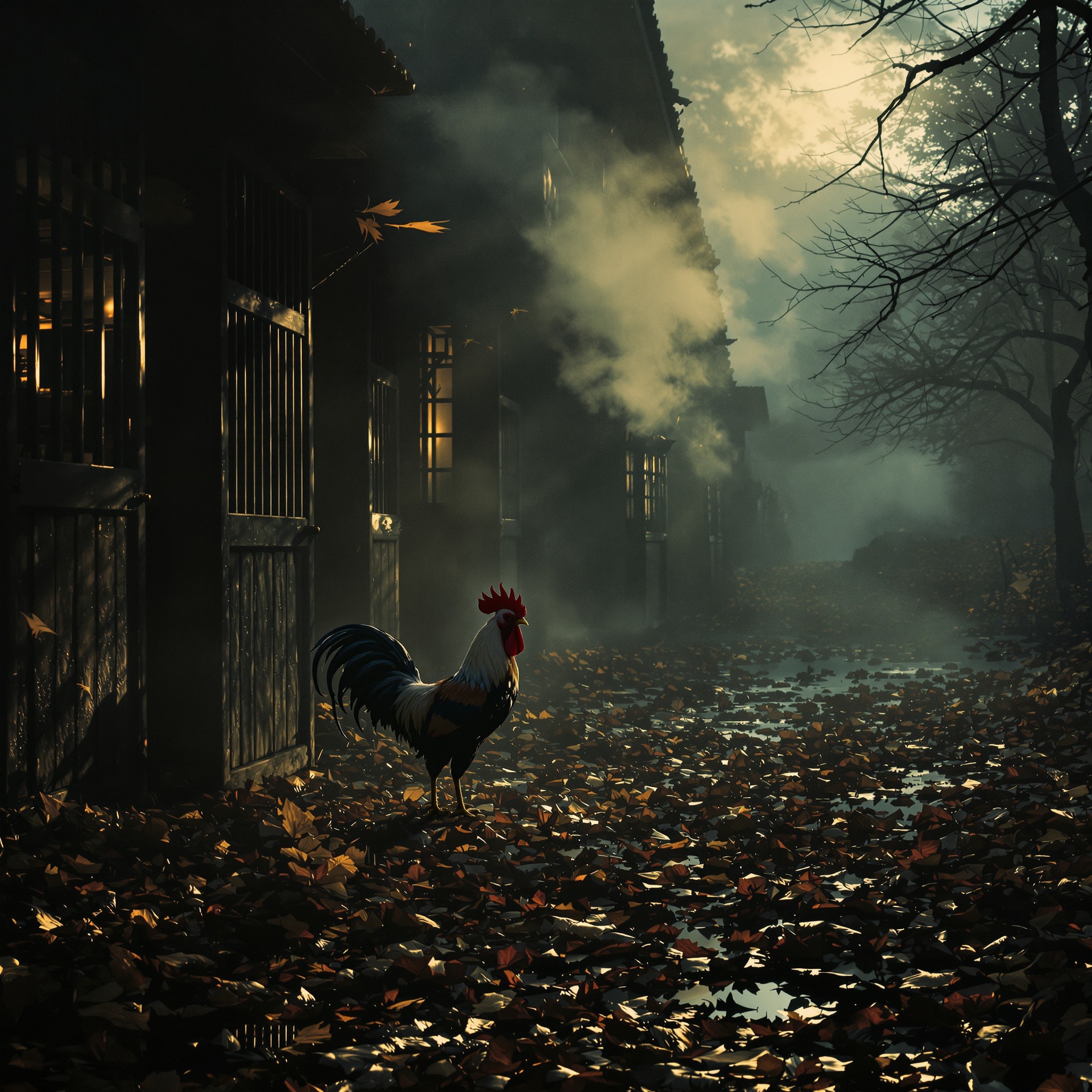
Before the Rooster
Make this in Suno
Courtyard-fire folk, biblical dramatic monologue, first-century passion narrative. Male baritone vocal, controlled and flat in the opening recitative, building to a louder-than-necessary second denial, cracking and cursing across the third, collapsing to near-spoken in the rooster passage, finally barely above a breath in the coda. Acoustic fingerpicked guitar suppressed — torchlight electric guitar, single-coil, dry and cold, no sustain pedal, played low in the mix like a witness. Low drone, cello bowed very slowly, minimal resonance. Hand percussion reduced to a single dry snare strike at the rooster moment — one hit, no reverb, then silence. Long room silence used as punctuation between denials. No warmth in the reverb — close-mic'd stone, not wood. BPM variable, speech-rhythm driven, roughly 60-72 in the aria section. Key of D minor, modal rather than resolved. Dark, cold, close.
Paste the style into Suno’s style field and the lyrics above into the lyrics box — the section markers and performance directives are Suno-ready.
What Is Truth
Make this in Suno
Patrician noir chamber art song, first-century Roman tribunal setting rendered in dry near-spoken baritone delivery climbing to sustained sung peaks; inside strophes feature close-mic'd baritone over single sparse piano strand with zero reverb, creating a confessional intimacy; outside strophes open to a small dry chamber reverb with low string tremolo simulating crowd-pressure as physical weight; no acoustic guitar, no percussion; instrumentation is solo piano, two string voices (cello low, viola mid), and breath on the capsule; Strophe VII collapses to near-silence with only a single piano tone sustaining under the basin gesture; bridge carries one sustained high string note cut on the fourth dream-image; coda returns to near-speech with piano fading to single held note; BPM approximately 58, rubato throughout; key of D minor resolving nowhere
Paste the style into Suno’s style field and the lyrics above into the lyrics box — the section markers and performance directives are Suno-ready.
Remember Me
Make this in Suno
Breath-limited passion folk, first-century passion narrative, intimate fragment form. Male gravelly light tenor, near-spoken in recitative passages, barely sustaining melodic tone in arioso sections — voice rationing every syllable as if breath is the only currency left. Single bowed cello or viola, one sustained open tone, minimal vibrato, no ornamentation. No percussion. No guitar. The string carries the whole harmonic world — one pitch, held, occasionally bending a semitone under emotional weight. Dry room, close-mic'd, almost no reverb — the sound of stone and wood, not cathedral. Tempo: unmeasured, breath-paced, no click. Dynamic arc: begins near-silence, fractionally opens at 'Father. Like he meant it.', peaks (still quiet) at 'Paradise. He said today.', collapses to near-nothing at 'But something —', string tone held alone after voice stops.
Paste the style into Suno’s style field and the lyrics above into the lyrics box — the section markers and performance directives are Suno-ready.
It Is Finished
Make this in Suno
Crucifixion dark-folk, sacred song-cycle finale, first-century Judea setting, near-lightless arrangement. Male baritone-tenor lead vocal, speech-song melodic monologue shifting to full-voiced aria at the fourth saying, voice diminishing physically across seven movements while remaining spiritually present. Single bowed string drone throughout — cello or viola, no vibrato, open tuning. Dry single-strike percussion at each saying's opening, no rhythm pattern, only punctuation. No acoustic guitar. Low sustained bass drone, sub-register, felt more than heard. Silence used as structural instrument — each silence section is 8-12 seconds of near-total quiet, no reverb tail, no pad. At Saying VI a distant high string harmonic enters, barely audible, like light seen from underground. The final held silence runs 20+ seconds before Volume VIII would begin.
Paste the style into Suno’s style field and the lyrics above into the lyrics box — the section markers and performance directives are Suno-ready.
Next showcase album: The Grief Is Smaller Than the Room
One seed. A whole album of song-worlds.