Book of Voices - Volume 4
What does power do to the heart? The kingdom arrives, peaks, and rots — and every singer is holding some piece of it.
Royal and decaying. IV.1–IV.2: court lyres, full strings, coronation brass, temple choir establish the family palette. Ensemble builds to absolute maximum at IV.10 (temple dedication — full orchestral liturgy, massed choir, struck-stone silence for Cell K). From IV.13 onward, instruments are removed one by one, never returned: IV.13 loses the choir; IV.14–15 lose the brass; IV.16–17 thin the strings; IV.18 strips to rhythm and contralto; IV.19 retains only acoustic guitar and a single cello; IV.20 is nearly bare voice over a held low string drone. The decay is countable. No electric instruments unless disguised as fire (IV.14), glory (IV.10), or ruin (IV.18). Bank IV.1–IV.2 as family reference tracks. Key palette: C major/A minor (golden age), E minor/G minor/F♯ minor (decay); D minor reserved for Cell W carrier (IV.17). Tempo spread: IV.20 at 50 BPM (floor), IV.14 at 112 BPM (ceiling).
Loading…
Space play/pause · ← → seek 5s · J/L seek 10s · M mute · N/P next/prev
How the Mighty Have Fallen
Make this in Suno
Chamber folk elegy, ancient Near Eastern lament, deep male baritone, composed and grief-controlled in the opening refrain with gradual unraveling across strophes, solo voice dominant throughout, court lyre as primary texture — single plucked strings, minimal ornamentation, iron-age resonance, not modern fingerpicking — sparse low cello and viola entering only at the final strophe's emotional break, no percussion, no choir, no brass, long silences between phrases treated as part of the performance, not gaps, reverb intimate and close as if sung in a stone room rather than a hall, tempo slow and irregular following the breath of the text rather than a fixed grid, key of A minor with Phrygian modal inflection, emotional arc from formal public declaration to private confession, production stripped to near-acoustic minimum consistent with.1 position in the album's sonic decay arc
Paste the style into Suno’s style field and the lyrics above into the lyrics box — the section markers and performance directives are Suno-ready.
Undignified
Make this in Suno
Biblical cantata-gospel, operatic baritone male lead, ancient Near Eastern ceremonial meets Black American gospel tradition, Iron Age court ensemble with ram's horns, frame drums, lyres electrified as rhythm instruments, timbrels and shakers driving a relentless forward pulse. Full brass proclamation at the whirling refrains — trumpets and shofar in unison. Percussion surge: hand drums, struck-wood, crowd-stomp building to peak intensity at refrain 2. 8-bar instrumental bridge drops to solo lyre over low drone. Final turn strips to solo baritone over a single bowed low string. Orchestral strings beneath, not in front. Choral response lines voiced as crowd-shout, not choir. No electric guitar. 104 BPM. Key of C major. Coronation-hall reverb in the call sections; open outdoor acoustic for the refrains; close intimate dry recording for the final turn.
Paste the style into Suno’s style field and the lyrics above into the lyrics box — the section markers and performance directives are Suno-ready.
Through the Window
Make this in Suno
Chamber pop, through-composed art song, Biblical reframe. Female mezzo-soprano lead — cool, controlled, semi-spoken delivery with one moment of vocal fracture mid-song; the register is intimate and glass-cold throughout, never belted. Solo harpsichord-register keyboard (clavichord or prepared piano) as the sole harmonic instrument — thin, crystalline attack, slight metallic decay on sustained notes. Glass harmonica or bowed glass overtones layered beneath at -18dB, providing a cold harmonic shimmer without warmth. No drums, no bass, no strings except a single cello held drone on the lowest available pitch entering only in the final stanza. Dry room acoustics with controlled reverb tail — the sound is interior, a single chamber, not a hall. Tempo approximately 58 BPM, free-metered with rubato on the recurring line. Key: A minor.
Paste the style into Suno’s style field and the lyrics above into the lyrics box — the section markers and performance directives are Suno-ready.
From the Rooftop
Make this in Suno
Dark R&B, neo-soul, Biblical dramatic monologue. Deep male baritone, half-spoken delivery in verses, controlled vibrato only on sustained holds, voice cracking once mid-song on a short repeated phrase. Low string ensemble — cello and bass cello dominant, bowed slow — brushed upright bass pulse underneath, no kick drum until the final verse where a single muted floor-tom enters on the off-beat. Dark woodwinds — bassoon and low clarinet sustaining chords in the background, barely audible, like breathing. No percussion drive. No electric guitar. Tempo approximately 62 BPM, 3/4 or 6/8 feel, unhurried and ceremonial. Key: E minor moving toward C minor for the verdict. Sparse reverb — intimate room, not cathedral — the voice close-miked, present, inescapable. The arrangement never swells; it presses. Production feel: ancient court recording, velvet over menace
Paste the style into Suno’s style field and the lyrics above into the lyrics box — the section markers and performance directives are Suno-ready.
You Are the Man
Make this in Suno
Confrontation folk, biblical narrative, singer-songwriter. Iron Age acoustic palette: nylon-string guitar with cedar resonance, sparse hand percussion on a frame drum building slowly through the parable sections. Deep weathered tenor vocal, sermonic and controlled — warm in the story sections, dropping to near-spoken on the pivot, rebuilding into inexorable rolling delivery for the sentence. No electric instruments. Single struck chord on the pivot, then silence before the sentence begins. Production is intimate and close-mic'd in the recitative, opening into a slightly larger, drier room for the sentence — as if the walls have pulled back. BPM approximately 72, free-time in the recitative. Key: A minor, shifting to E minor for the sentence. No choir, no strings — this is one man in a room with a king. The silence is part of the arrangement.
Paste the style into Suno’s style field and the lyrics above into the lyrics box — the section markers and performance directives are Suno-ready.

Create in Me
Make this in Suno
Bare piano worship, biblical narrative, Iron Age lament, deep male baritone, sermonic delivery collapsing to near-spoken whisper, voice fragmenting mid-sentence on 'Create in me a clean —', intimate confessional register, no choir, no strings except single cello col legno (bow-wood percussive tapping, not legato bowing), piano sparse and low-register, wide reverb decay on single notes, long silences between phrases, no rhythm section, no percussion, no brass, tempo approximately 58 BPM, key of A minor moving toward F minor at bridge, production nearly bare — the space between notes is the instrument, emotional arc from controlled confession to collapse to quiet offering, vocal peaks on blocking hooks then receding, final lines near-spoken over single piano note held, no fade
Paste the style into Suno’s style field and the lyrics above into the lyrics box — the section markers and performance directives are Suno-ready.
Absalom, My Son
Make this in Suno
Biblical operatic folk-song, Iron Age lament register.7 of a 20-track song-novel set in the monarchic period. Deep male baritone lead vocal — recitative-to-aria arc, begins near-spoken and liturgically controlled, rises to full operatic grief at the 'O my son' cry, collapses into broken two-word fragments, returns to controlled recitative with transparent devastation underneath. Low strings only — cello and viola sustained drones, no percussion, no brass, no choir. The ensemble has been thinning track by track; this is the grief apex before the final decay. Slow tempo, approximately 58 BPM, E minor palette. Minimal reverb — the gate chamber is stone and narrow, close acoustic, not cathedral. No vibrato on string drones until the Aria II collapse; then a slow wide vibrato enters and does not leave. The production carries silence as structure — the gap after 'My son.
Paste the style into Suno’s style field and the lyrics above into the lyrics box — the section markers and performance directives are Suno-ready.
An Understanding Heart
Make this in Suno
Neo-soul ballad, 12/8 time, 72 BPM, key of C major resolving to A minor for the waking section. Male baritone vocal, young register, speech-song verses with melodic arioso peaks. Instrumentation: muted Rhodes electric piano as harmonic spine throughout; warm muted trumpet and flugelhorn entering on the Aria sections only, not in recitative; light upright bass walking sparsely in 12/8 feel; brushed snare on the request aria only, dropping out for recitative and arioso; solo cello sustaining beneath the waking section; all instruments out for spoken coda over single low cello drone. Production: intimate, close-mic'd vocal with slight room reverb — not cathedral, not dry, a stone room at night. Warm analog warmth on the Rhodes. No compression on the coda — let the voice sit unprocessed in the silence.
Paste the style into Suno’s style field and the lyrics above into the lyrics box — the section markers and performance directives are Suno-ready.
Divide the Child
Make this in Suno
Biblical art song meets jazz-inflected chamber drama. Brushed snare kit, upright bass walking at 72 BPM in E minor, sparse prepared piano with wide dynamic range — intimate and taut, the full ensemble withheld until the sword-order pivot. Male baritone lead, young and controlled, shifting between rhythmic speech-song and near-sung declaration; voice carries the weight of a man performing certainty he does not feel. Recitative sections are almost spoken over the bass line; the blocking hook rises to the closest thing to belting in the track before the final section drops to near-silence. Reverb is dry and close — cedar-paneled room, no cathedral wash. The piano punctuates rather than fills. Cello enters only at the closing verdict verse, low and sustained. Tempo holds steady; no ritardando except the final three lines where the bass drops to a single held low note. Key: E minor.
Paste the style into Suno’s style field and the lyrics above into the lyrics box — the section markers and performance directives are Suno-ready.
A House for the Name
Make this in Suno
grand liturgical orchestral, sacred oratorio, dramatic baritone solo, ancient near-eastern ceremonial, temple dedication processional, full symphonic choir SATB fortissimo climax, massed brass fanfare, sustained string legato, single cello obbligato in final aria, structural silence event marked by complete percussion dropout and orchestral cessation (Cell K), no electric instruments, no modern production artifacts, warm open vowel choral texture on ah and oh, cold precise string lines at cloud-arrival recitative, brass re-entry pianissimo on held chord in coda, tempo largo throughout with space for spoken text between sung sections, dynamic arc from processional grandeur to absolute silence to intimate cello-and-voice to final pianissimo choir resolution, deep male vocals, baritone, masculine chest delivery, ceremonial and unhurried, Iron Age royal liturgy sonic world
Paste the style into Suno’s style field and the lyrics above into the lyrics box — the section markers and performance directives are Suno-ready.

Arise, My Love
Make this in Suno
Sensual folk-soul, intimate chamber folk, biblical narrative ballad. Female vocals, warm alto, mezzo range with lyric clarity — conversational in recitative sections, full-throated on aria peaks, near-whispered in coda. Acoustic guitar fingerpicked lightly but NOT dominant — fretless bass carries the warmth and pulse beneath. Light hand percussion, brushed frame drum, occasional struck-wood texture. No brass, no choir, no orchestral swell — this is the album's step back from the liturgical peak of track ten, the ensemble stripped to its most human. Reverb: intimate room, slight warmth, no cathedral depth. BPM: 66–70, unhurried. Key: A major, open and bright. Dynamic arc: begins at near-spoken intimacy (verse soft, fretless bass alone), blooms on first aria hook, pulls back for the arioso aside, peaks at 'Not for sale' with full voice and percussion
Paste the style into Suno’s style field and the lyrics above into the lyrics box — the section markers and performance directives are Suno-ready.
Vanity of Vanities
Make this in Suno
Biblical reframe, contemporary sacred, jazz-noir chamber piece. Male bass-baritone, aged and precise, scholarly delivery shifting to near-spoken recitative in final section. Solo piano — sparse, unhurried, entering only in gaps between inventory lines, never underlining them. Brushed snare at a whisper throughout inventory sections, disappearing entirely at the pivot. Bass clarinet carrying the low register where a choir once lived, holding long tones beneath the recitative. No choir, no brass, no strings — the first audible thinning of the post-peak ensemble. Dry room with moderate reverb — intimate, not vast. F-sharp minor, 68 BPM. Inventory sections: deliberate, weighted, the rhythm of a ledger being read. Hook sections: sparse piano chord under 'smoke,' long decay. Pivot section: voice alone over a single bass clarinet drone, no snare, no piano movement.
Paste the style into Suno’s style field and the lyrics above into the lyrics box — the section markers and performance directives are Suno-ready.
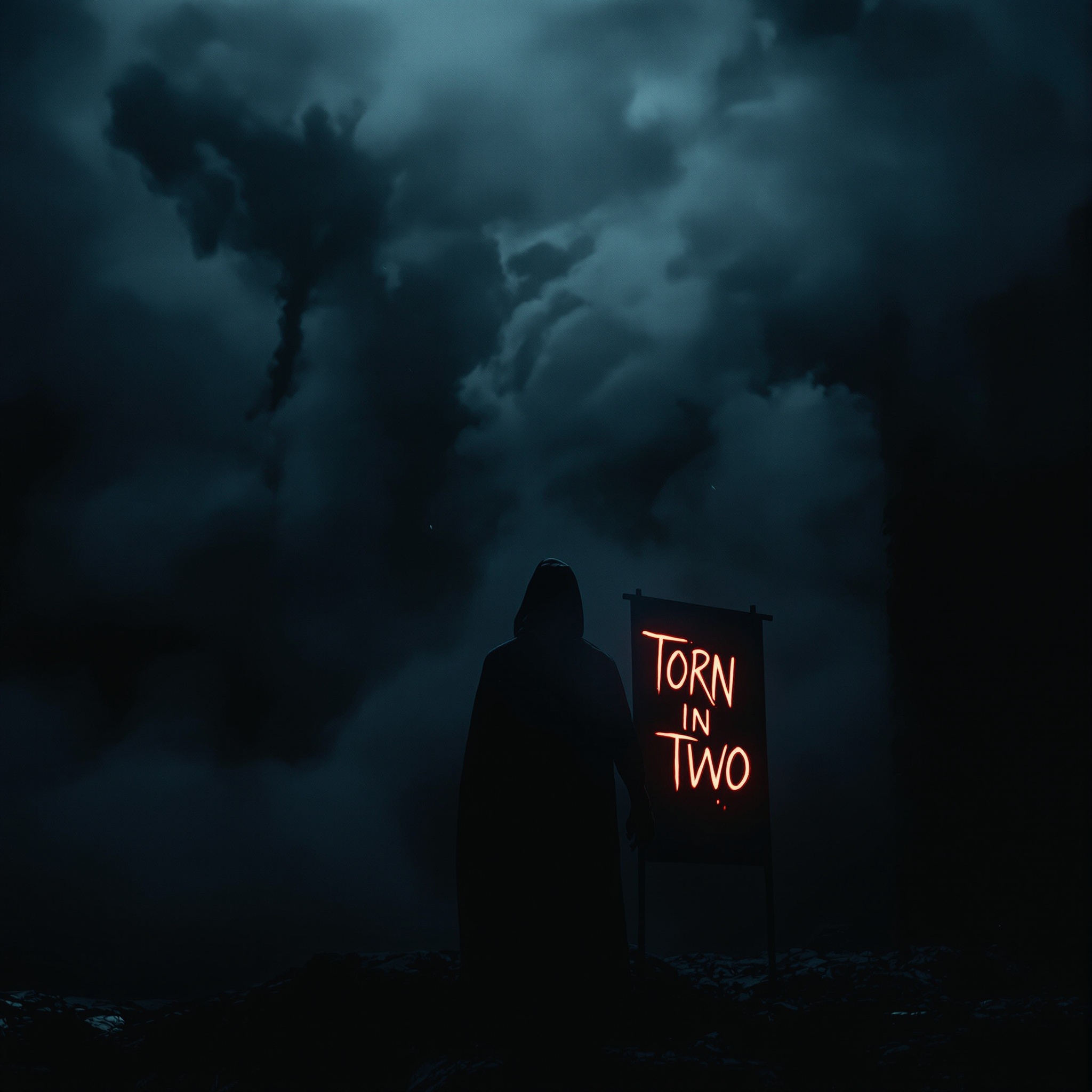
Torn in Two
Make this in Suno
Heavy riff-rock, Iron Age biblical drama, cinematic score-rock. Male high tenor vocal straining into baritone, aggressive and declarative in the chorus, near-spoken in the verses, dropping to dry recitative in the bridge. Driving throne percussion as primary rhythmic engine, heavy distorted guitar riff with ancient modal tuning, no choir, dense string section sawing on minor intervals. Electric-adjacent drone beneath the verses, full riff detonation at chorus. No acoustic fingerpicking. Key center F-sharp minor, tempo 88 BPM. Production texture: raw, throne-room reverb, close-miked vocal in verses, wide in chorus. Strings swell and cut abruptly at bridge, leaving near-silence under the tribe-count. Final verse stripped to single guitar and a low string drone, vocal exposed and cracking. Atmosphere: the smell of new mortar, the scrape of sandals on limestone
Paste the style into Suno’s style field and the lyrics above into the lyrics box — the section markers and performance directives are Suno-ready.
Fire on Carmel
Make this in Suno
Showdown gospel-rock, biblical epic, modern worship-rock with cinematic orchestral weight. Deep baritone male vocal, prophetic sardonic delivery in taunts section shifting to full-chest declaration in hooks, crowd-roar congregational unison in coda. Full : driving electric guitar with raw midrange, no reverb-wash; toms and floor kick delivering a march-tempo pulse at 98 BPM in A minor; brass section at maximum presence — full trumpets and trombones doubling the hook phrases, final loud statement in the album's sonic arc. Cello and viola swell under the twelve-jar verse, building without resolution. No choir — choir stripped from this point in the album. Dry room sound, close-mic'd vocals, intimate despite the scale. Taunts section has a half-spoken rhythm, almost spoken-word over the pulse. Fire-fall coda: brass drops, bass drum single-strike
Paste the style into Suno’s style field and the lyrics above into the lyrics box — the section markers and performance directives are Suno-ready.
The Still Small Voice
Make this in Suno
Biblical worship, sparse devotional, modern sacred song, Iron Age narrative cantata. Male bass-baritone vocal, worn and near-spoken in verse sections, dropping to intimate whisper at the structural center, recovering to a low melodic line for the arioso close. Single steel-string acoustic guitar, spare and dry with no reverb wash in the negation sections — each strum deliberate, not decorative. One sustained low cello or bass string drone underneath the whisper moment, barely audible, like a frequency rather than a note. No percussion throughout. No electric instruments. No choir. The sonic texture is the album's most stripped point — following the full fire-and-brass of Carmel, this is the sound of everything removed. Room ambience only, close-miked, as though recorded in a stone cave. Slow tempo, 58 BPM, rubato in the recitative. Key of E minor, resolving to nothing.
Paste the style into Suno’s style field and the lyrics above into the lyrics box — the section markers and performance directives are Suno-ready.
Chariots of Fire
Make this in Suno
Psychedelic soul, sacred R&B, cinematic gospel noir, Iron Age biblical narrative. Male tenor lead, speech-song verses delivered almost spoken — liturgical cadence, barely melodic — erupting to full-throated soul at the whirlwind section. Hammond organ as foundational texture throughout, low and reverent in stop sections, swelling and distorted at the Jordan crossing. Mid-range hand percussion — darbuka or frame drum — enters at Stop II, builds through Stop III, detonates at the whirlwind alongside psychedelic string swells. Strings return briefly and dramatically for the chariot-of-fire moment, then withdraw; the closing gesture strips back to organ drone and the voice alone. No brass. Tempo approximately 72 BPM, key of E minor. Wide reverb on the vocal in the whirlwind section; dry and close in the three stops. Production texture: warm, ancient
Paste the style into Suno’s style field and the lyrics above into the lyrics box — the section markers and performance directives are Suno-ready.
Seven Times in the Jordan
Make this in Suno
Wry world-folk, Iron Age Near East sonic palette, oud as lead melodic instrument over a steady hand-percussion walking figure, single bowed string line (cello or viola) held mostly below the voice, bass-baritone male vocal moving freely between rhythmic speech and full-bodied song, dry room acoustic with minimal reverb, tempo approximately 72 BPM in a stately walking pulse that neither rushes nor mourns, D minor tonality with modal Middle Eastern inflections on the oud, recitative sections half-spoken over sparse percussion, aria sections open to fuller resonance with the string line rising, blocking hook sections percussive and declarative with the vocal landing hard on stressed syllables, coda strips to near-unaccompanied voice with only a low string drone beneath, no electric instruments, no Western pop production
Paste the style into Suno’s style field and the lyrics above into the lyrics box — the section markers and performance directives are Suno-ready.
Painted Eyes at the Window
Make this in Suno
Villainess art-pop, operatic pop, dark chamber pop, Iron Age biblical drama. Female contralto lead vocal — deep, ceremonial, imperious; the voice of forty years of command meeting its last morning. Sparse percussion rhythm track throughout, no full drum kit, only struck frame drum and low pulse suggesting chariot wheels on stone. Minimal strings — single cello line, dry, no vibrato, tracking the vocal in the ledger sections. The aria section lifts to a fuller contralto belt over thickening low-end pulse, then collapses back. No choir, no brass — the album has stripped them away; this track inherits silence. The blocking hook 'Who is on my side?' is the track's lone peak: contralto at full power, the rhythm doubled, then cut. The closing recitative is near-spoken over a single cello held note, no rhythm, no production lift — documentary silence. Key: F minor, decaying from G minor.
Paste the style into Suno’s style field and the lyrics above into the lyrics box — the section markers and performance directives are Suno-ready.
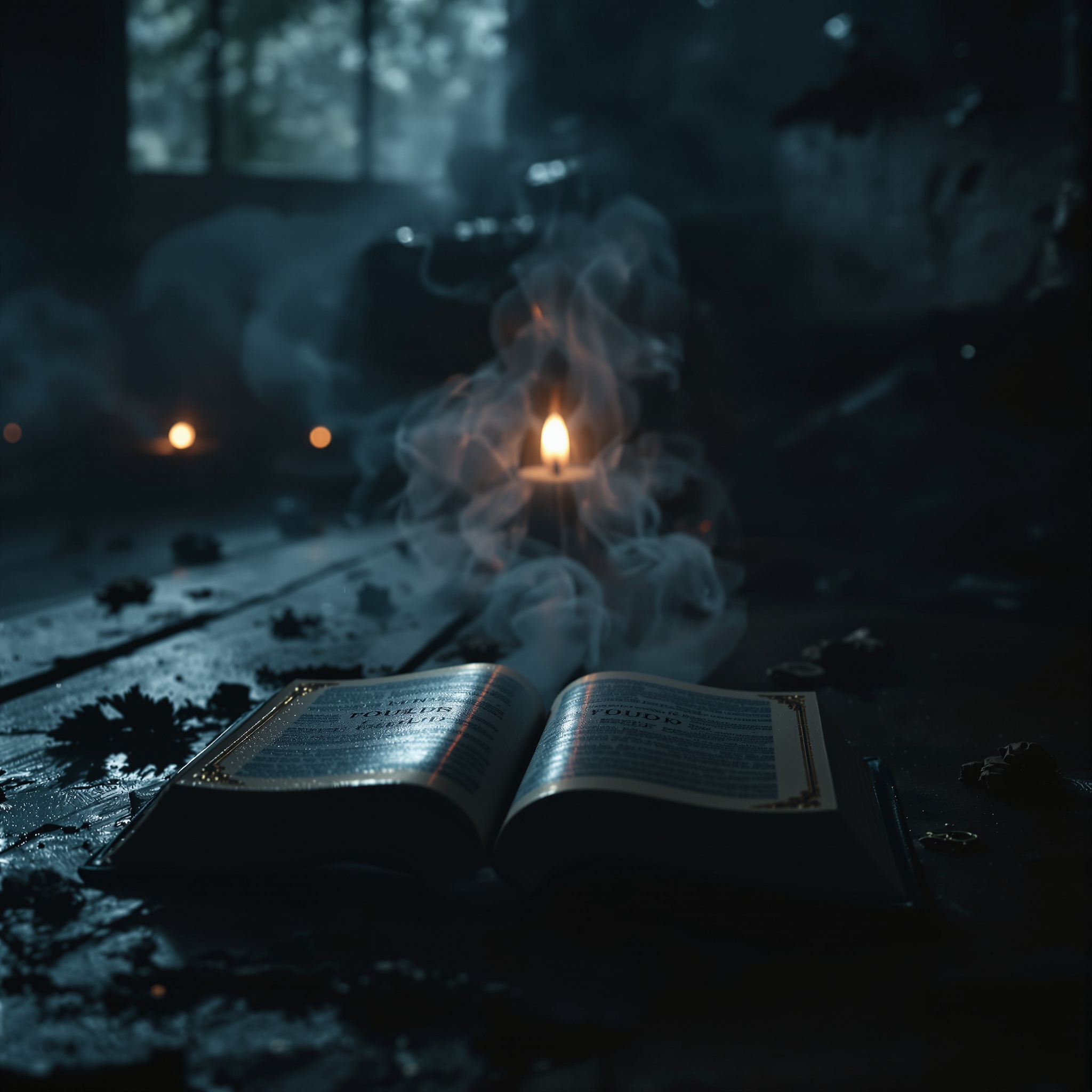
The Book Found in the House
Make this in Suno
Biblical narrative song, contemporary classical with folk undertow, Iron Age drama. Solo earnest lyric tenor, male voice, baritone-adjacent warmth in recitative sections, full lyric tenor in the aria, half-spoken urgency in the inventory purge. Instrumentation: acoustic fingerpicked guitar carrying the harmonic weight alone in verses, single cello entering for Huldah's aria with a sustained legato counterline, cello and guitar in unison for the inventory section with slight rhythmic urgency, both instruments holding a long open chord through the 8-bar instrumental bridge, returning stripped and deliberate for the two blocking hooks. No percussion, no ensemble, no choir — the decay arc is nearly complete. Sparse reverb, intimate room, close-mic'd vocal. BPM approximately 68, rubato in recitative passages. Key of E minor
Paste the style into Suno’s style field and the lyrics above into the lyrics box — the section markers and performance directives are Suno-ready.
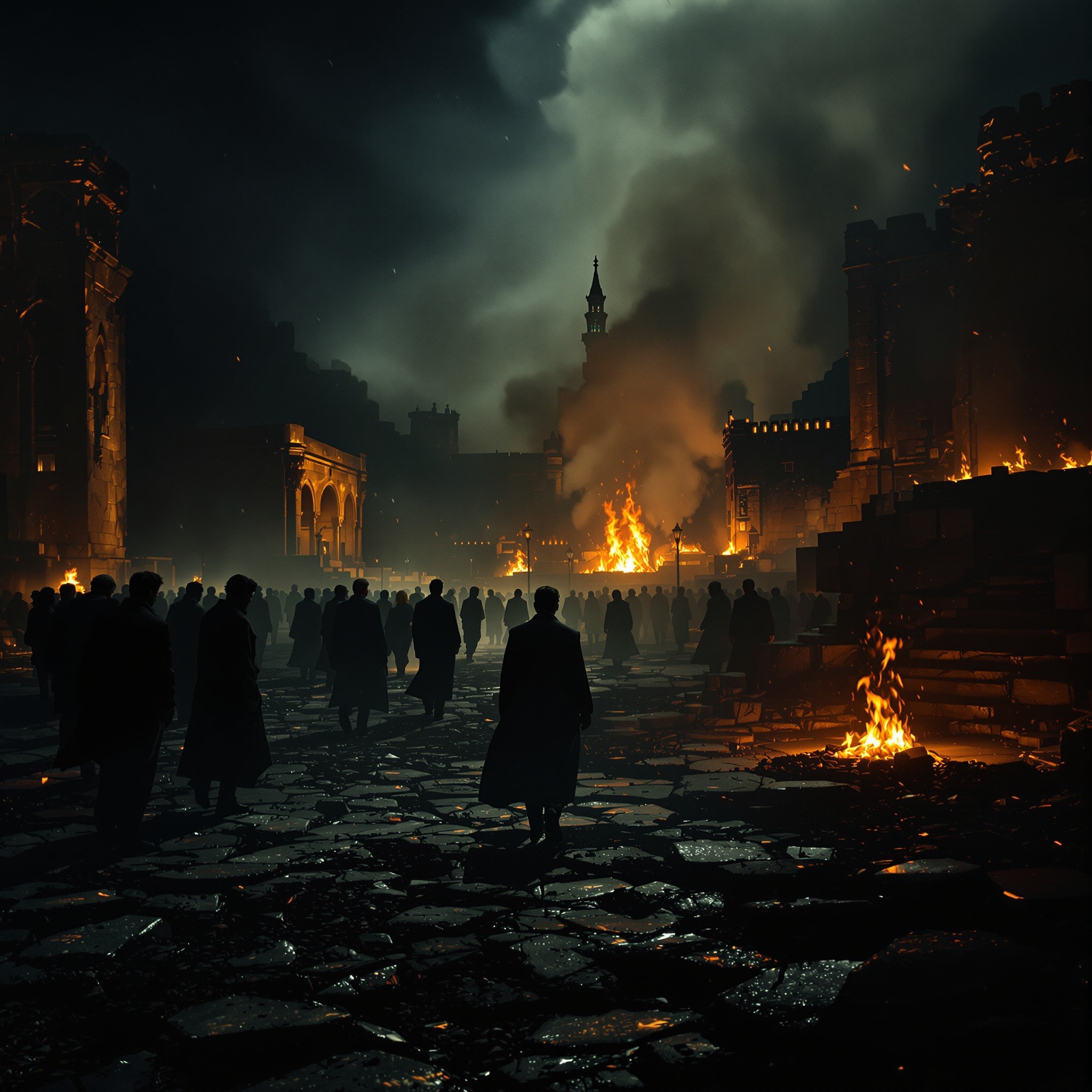
The Ninth of Av
Make this in Suno
Contemporary classical lament, sparse biblical reframe, single female mezzo-soprano voice, Iron Age Jerusalem setting, nearly bare acoustic arrangement, one sustained low cello or double-bass drone held throughout, occasional breath of room ambience, no percussion, no choir, no brass, no electric instruments, 50 BPM, 4/4 time, E minor or F-sharp minor tonal center, the voice moves from near-spoken recitative to sung declaration to whispered vow across 22 lines, extreme dynamic restraint — pp to mp, never forte, the drone barely audible beneath the voice, long silences between the three-line breath groups, the production texture of a woman alone in a ruined building speaking aloud to keep from disappearing, dry reverb suggesting stone and ash not cathedral, the voice slightly forward in the mix with the drone far behind, no melodic instruments except the single string
Paste the style into Suno’s style field and the lyrics above into the lyrics box — the section markers and performance directives are Suno-ready.
Next showcase album: The Grief Is Smaller Than the Room
One seed. A whole album of song-worlds.