Skip to content
← Showcase albums

Book of Voices - Volume 3

What does faithfulness look like when everyone does what is right in their own eyes?

Frontier acoustic — dry-room strings, goatskin stomp, campfire and battlefield. Opens martial (III.1: massed low strings + snare-brush), detonates at Jericho (III.4: the shout is the loudest single moment in the cycle), stills to Appalachian murder-ballad calm (III.8), passes through night-raid whisper (III.10), swagger-and-collapse blues (III.11–12), then the warm center: Ruth/Naomi/Hannah triptych at the cycle's slowest tempos (III.13–15, 63–54 BPM). Darkens toward the kingdom: crowd-chant menace (III.17), brooding unraveling (III.18), bright sling-folk (III.19), bittersweet covenant (III.20), coldest room: dark cabaret gothic (III.21). No electric unless disguised as weather, torchlight, or the supernatural (Endor only). Cell codes W/B/R/N/K/L govern arrangement-layer motifs; no cell name enters any lyric. Candidates C-22 (Cell B warm) and C-23 (grief apex) slot between their anchor tracks if shipped.

20 tracksone concept · one palette
Read it as a song-novel →
Book of Voices - Volume 3 Radio00 / 20

Loading…

0:00
0:00

Space play/pause · ← → seek 5s · J/L seek 10s · M mute · N/P next/prev
01 · Male vocalMartial frontier folk-rock
Strong and Courageous cover art

Strong and Courageous

Intro — Spoken
Moses is dead.
They keep saying it to me like I don't know.
I carried his tent poles forty years.
I know.
Aria I — Charge, First Pillar
Be strong: no man will stand against you all your days —
As I was with the one you buried, I am here.
I will not fail you, will not leave you on the way.
The word he carried up the mountain — you will carry near.
Verse — held low
I held the tent flap forty years.
I learned the weight of listening from outside it.
I know that voice the way a man knows weather —
from under a roof, through cloth, at a remove.
Now the voice that filled the tent
is speaking to the space where I am standing,
and there is no flap left to hold.
Aria II — Charge, Second Pillar
Be strong and very courageous: hold the word he wrote —
Do not turn to the right hand, do not turn away.
Say it in the morning, say it low inside your throat,
And wherever you set your feet, I have gone ahead this day.
Bridge — Dialogue Break
He told me once: "The people will do worse after I am gone.
But you will see the fords, and you will take them in."
Aria III — Charge, Third Pillar — Full Song
Be strong, rise up, every place your feet shall tread
Is given — I have said so — I have sworn it to your fathers.
The Jordan runs at flood stage — let the priests go in ahead —
I will not leave you. Go across. The living God has said it.
Coda — Spoken
I say it standing. I will say it standing.
Until the word takes root.

Make this in Suno

folk-rock, martial frontier, epic narrative, determined and resolute, acoustic guitars with orchestral strings and percussion, male baritone vocals with spoken passages, steady driving rhythm, 85-95 BPM, cinematic production with layered instrumentation, anthemic chorus, historical/biblical themes, gritty yet soaring texture

Paste the style into Suno’s style field and the lyrics above into the lyrics box — the section markers and performance directives are Suno-ready.
02 · Female vocalSmoky torch-song turning sacred
The Scarlet Cord cover art

The Scarlet Cord

Verse 1
Before the city woke I went to the sill
and knotted the cord the strangers left.
It was the color I hung for men before —
now I hang it for the God who found me first.
Refrain
Scarlet in the window
where the asking used to be.
Scarlet in the window —
I don't know if it knows me.
Verse 2
They said: tie it. When it starts, don't look.
I have my mother here, my brother's children small.
The cord is the same color it always was.
The city reads it the way it always did.
Let them read it wrong one final morning.
Refrain
Scarlet in the window
where the asking used to be.
Scarlet in the window —
I don't know if it knows me.
Bridge
I have heard what your God did at the sea —
the water standing, the kings going pale at the news.
The men of this city melt behind their wall.
I said it to the strangers plain:
your God is God — in heaven above,
on the earth beneath. There is no other room.
I hung my family on that sentence.
Verse 3
I have traded strangers' safety for my own.
I have given a city's secret for a cord.
I am inside the wall I know will fall,
waiting for a God to keep a word.
Final Refrain
Scarlet in the window
where the asking used to be.
Scarlet in the window —
and the God who dried the sea
knows the color of this thread.
Knows me.

Make this in Suno

Ancient-world folk narrative, sparse singer-songwriter, Bronze Age ballad atmosphere. Female alto vocal, intimate and half-spoken in verses, slightly open on refrain but never full-throated — restraint is the register. Single acoustic guitar, dry-room, no reverb on the strings, played close and unhurried. Low cello drone underneath the entire track, barely moving, a sustained pedal that holds the song in suspension. No percussion except the occasional soft stomp on the floor — organic, not metronomic. Torchlight acoustic ambience: the room is small and enclosed. BPM 58–62, in a minor modal key (Dorian or Phrygian feel, no resolution). Spoken section over bare cello only, guitar drops out. Final refrain slightly slower than the first two, cello opens into a wider sustain on the last line. Total texture: a woman alone in a room at night, one candle, stone walls

Paste the style into Suno’s style field and the lyrics above into the lyrics box — the section markers and performance directives are Suno-ready.
03 · Male vocalSlow processional, building awe
The Day the River Stopped cover art

The Day the River Stopped

The Jordan at barley-harvest runs to its brim and over —
I have walked this bank in seven years of camp
and seen the water take a sandal, take a goat, take a man
who leaned too far to fill his jar.
I know what flood-stage means.
I know the color the water turns
when the highlands upstream have been at rain for thirty days.
There is no ford.
And yet I was commanded: step in first.
Take the weight of what is holy, go down to the edge,
and when your soles have touched the water —
go.
And the priests remained on the riverbed.
I thought of the poles.
Cedar-wood in bronze rings — I know the sound they make
when the ark shifts, when the man on my left stumbles on a stone.
I have carried this burden through the camp that buried its dead in the desert,
through the long march down from Sinai and up through Moab's grief.
I know the ark.
I do not know what I was about to ask the ark to do.
My right foot went under.
The cold closed around my ankle like a hand that had been waiting —
and the water stopped.
And the priests remained on the riverbed.
Not slowly — not a fire dying down —
it stopped.
The roar became a wall —
became a hill of water to the north,
standing upright like a city wall that had no city behind it,
and underfoot the mud pushed back up solid,
and the reeds on either bank bent in the wind of a river
that was no longer there.
The man on my right had no face I recognized —
it was the face a man puts on
when he has seen something he cannot put back.
The poles pressed my shoulder.
The box was the box.
And the priests remained on the riverbed.
Then the people came.
All of them — the column that had been two thousand cubits behind us —
they came through on dry ground:
the elders, the armed men, the children clutching their jars,
the women with their bundles and the ones who had been children at the sea —
who had waded through on that far shore as small as a hand,
who thought the miracle had been given once and sealed —
and I saw one of them break open on the crossing,
a sound without a word,
and I understood: the God who stopped the sea for our mothers and fathers
is the same God whose box is on my shoulder
and whose river is a wall above my head.
And the priests remained on the riverbed.
Joshua called us out at last.
We came up from the riverbed into Canaan —
the ground beneath us had been dry.
I turned to watch the water fall.
It fell the way sleep falls on a child —
all at once, without argument, without remainder.
The Jordan was a river again.
The morning was a morning again.
And I was a man who had stood in the throat of the Jordan
and held a box while God held the river,
and I will spend the rest of my life
not knowing what to call the place I stood.
The maps will say: riverbed.
The maps were not there.

Make this in Suno

Through-composed liturgical folk narrative, Bronze Age processional, sacred dramatic monologue. Deep bass-baritone male vocal moving across speech-to-song spectrum — half-spoken recitative in opening strophes, full-throated resonant singing at the water's stopping, returning to near-spoken in the final strophe, ending in pure speech on a single word. Instrumentation: low cello and bass viol as processional foundation, goatskin frame drum entering only at the crowd's crossing and fading before the final strophe, sparse wooden flute in the upper register echoing between strophes, dry-room acoustic with minimal reverb except at the hill-of-water moment where brief natural cave reverb opens and closes. BPM approximately 52-58, processional weight. Key of D minor, resolving to neither major nor minor at the close. Near-silence between strophes — strings resolve and release. No electric.

Paste the style into Suno’s style field and the lyrics above into the lyrics box — the section markers and performance directives are Suno-ready.
04 · Male vocalBuilding march — rams' horns over near-silence
Seven Times Around cover art

Seven Times Around

A stone rang off my shield.
I kept the line.
That's all.
A woman on the wall laughed.
I fixed my gaze on the plain ahead.
I locked my teeth around the answer.
One circuit. The horns.
Then the air itself held still, the city behind us.
We did not turn.
Helek's son beside me
counted every step aloud.
By midday I said: stop.
I pressed my hand to the wall as I passed —
limestone, warm from the afternoon.
A wall is only stone that trusts itself.
Then I walked on.
Joshua came along the line at dusk.
Not: be ready.
Tomorrow: shout.
One horn.
Then every jaw unlocked at once —
the sound that tore from six circuits of stillness,
from the stone on Day One,
from the woman laughing,
from Helek's son counting,
from the warm limestone under my hand —
SHOUT IT DOWN.
SHOUT IT DOWN.
Six days dumb and then the horn.
My mouth opened before I chose it.
SHOUT IT DOWN.
The stone that hit my shield —
it's under the rubble now.
SHOUT IT DOWN.

Make this in Suno

Ancient frontier folk, sparse acoustic, biblical narrative, spoken-word-to-full-voice arc. Male baritone, dry close-mic'd delivery for Days 1–6, nearly spoken — rhythmic, controlled, no vibrato. Day Seven erupts to full chest baritone, raw and unpolished. Instrumentation: solo goatskin frame drum with brush-hiss pulse for Days 1–6; single sustained ram's horn drone low in the mix; dry room acoustics, zero reverb on vocal until the shout. At Day Seven the full band detonates — massed low strings, stomp percussion, ram's horn in full cry, dry-room hand drums doubling the pulse. BPM: 72 for Days 1–6, tempo doubles to 144 at the shout. Key: D minor resolving to D major at detonation. No electric instruments. Atmosphere: desert heat, limestone dust, controlled dread building to release. Dynamic arc: near-silence for six sections, then the loudest single moment in the album cycle.

Paste the style into Suno’s style field and the lyrics above into the lyrics box — the section markers and performance directives are Suno-ready.

05 · Male vocalCosmic stoner-rock, huge and strange
The Sun Stood Still cover art

The Sun Stood Still

We marched all night from Gilgal — uphill, in the dark,
five kings ahead of us and Gibeon calling.
We arrived at dawn to a battle already leaning —
God threw the first stones.
The hailstones did the counting while I herded them to the ridgeline.
I sealed the cave at Makkedah and told the soldiers: morning.
The Amorites were running but the dark was closing faster.
I marked the sun above Gibeon and told it: not yet.
Chorus
Sun, stand still over Gibeon —
Moon, in Aijalon's vale —
Sun, stand.
Sun, stand.
Aijalon burned long past where the sun had any right to be.
I've never asked for more sky than I could use — I used it all.
Jordan moved for the ark. Jericho moved for the shout.
Today the sky moved because I needed it.
Bridge
The sword arm tired.
The shield arm tired.
The sun did not.
And when it finally moved again I was standing
in the rust-red granite evening
of a man who'd had enough sky to finish what he started.
Final Chorus
Sun, stand —
And it did.
Coda
There has been no day like it, before or since —
when the LORD listened to the voice of a man.
Understand what I am telling you:
I did not command the sun.
I asked.
The difference is everything.

Make this in Suno

Cosmic stoner-rock, arena rock, ancient-world swagger. Deep male baritone, chest-dominant, gravelled and declarative — couplets delivered flat and authoritative, bridge fragments near-spoken, final chorus at full chest resonance. Open-tuned electric guitar disguised as weather: sustained golden-hour shimmer in D Mixolydian, no pick attack, just warm sustain pooling under each long couplet line. Goatskin stomp-drum on beats 1 and 3, brushed and wide. Wide-room reverb throughout verses and choruses — the sound of a valley in afternoon heat. Bridge pulls dry: sudden room collapse for three staccato fragments, then reverb floods back for the 35-word run-on sentence. Final chorus: full room, full resonance, no additional instrumentation — the guitar holds one chord while the voice lands the two-word confirmation. BPM approximately 72, slow march tempo. Key D Mixolydian.

Paste the style into Suno’s style field and the lyrics above into the lyrics box — the section markers and performance directives are Suno-ready.
06 · Male vocalLegacy hymn, front-porch gravity
As for Me and My House cover art

As for Me and My House

We came to Shechem with the sun behind us,
the oak of Moreh pressing down its shade.
The tribes fell into their old arrangement —
I read the wanting in them like a coming storm.
I had walked to Jordan's edge at full flood height.
I had called the sky to hold the light in place.
But standing there at Shechem in the evening
I saw what they were fitting to my face.
Not hunger for the God who split the river.
Not the awe of walls that buckled to a cry.
Their eyes were sliding off the God who brought them
toward anything with shoulders they could see.
So I crouched down in the dirt, an old man
leaning into the thing he needs his body for —
these knees crossed Jordan; let them speak once more —
and I dragged a line across the threshing ground there,
one slow groove pressed into the threshing floor.
I told them what He did along the way here,
the ones we crossed and the ones who fell between,
all the way to Shechem in the autumn scatter —
every mercy they had witnessed and not seen.
Then I set the stick down in the dirt before them,
straightened up the way old soldiers have to do.
I can only answer for this household now —
I set the stick down knowing they'd agree,
and knowing what agreement costs by morning.
Bridge
CHOOSE.
Choose this day whom you will serve.
As for me and my house —
we will serve the LORD.

Make this in Suno

Legacy hymn, front-porch gravity, sacred Americana, ancient Near East acoustic. Solo aged baritone male vocal, gravelly and deliberate, near-spoken in verses, rising to full-voiced testimony in quatrains IV–V, dropping to intimate speech at the bridge and spoken finale. Instrumentation: single steel-string acoustic guitar, dry-room recording, minimal reverb, no pedal steel, no drums — the stomp of an old man's boot on packed earth is the only percussion. Sparse high-register guitar fingerpicking beneath the verses, dropping entirely under the bridge and spoken close. Tempo: slow processional, 58 BPM, in 4/4 but with the feeling of a man choosing each step. Key of D major resolving to its relative minor at the bridge. Atmosphere: late afternoon light on a threshing floor, the oak's shadow stretching. Dynamic arc: intimate and near-speech through verse I–II

Paste the style into Suno’s style field and the lyrics above into the lyrics box — the section markers and performance directives are Suno-ready.
07 · Female vocalFierce prophetess war-folk, stomping
Wake Up, Deborah cover art

Wake Up, Deborah

Awake, awake, Deborah —
awake, awake, utter a song.
Stars in their courses fought for us.
I know how this ends.
I was there when it began.
I was not there when it finished.
Hear, O kings: sit and listen.
I am a mother rising in Israel.
Barak rose when I spoke, and would not rise alone.
Issachar's captains at my word.
The princes of Zebulun, Naphtali;
they risked their lives on open ground.
But the tent-peg — that was not me.
The milk she poured — not mine to give.
Jael's hand. Jael's hammer.
The glory stopped at a tent I never entered.
Refrain
She struck. He fell. Not my hand — hers.
Blessed above women be Jael —
blessed in the tent she keeps.
I sang the stars wheeling into war:
the stars fought from heaven,
from their courses they fought against Sisera.
I sang the Kishon sweeping chariots.
I called the mighty from Ephraim's hills.
The river rose and did what I could not.
And who stood at the threshold open?
Not the general. Not the prophet.
A Kenite woman with a plate of milk.
She covered him — and then she finished it.
I called Sisera's doom in the open field.
Jael called no one.
Refrain
She struck. He fell. Not my hand — hers.
Blessed above women be Jael —
blessed in the tent she keeps.
Before any of this,
I sat under the palm tree they named for me,
and I thought: the LORD needs a sword.
And I thought: the LORD needs a general.
I was wrong both times.
He wanted a threshold. A cup. An iron peg
drivers press into hill-country soil.
He wanted what a household keeps on hand.
Refrain
She struck. He fell. Not my hand — hers.
Blessed above women — blessed above all —
the tent she kept, the war she won.
Not my hand. Hers alone.
I know that now.

Make this in Suno

Fierce prophetess war-folk, stomping Biblical Americana. Female mezzo-soprano lead, declamatory chest voice, full proclamation register in call sections, dropping to raw near-speech in response sections. Goatskin frame drum dominant, hard foot-stomp on the downbeat, layered handclap on two and four. Low droning strings (open-tuned fiddle, no vibrato) hold a pedal throughout verses; production strips to drone-only on response sections for maximum contrast. No fingerpicked guitar lead — rhythm section drives. BPM approximately 96, driving and march-like. Key of D minor modal, Dorian flavor. Dry room acoustic with slight cave resonance — no reverb wash. Chant-ready chorus with room for group echo on 'she struck, he fell.' War-camp atmosphere, torch-lit, smoke-hazed. Dynamic arc: full stomp on call, stripped drone on response, spoken bridge with single fiddle

Paste the style into Suno’s style field and the lyrics above into the lyrics box — the section markers and performance directives are Suno-ready.
08 · Female vocalAppalachian murder ballad, deadly calm
The Tent Peg cover art

The Tent Peg

He came to me with dust coating his face,
his generals scattered to the reed.
I said, come in, my lord, turn here to rest;
the mat was laid for any guest in need.
He asked for water; I brought richer fare,
a bowl of milk, a mother's pour.
He said: stand in the opening, turn them from the path.
I tucked the covering close once more.
He slept the way a man sleeps when he's sure
no harm will come through goat-hair walls.
I watched his chest, the rise and fall of a man
who trusts a roof and never falls.
The peg was where I put it in the spring
when we drove this tent against the hill.
I lifted the hammer from beside the mat.
The acacia past the flap hung still.
I drove the peg through temple into earth.
He never woke; I set the hammer down.
I straightened up and listened to the birds.
The valley held no other sound.
Bridge
The milk was in the bowl from morning pressing,
the mat was laid along the eastern wall,
the covering folded at the foot for guests,
and the peg and hammer, where they always live
in any tent that's staked against the wind.
When Barak came along the valley road
searching for the man he'd chased,
I walked out to the light where he could see:
come in, I said, and don't make haste.
Deborah sang of chariots and kings,
she sang my name above the highest tree;
I kept what I had; I used what I made.
The song is hers. The tent belongs to me.

Make this in Suno

Appalachian murder-ballad, acoustic folk, ancient Near Eastern inflection, single-voice narrative. Female alto vocal, melodic-monologue delivery, conversational and unhurried — zero vibrato on the flat declarative lines, minimal sustain on domestic images. Single dry-room acoustic guitar, slightly detuned open-D, no reverb beyond the room's natural decay. No percussion. No harmony vocals. No bass. Tempo fixed at 58 BPM, UNWAVERING — the calm is the horror. Key of D minor. Sparse fingerpick pattern, one note per syllable on verse lines, slight arpeggiation on bridge only. Room ambience: close-mic'd, intimate, the sound of one person in a small enclosed space. Tonal character: the album's Appalachian murder-ballad register, quieter than the battle tracks, denser than Ruth's warmth. No dynamic arc — the volume holds constant from first line to last.

Paste the style into Suno’s style field and the lyrics above into the lyrics box — the section markers and performance directives are Suno-ready.
09 · Male vocalAnxious folk, wry
Threshing in the Winepress cover art

Threshing in the Winepress

Verse 1
The angel showed up under the oak at Ophrah —
said, "Mighty man of valor."
I looked behind me.
There's nobody there.
I'm threshing wheat in a winepress.
That's a hole in the ground.
I put it there so the Midianites ride past
and take someone else's harvest instead of mine.
Mighty.
So I said: put the dew on the fleece,
leave the ground around it dry.
I'll call that a yes. I'll go.
He did it.
Wool soaked through. Ground cracked and pale.
Alright — wet fleece, dry ground — alright.
Verse 2
Except — and here's the thing —
I thought: maybe dew just settles on wool.
Maybe that's a wool thing. Not a sign.
So I said — and I want you to know
I said it very politely —
Do it the other way.
Just to be sure.
One more time.
Bridge
Test one: fleece wet, ground dry — yes.
Test two: ground wet, fleece dry — yes.
Test three...
I was out of fleece.
So I went.
Wet ground, dry fleece — alright.
Alright.
Verse 3
I'd already torn the altar down in the dark,
afraid of my father's house, afraid of the town.
Did it anyway.
Does that count?
I think that's the only question I've ever asked
that I already knew the answer to.
The angel sat there under the oak.
Patient.
Called me mighty again —
I think just to be irritating.
Or —
I think he was looking at the altar.
Outro
I know.
I know.

Make this in Suno

Anxious folk, wry talking-verse, Americana storytelling, Bronze Age frontier acoustic. Male tenor-baritone, dry sardonic delivery in speech-song sections, voice drops to quieter confession on sung verse. Reedy banjo carrying a syncopated two-beat rhythmic pulse — the instrument talks under the narrator's speech, not over it. Goatskin frame drum for stomp on the fleece refrain, minimal and dry. Sparse fiddle enters only on the sung verse, doubling the vocal line at low register. No reverb in the talking sections — dead room, close-mic intimacy, the listener is standing in the winepress with him. The bridge spoken over silence: banjo drops out, drum drops out, voice alone on the two-column list, then the comic pause, then 'I was out of fleece.' Final outro near-unaccompanied — single banjo chord, sustaining, under two spoken words. BPM: 88 in verse, drops to 72 for sung verse and outro.

Paste the style into Suno’s style field and the lyrics above into the lyrics box — the section markers and performance directives are Suno-ready.
10 · Male vocalNight-raid percussion
Three Hundred Torches cover art

Three Hundred Torches

I was chosen for the way I drink —
lapped water off my palm like the dog I am.
The others knelt. I crouched and kept my eyes up.
Gideon looked at how I drink and said: come.
Two hundred and ninety-nine
who also drank wrong —
we are standing in the dark
with our jars.
The torch is burning the clay into my fist.
My sword-hand is full of clay.
Gideon doesn't want us drawing steel.
The war is not that war.
You cannot hold a jar and a sword.
That is the entire strategy.
He said it into the dark like he was sure:
the LORD has given the camp into your hand.
I looked over my shoulder when he said it.
Gideon blows —
I blow —
A sword for the LORD —
A sword for Gideon!
A sword for the LORD —
A sword for Gideon!
For the LORD —
For Gideon —
For the LORD —
Coda
I never drew steel.
The jar broke.
The light came out.
That was enough.

Make this in Suno

Ancient Israelite frontier acoustic war-ballad. Dry-room goatskin hand drum holds a single unresolved pulse throughout — no release, no fill. Sparse low cello drone underneath whispered verse sections; no melody, only pressure. Male tenor vocal begins half-spoken, barely above breath — rhythmic speech over the pulse, intimate and frightened. Single clay-pot strike or hand-percussion accent marks each verse break. At the war-cry moment: full-band detonation — massed low strings, goatskin stomp doubled, shofar-adjacent horn blast, the jar-smash is a percussive crack in the recording; the shout is raw, unprocessed. Echoes diminish by removing instruments one at a time: first echo loses strings, second loses drum, third is single voice only, no reverb. Coda: complete strip to one male voice and one held cello tone. No electric instruments. No vibrato. Dry room, close mic.

Paste the style into Suno’s style field and the lyrics above into the lyrics box — the section markers and performance directives are Suno-ready.
11 · Male vocalSwaggering blues-rock
The Riddle and the Razor cover art

The Riddle and the Razor

Out of the eater, something to eat.
Out of the strong, something sweet.
Verse 1
Thirty linen suits, thirty changes of clothes —
answer by the seventh day, or that's how the wager goes.
I killed the lion on the Timnah road in the bloodstained dust,
and the bees moved in by morning — you won't understand.
What I carry, I didn't ask for. What I lift, it doesn't tire me.
At Lehi I picked up a jawbone and stacked a thousand into the dirt beside me.
Chorus
Out of the eater, something to eat.
Out of the strong — something sweet.
Honey in a carcass — go ahead and explain.
I am the answer. I can't say my own name.
Verse 2
I lit three hundred foxes at the tail and watched Philistia burn —
they came for me at Lehi and I picked up what I didn't earn.
The ropes of Judah peeled off me like flax in flame.
I am the kind of trouble that keeps walking after every rope.
Ask me why I'm standing here and I'll give you a boast.
Ask me what I'm made of — watch me change the subject fast.
Chorus
Out of the eater, something to eat.
Out of the strong — something sweet.
Honey in a carcass — go ahead and explain.
I am the answer. I can't say my own name.
Bridge
I found the honey in the body of the lion I tore.
I put my fingers in the dead — I ate, and said no more.
The sweet came from the slain.
I didn't tell my father what I'd touched along the Timnah road.
There is a thing inside this gift that does not answer when I call —
at Ramath-lehi I threw the jawbone down and watched it fall.
Ask me what I'm made of — watch me change the subject fast.
Out of the strong — what is breaking?
Out of the gifted — what is taken?
Outro
I shook myself awake the way I always had.
I did not know.
I did not know the LORD had gone.

Make this in Suno

Swaggering blues-rock, D Mixolydian, BPM 96, driven by slide guitar with thick brass stabs on the chorus downbeats — trumpet and trombone in unison, punching between phrases rather than sustained. Dry-room goatskin stomp on 2 and 4, no reverb on the kick, intimate and aggressive. Deep male baritone vocal, chest-dominant, declarative delivery with zero vibrato in verses; chorus chanted with full-band locked groove. Verse production sparse: slide guitar + stomp + bass, voice riding dry. Chorus detonates: brass enters, stomp doubles, vocal forward and percussive. Bridge strips to slide guitar alone, no percussion, slower tempo, the instrument doing the breathing the voice won't. Final riddle: one stopped string, near-silence, baritone nearly spoken. Bronze Age battlefield grit meets Memphis juke joint. Raw, hot-room recording aesthetic — 1970s analog warmth without studio polish.

Paste the style into Suno’s style field and the lyrics above into the lyrics box — the section markers and performance directives are Suno-ready.
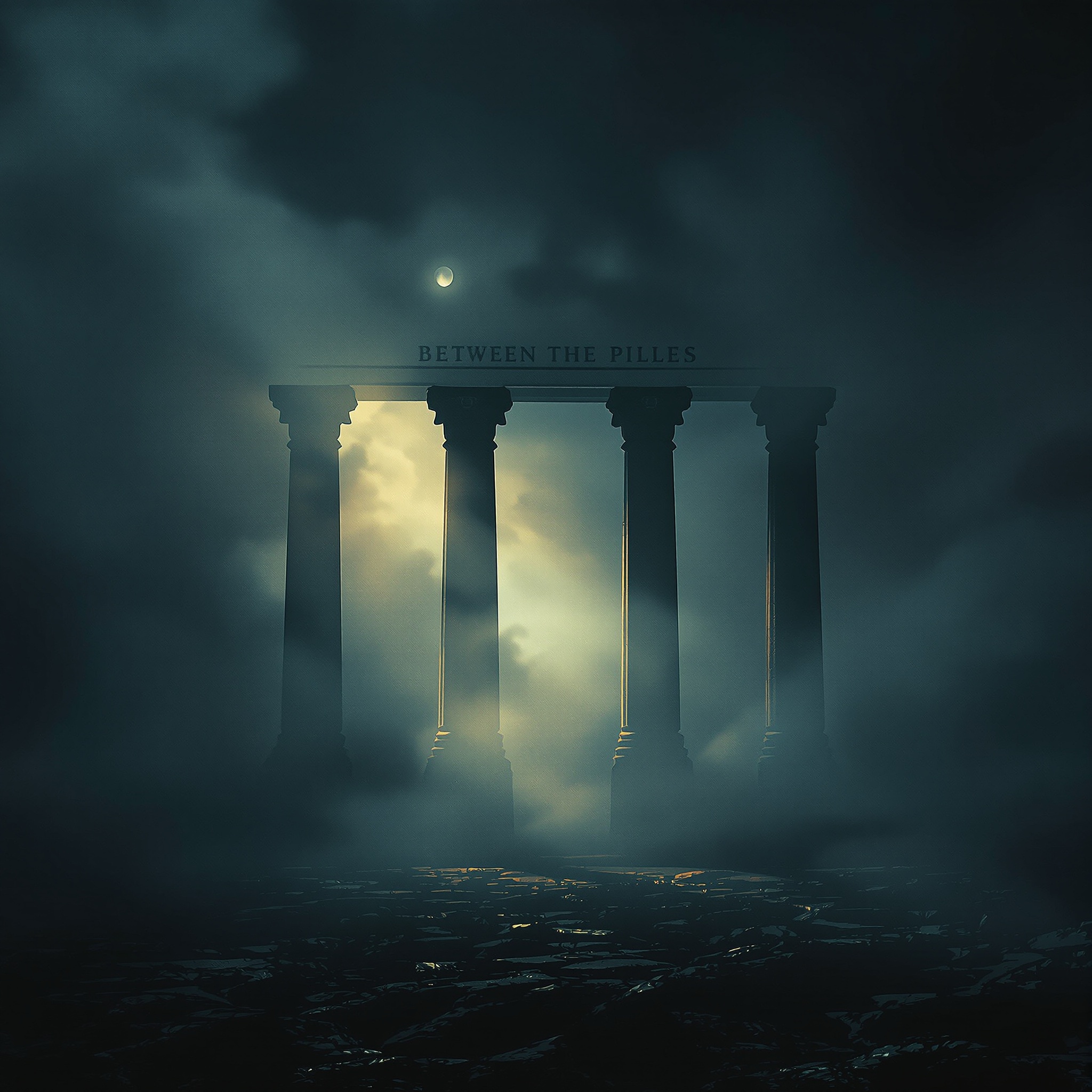
12 · Male vocalDoom gospel, blind and massive
Between the Pillars cover art

Between the Pillars

I tore a lion open in the Timnah road's dust
and left it in the ditch and said nothing, asked for nothing.
I drove three hundred foxes, torches tied tail-to-tail, into the standing wheat,
and the smoke rose before anything I'd prayed.
I carried the gates of Gaza up the hill before the sun — weight against my ribs,
forty men watching from the walls, and I left them watching.
I thought the answer wore my shape,
and I never stopped to ask whose strength I was carrying.
She asked me seven times and I gave her seven walls.
The eighth time I was too tired to lie again.
The millstone rope has worked a groove into my chest
where the vow I never chose once lived.
They put me behind the oxen and I walk in circles now,
limestone against limestone, Gaza laughing overhead.
I can't see the other prisoners.
I hear them cough at the second watch.
The sound the mill makes doesn't change
whether the grain is wet or dry.
I count the rotations.
I have stopped counting.
My mother kept the vow.
I kept the strength.
I thought they were the same thing.
The hair is growing back.
I don't know what that means.
God of my father,
I never asked You for anything.
I am asking now.
One more time.
Only this once.
Let me find the pillars.

Make this in Suno

Doom gospel, ancient folk oratorio, Bronze Age liturgical, slow dirge, 52 BPM, deep baritone male vocal speaking-on-pitch, voice descending register strophe by strophe, near-monotone in middle section, final prayer near-spoken over near-silence. Doom gospel organ sustained and unresolved throughout, goatskin frame drum pulse on downbeats only, dry-room low string drone fading strophe by strophe, millstone rhythmic undertone in percussion layer, no melody in the conventional sense — vocal rides the groove of speech rhythm. No electric instrumentation. Arrangement strips one layer per section: full organ and strings in opening, strings out by middle strophe, organ alone by penultimate strophe, single organ chord held without resolution under final prayer. Room sound: stone chamber, medium reverb, dry on vocal, ambient on organ. Atmosphere: exhausted, monumental, intimate failure.

Paste the style into Suno’s style field and the lyrics above into the lyrics box — the section markers and performance directives are Suno-ready.
13 · Female vocalTimeless covenant ballad, wedding-canon register
Where You Go cover art

Where You Go

Orpah turned. I watched the road take her.
I did not call. I did not follow on.
She was not wrong. That is the thing to say first —
the road she took was the road that made sense.
I pressed my feet into the dust to stay there.
The sun hung quiet. The road was long.
Where you go, I will go.
Where you rest, I will rest.
Your people will be my people.
Your God — my God. Nothing less.
She told me: Turn. She said: I have no sons.
I watched the grief pull her shoulders slack.
She said: Go back to where your people run.
I reached — and pulled her cloak straight.
Where you go, I will go.
Where you rest, I will rest.
Your people will be my people.
Your God — my God. Nothing less.
Bethlehem rose in the barley's glow.
I did not know this city. Nor this God.
Just the road, and her. And I could go.
Just two widows on a borrowed road.
Bridge
I did not choose a God I understood.
I chose a woman with nothing more to give.
And maybe the God she carried in her grief
would find me in this dust and let me live.
Final Refrain
Where you go, I will go.
Where you rest, I will rest.
Your people stand at this gate now.
Your God — my God. Nothing less.
Where you die, I will die —
and the ground that takes you takes me next.

Make this in Suno

Frontier acoustic folk, biblical song-novel track III.13, warm center of a martial cycle, 63 BPM, unadorned female soprano near-spoken on verses, open and plain on chorus, cello sparse and dry-room bowed with minimum reverb, no vibrato in the strings, goatskin frame drum at quarter-note pulse barely audible beneath, no electric instruments, no percussion beyond the frame drum, the arrangement at its thinnest voicing in the cycle — two instruments only, voice and cello, with negative space between phrases, intimacy of a private vow spoken to one person in road-dust light, barley-field warmth in the key (D major, open tuning), the chorus vowels open and forward on go/rest/confess, bridge near-spoken flat declarative prose register, final chorus slightly warmer than first two iterations, Appalachian plainspokenness without ornament

Paste the style into Suno’s style field and the lyrics above into the lyrics box — the section markers and performance directives are Suno-ready.
14 · Female vocalGrief-country, sparse
Call Me Mara cover art

Call Me Mara

They put him in my arms at the threshing floor
while the barley dust hung thick above the stalks —
Obed, they named him, twice, like a seal set —
the women said it twice and said it plain.
His fists are folded tight as a walnut shell.
I have held a man's grip before this day.
The same ridge at the knuckle — Elimelech —
and I could not look away.
Call me Mara.
Not Naomi. Not pleasant. Not the name
you spoke into my hair that morning in the tent before Mahlon was born.
That woman walked out of Bethlehem with a husband.
She did not come back.
Ruth brought me through the barley fields as harvest
ended — I was the stone she had to carry in —
she set the sheaves down like I'd asked for none
and fed me like a kin.
They are lifting Obed up where you would have lifted him —
the women call it mercy, call it son —
I watch them lift their arms above their singing
and find I am —
I am not what they thought I would become.
They say the boy restores my life to me.
They say the LORD has not left me desolate —
I press him against the place grief settled
and the singing rises —
Mara.
Elimelech. The women name him servant,
name him living thread to you, somehow.
I hold the knuckle-ridge of your lost grip in this room
and the singing rises —
Mara.
Coda
His fists release. He breathes against my throat.
The barley dust has settled in the light.
I do not say the old name. But I feel it
pulling like a cord —
quiet, and drawn tight.

Make this in Suno

Grief-country, sparse acoustic lament, Appalachian-adjacent, Bronze Age pastoral texture, 54 BPM, key of D minor. Female contralto lead vocal, close-mic, speech-song spectrum — spoken sections near-monotone and unadorned, aria sections plain melodic with ABCB phrasing arcs, arioso sections pressing gently into unresolved harmonic space, whispered sections completely unaccompanied. Single acoustic guitar, nylon or gut string, fingerstyle with long sustain and minimal movement — one note where two might go. Sparse dry-room ambience, almost no reverb, the room small and close. Cell N harmonic lift prepared twice in the arioso sections and withheld — the resolution arrives in the guitar, not the voice. No percussion. No bass. No electric. Harvest-dust atmosphere: dry, still, intimate, the quietest room in the cycle.

Paste the style into Suno’s style field and the lyrics above into the lyrics box — the section markers and performance directives are Suno-ready.
15 · Female vocalAching mother's vow, folk-hymn
Lend Him to the Lord cover art

Lend Him to the Lord

I have come again to Shiloh.
The lamp is where I left it.
Eli is in his chair.
I don't look at Peninnah.
The curtain smells of cedar and old smoke.
I pressed my forehead once against the wool.
My lips were moving but I had no sound.
I poured out what the weeping couldn't hold.
I am not drunk, old man — I am not drunk.
I am a woman who has run out of measured grief.
I am a woman with a promise folded
small enough to fit inside a child not born.
If You will remember — only remember me —
and not forget the one who stands here asking,
and give my arms the weight I've begged to carry,
then I will bring him to Your house while his arms still reach for me.
I will bring him back before he learns to stay.
I have already measured out the linen.
I have already cut the cloth by feel.
A robe each year — that's all I'll keep.
A robe each year to say I didn't forget.
Each year a robe — a little larger than the last.
One more finger's width across the shoulder.
I'll measure what I'm missing in the cloth
and sew him taller than the grief was long.
Bridge
The strong man's bow goes slack.
The hungry ones are fed.
The barren woman bears her seven.
The mighty are brought low instead.
My mouth is open wide with joy.
No rock stands like my God.
He raises up the poor from ash.
He sets the humble on the throne.
I left him there with Eli.
He had not learned my face yet.
But I had sewn the robe already —
every stitch a year I'd come again.
Every stitch a year I'd come again.

Make this in Suno

Folk-hymn worship, ancient Near Eastern acoustic, female mezzo-soprano vocal, lullaby phrasing in verses with half-spoken intimacy, bridge rising to full-voice proclamation. Dry-room recording, close-miked, minimal reverb on verses. Instrumentation: sparse plucked lyre or oud doubling a low cello drone, goatskin frame drum entering only at bridge, single sustained string note beneath the little-robe stanza. No electric instruments. Tempo 56-60 BPM, slow lullaby pulse. Key of D minor. Dynamic arc: hushed and inward for spoken opening and lullaby verses, swelling to full acoustic texture at bridge, returning to near-silence for final lullaby. Atmosphere of lamplight and cedar, ancient sanctuary stillness. Vocal texture: warm, worn, intimate — no pop gloss, no melisma except on the bridge's sustained open vowels.

Paste the style into Suno’s style field and the lyrics above into the lyrics box — the section markers and performance directives are Suno-ready.
16 · Male vocalNight-wonder lullaby-folk in the sanctuary dark
Speak, For Your Servant Hears cover art

Speak, For Your Servant Hears

The lamp burned when I woke to my name —
one oil-wick, one room, the dark unmoving around me.
They say the word was rare in those days.
The lamp was almost out. It hadn't gone.
I went to Eli where he lay in the sanctuary
and said, Here I am — you called me.
He said, I did not call — go lie down, go lie down.
Speak, for your servant hears.
The lamp burned when I heard it again —
the same pull in the dark, the same word finding me.
I went to Eli a second time through the cold
and said, Here I am — you called me.
He said, I did not call — go lie down, go lie down.
Speak, for your servant hears.
The lamp burned when the third call came —
and Eli knew then what I did not yet understand.
He said, go lie down in your place —
and if the call comes again, say this:
Speak, for your servant hears.
So I lay flat against the stone and I waited.
The lamp put its light on the ceiling and held it there.
And the call came.
And I said what Eli told me.
And what was spoken
a boy's mouth was not made to carry —
Eli's house will fall.
His sons will not outlive the word.
I am doing a thing in Israel
that will make both ears tingle
in every ear that hears it.
I stayed flat against the stone until the light came.
I said nothing first.
And Eli found me and he said,
What did the Lord say to you —
do not hide it from me.
And I told him every word.
I did not hide any of it.
And Eli said,
He is the Lord —
let him do
what is good in his sight.

Make this in Suno

Night-wonder lullaby-folk, acoustic chamber intimacy, ancient sanctuary atmosphere, Bronze Age pastoral dark. Young male tenor, boy-voiced and clear in verses, dropping to near speech-song in the final section — no vibrato, no performance flourish, the voice of a child who has been coached and is executing the coaching. Single right-hand piano, oil-lamp flicker, pedal-restrained and sparse, repeating the same minimal phrase through all three runs like a wick that cannot be put out. Low cello drone, no vibrato, bowed long and held rather than phrased. Goatskin stomp enters on the third run only — one beat, one brush — then vanishes. The Listening section: near-silence, cello sustain only, piano absent. BPM 52-56, rubato permitted, the three runs breathe at the same pace so the repetition registers as formal, not lazy. Key of D minor, modal inflection toward Dorian.

Paste the style into Suno’s style field and the lyrics above into the lyrics box — the section markers and performance directives are Suno-ready.
17 · Male vocalOminous crowd-chant rock
Give Us a King cover art

Give Us a King

He told us what a king would take.
The sons who plow your barley rows —
he'll draft them to his iron wheels,
set them before the chariots of war.
Your daughters — working stone, drawing water,
pressing oil for officers they'll never meet.
Your finest fields, your vineyards, your olive groves —
he'll parcel them out to men who never sowed.
A tenth of your harvest.
A tenth of your flocks.
Every loss named like livestock at the gate.
And you will cry out on that day.
He said it plain as a man counting losses:
you will cry out —
and the LORD will not hear you.
Nevertheless.
Nevertheless.
Give us a king —
like all the rest.
Give us a king.
He told us: the king will take your oxen,
your donkeys, press them into his labor.
You will be his servants.
I heard this.
We all heard this.
He set it out like a settlement at harvest —
the loss side longer than the yield.
And we let him finish.
We let him finish —
and then we answered.
Nevertheless.
Nevertheless.
Give us a king to judge us —
let him lead us out to war,
like all the rest.
Give us a king.
I was there when the threshing floor went quiet.
I thought of Philistine iron,
the way their chariots split the hill country wide.
I thought: a tall man.
Someone tall enough to carry all of it.
Someone whose shadow might hold us
while we stopped shaking.
And my mouth moved with the rest.
I thought of Joshua at Shechem, old and dry,
who drew his line and said:
choose this day.
Choose.
We chose.
Nevertheless.
Nevertheless.
Give us a king —
like all the rest.
Coda
The lot fell where it fell.
Saul stood head and shoulders over all of us.
Just like we asked.
Nevertheless.

Make this in Suno

Ominous crowd-chant rock, ancient Near East folk-rock, dark ceremonial stomp. Deep male bass-baritone vocals, aged and sermonic, near-spoken in verses climbing to full-throated declaration in choruses. Dry-room acoustic percussion — goatskin frame drums, foot stomp, bone-dry snare brush. Low modal bass drone throughout, barely moving. No electric guitar; instead, bowed low strings sawing a minor modal figure. Crowd-chant backing vocals enter on chorus 2, swell on chorus 3, then strip away entirely for the coda. Sparse arrangement — the silence between drums is as loud as the drums. 68 BPM, deliberate and inescapable. Key of D minor Dorian. No reverb on the lead vocal — bone dry, close, confessional. Room reverb only on the crowd voices. Atmosphere: a verdict being read aloud in an open field.

Paste the style into Suno’s style field and the lyrics above into the lyrics box — the section markers and performance directives are Suno-ready.
18 · Male vocalBrooding art-rock
Hiding in the Baggage cover art

Hiding in the Baggage

Samuel's voice was crossing the field
and I was wedged in ox-yokes and sackcloth,
knees to chest,
listening to my name travel over the crowd
like something loose.
Benjamin. Matri. Saul.
Emptiness where Saul should be.
What do they see?
I heard them find me.
The crowd closed around my arm, pulling upward.
And I rose — God help me — I rose,
and the crowd made a sound I had never heard a crowd make before.
Not cheer. Closer to relief.
Relief — that is the sound a crowd makes
when it finds somewhere to put what it has been carrying.
It put it on me.
What do they see?
Head and shoulders.
That is the sum of it.
Head and shoulders above every man in Israel,
and they read it as sign,
and Samuel pressed oil into my scalp and I let him,
and I said nothing of what I knew —
which was: I know how to stand in a field. That's what I knew.
Which was: standing is all I had to offer.
Gideon tore his father's altar down
and he was afraid —
afraid and did it anyway.
I know that story.
That story. I pick it up. I cannot lift it.
What do they see?
Gilgal.
Seven days I waited for Samuel.
Troops bleeding away at the edges of camp,
Philistines massing,
the pass filling up with iron —
and I thought: the man who could save them
has to be the man who stays.
So I built the fire.
I laid the offering on.
I did what Samuel would have done
because Samuel wasn't there
and someone had to be.
I feared the people.
I obeyed their fear.
Not the same as Gideon.
Not the same.
Coda
He found me at the altar.
"Because you have not kept what the LORD commanded —
your kingdom will not continue."
And I had no answer.
Because I had known.
I had known since the sackcloth hung heavy.
What do they see?
I cannot name what they see.

Make this in Suno

Brooding art-rock, through-composed song-novel entry, sparse and descending. Deep male baritone, sermonic to near-spoken, register dropping section by section across the track. Opening: dry-room cello sustain and descending electric bass figure (played clean, no distortion, functioning as low strings). No snare in the first two sections — brushed kick only, barely present. Mid-song Aria: full low-string swell, cello and viola, with a single distorted guitar chord held long and releasing before the Gideon passage. Second Arioso: bass figure returns, stripped of strings, just cello and bass. Coda: single cello note, unresolved, held. Dry room acoustics throughout, minimal reverb, intimate and forensic. 58 BPM, D minor, 4/4 with occasional bar of 3/4 at the recurring self-question. Atmosphere: a man in a room too small for his height. Dynamic arc: 3 to 7 to 3 to 1.

Paste the style into Suno’s style field and the lyrics above into the lyrics box — the section markers and performance directives are Suno-ready.
19 · Male vocalYoung shepherd swagger-folk, sling-rhythm
Five Smooth Stones cover art

Five Smooth Stones

He calls me a dog.
Fair enough.
I've seen what dogs do to wolves.
Grab five from the brook where the water runs clear —
not one. A shepherd counts past his fear.
Forty days of that calling and the ridge line went taut;
the army reads iron. I'm reading God's will.
He measures the bronze, the spear, and the shield —
I measure the gap between him and the field
where the lion once waited and didn't get far —
I run at the giant. I run at the giant.
Run at the giant, sling wide in the air,
the giant took up half the sky standing there.
He filled up the valley with forty days of dread
and I ran right at him and aimed for his head.
Run at the giant, run at the giant —
the shepherd knows what the soldier forgot:
the tallest man standing is just a good shot.
He sees me and laughs — am I some kind of game?
He calls on his gods; I call on a Name.
He's draped head to ankle in bronze and in steel,
I've got a pouch full of proof and a deal:
your gods will forget Goliath before you hit the ground,
your gods can't carry your dead — that's the sound
of a valley gone quiet because it knows what's right —
I run at the giant. I run at the giant.
Run at the giant, sling wide in the air,
the giant took up half the sky standing there.
He filled up the valley with forty days of dread
and I ran right at him and aimed for his head.
Run at the giant, run at the giant —
the shepherd knows what the soldier forgot:
the tallest man standing is just a good shot.
Bridge
The sling makes five circles.
One for the bear. One for the lion.
One for the forty days.
One for the God who sent me.
One for the gap.
You come to me with sword, with spear, with javelin —
I come to you in the name of the LORD of hosts.
The stone takes the gap between bronze and the air,
the giant falls forward like he never stood there.
I lift up his sword — it's heavier than mine —
and the valley that sealed around that moment in time
cracks open with sound: forty days of their dread
become one shout of proof that the boy ran ahead.
The brook runs clear where I grabbed the five stones —
run at the giant. Run at the giant.
Run at the giant, sling wide in the air,
the giant took up half the sky standing there.
He filled up the valley with forty days of dread
and I ran right at him and aimed for his head.
Run at the giant, run at the giant —
the shepherd knows what the soldier forgot:
the tallest man standing was just a good shot.

Make this in Suno

Young shepherd swagger-folk, sling-rhythm acoustic, bright Appalachian folk with Bronze Age grit, uptempo 126 BPM in D major. Male tenor vocal, boyish and bright, half-spoken in verses, full chest declaration on chorus peaks, intimate spoken delivery on the spoken lines. Percussion-forward: goatskin frame drum with five-beat stomp-and-snap rotation as the primary rhythmic engine, the sling's circular motion encoded in the groove. Dry acoustic flatpick guitar on the couplets, sparse and percussive. High strung mountain dulcimer on the confrontation chorus for brightness and altitude. Single jaw harp drone through the bridge, then full stomp returns for the final chorus. No reverb on the spoken lines — close and dry. Short room reverb on the sung couplets. Wide open bright reverb on the confrontation chorus, valley-scale space.

Paste the style into Suno’s style field and the lyrics above into the lyrics box — the section markers and performance directives are Suno-ready.
20 · Male vocalCovenant-friendship ballad, bittersweet
The Arrow Beyond You cover art

The Arrow Beyond You

We said: if the shots fly long, it means go.
We said it plain, the way men say the hard thing plain.
I set the mark. You said you'd see and know.
The field between us bore what neither spoke again.
I scratched the compact in the dry grass — lines.
You asked if I was certain. I stayed mute.
My father's house stands at my back from here.
Tomorrow is the new-moon feast:
I know which seat will sit there empty,
and I know what my father will read in the emptiness.
The boy stands at the oak, the place I set.
I pull the first shaft back and feel the string.
The fletching burns a line across my cheek.
I loose it past the boy, past what I cannot see.
The second carries the whole of it:
a shaft can say what a man's lips cannot risk.
The third I do not aim. I release.
It reads the grass. The mark shows in the dusk.
Go, I told him. Fetch the shafts and go on home.
He scooped them up, a boy, unburdened, light.
He did not know the field was covenant soil,
the arrows past his reach, already out of sight.
You in the rocks. Me watching the boy leave.
What I throw past you I cannot keep.
My father's throne sits over what I hold.
We kissed farewell and wept. That was the covenant. That held.
Go in peace — the God of Israel keeps
the compact we have made, and God has heard.
I walk back to the house now, in the cold.
What I threw out there, I cannot call it back.
I won't.

Make this in Suno

Folk song-cycle, classical singer-songwriter, ancient Near Eastern pastoral. Lyric male tenor, warm and intimate, conversational-to-melodic delivery, restrained throughout with one near-spoken phrase at the arrow release. Fingerpicked acoustic guitar carrying the melodic line in open tuning, bittersweet string trio (two violins, cello) sitting just below the voice — never swelling above it. No percussion until the final movement's last quatrain, where a single frame drum enters at half-time, then drops for the final couplet. Room is dry with slight natural reverb as if recorded in a stone chamber. BPM 66, key of D minor. Atmosphere: late-afternoon field, the specific quiet after a decision, no resolution offered. Dynamic arc: intimate verse one, controlled verse two, near-spoken movement two center, the boy's departure in movement three dropping to near-silence

Paste the style into Suno’s style field and the lyrics above into the lyrics box — the section markers and performance directives are Suno-ready.