On That Glorious Day
A father's grief, faith, and the unbreakable thread between the living and the gone.
Begins sparse and intimate — fingerpicked acoustic guitar, a single piano note held like a breath. Slowly layers: strings enter at track 3, a choir breathes in at track 5, full orchestral gospel swell crests at track 7. Track 8 strips back to what track 1 had, plus one added voice. The sonic world is Southern gospel meets Americana hymn — warm, unhurried, analog. Reverb is wide but never cold; every instrument sounds like it was recorded in a wooden room. The production arc mirrors grief: silence → endurance → release → transcendence → return to stillness, transformed.
Loading…
Space play/pause · ← → seek 5s · J/L seek 10s · M mute · N/P next/prev
The Quiet After
Make this in Suno
Americana gospel through-composed ballad, sparse Southern hymn, intimate worship. Male tenor vocal, high register with natural falsetto break, half-spoken restraint building to cracked falsetto on vision sequence, dropping to near-spoken collapse in arioso section. Solo fingerpicked acoustic guitar, single sustained piano note held like an inheld breath, breath-wide analog reverb in a wooden room, near-silence production. No rhythm section, no percussion, no drums. Vast reverb tail, intimate close microphone on vocal with room ambience underneath. F-sharp minor. Slow unfolding tempo, rubato phrasing, no fixed pulse. Atmosphere: winter morning, frozen ground, a man alone at a small grave. Dynamic arc: cold arrival to reaching falsetto to physical collapse to broken silence. Southern Gothic warmth despite the cold. Recorded in one room. No production gloss.
Paste the style into Suno’s style field and the lyrics above into the lyrics box — the section markers and performance directives are Suno-ready.
Little Footprints
Make this in Suno
Southern gospel ballad, Americana hymn, slow grief register, 62 BPM, key of G major. Male tenor vocal, light and restrained in the verse — half-spoken, intimate, the quality of reconstruction; opens into full sung tone on the chorus, grief surfacing past restraint; bridge drops to near-spoken confession, quieter than the opening. Instrumentation: fingerpicked acoustic guitar carrying a slow arpeggiated pattern, single upright piano notes held long with natural room decay; cello enters on the first chorus with a sustained melodic line, warm and low, withdrawing for the bridge. Reverb: wide but not cold — wooden room, like a small rural church or a farmhouse parlor. No percussion. No electric instruments. Analog warmth throughout. Dynamic arc: verse intimate and contained, chorus opening with the cello's weight, bridge stripped to near-silence.
Paste the style into Suno’s style field and the lyrics above into the lyrics box — the section markers and performance directives are Suno-ready.
Her Mama's Eyes
Make this in Suno
Contemporary worship meets Americana hymn, sparse and interior. Female alto lead vocal, conversational and close-miked, half-spoken in verses, opening to full tone on refrain peaks. Single sustained organ note under the entire track, warm and analog, never cold. Solo cello enters midway through verse 2, carrying the melody the voice leaves behind. Minimal brushed snare enters at the bridge — distant, like a heartbeat in another room. Final refrain adds two to three female background voices, building from a whisper to a small choir on the final line, then releasing. No electric guitar. No rhythm section until the bridge. Reverb is wide but wooden — every sound recorded in a single room. BPM 58-62, key of D minor resolving to F major on refrain. Production arc mirrors the track's emotional position: begins almost silent, grows through the bridge
Paste the style into Suno’s style field and the lyrics above into the lyrics box — the section markers and performance directives are Suno-ready.
Why Did You Take Her
Make this in Suno
Gospel soul, Southern gospel Americana, raw testimony register, male baritone vocal, near-spoken verse delivery breaking into full-voice confrontation, no falsetto, no gospel runs, deliberate vocal plainness. Instrumentation: sparse fingerpicked acoustic guitar and single held piano note in opening, hard-hitting drums entering on second verse with controlled-distortion electric guitar channeling sanctified grit, bass sitting low and warm. Arrangement fractures completely before the final Silence section — full band drops out mid-phrase, leaving only breath and one piano note. Reverb is wide and wooden, recorded-in-a-country-church spatial quality. 82 BPM walking tempo. Key of D minor. Dynamic arc: intimate near-speech opening, explosive confrontational peak mid-song, catastrophic silence, then the quietest moment on the album at the close. Analog warmth throughout. No synthesizers.
Paste the style into Suno’s style field and the lyrics above into the lyrics box — the section markers and performance directives are Suno-ready.
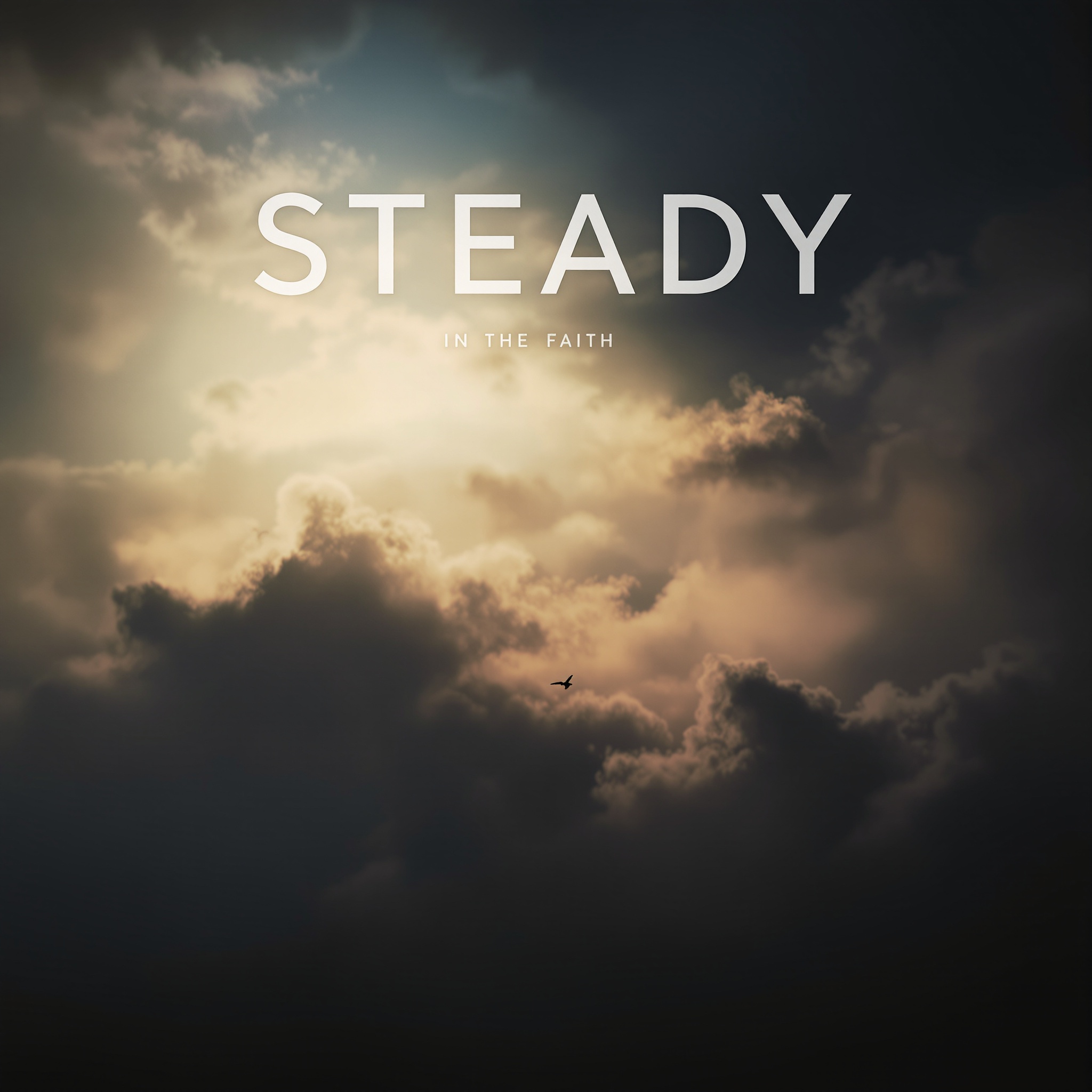
Steady in the Faith
Make this in Suno
Southern gospel anthem, contemporary Christian music, Americana hymn, acoustic-orchestral, Track 5 of 8 in a grief-arc album. Male baritone-tenor, compressed speech-song in verses breaking into full sustained chest voice on chorus; spoken bridge at the edge of breaking; final chorus rises to congregational fullness. Full band: fingerpicked acoustic guitar and single sustained piano note in verse, bass and brushed drums entering at pre-chorus, gospel organ swell building through chorus, full orchestral gospel detonation at final chorus with small choir breathing underneath the final 'We still believe.' Warm analog reverb — large wooden room, not cathedral cold. Wind-through-pines ambient sound present in every section, sometimes background texture, sometimes foregrounded between lines. BPM approximately 68, key of G major. Dynamic arc: intimate restraint in verse
Paste the style into Suno’s style field and the lyrics above into the lyrics box — the section markers and performance directives are Suno-ready.
The Dream I Keep
Make this in Suno
Dreamlike contemporary chamber-folk elegy in D minor, around 58 BPM, free and spacious. Weathered male baritone, extremely close-miked, delivering the fragmented verses in stunned near-speech, with brief melodic openings
Paste the style into Suno’s style field and the lyrics above into the lyrics box — the section markers and performance directives are Suno-ready.
When Our Time Comes
Make this in Suno
Gospel Americana, Southern gospel meets orchestral Americana hymn, Track 7 of 8 full-production peak. Female mezzo-soprano vocal, warm roughened grain, opens in near-spoken urgency building to full-throated gospel release, final chorus expands to near-choral weight. Full gospel orchestra: strings swell from underneath verse 1, brass enters at chorus, piano anchors throughout, choir breathes in on second chorus, full orchestral gospel detonation at final chorus. Drums enter at verse 2 with R&B gospel swing, kick and snare wide and warm. Bridge is purely instrumental — strings and choir carry the silence, no vocal. Production is warm analog wooden-room reverb, wide but never cold. Tempo 92 BPM with gospel swing feel. Key of G major. Verse production intimate and driving, chorus erupts to full orchestral gospel swell, final chorus layers congregational choir behind the lead.
Paste the style into Suno’s style field and the lyrics above into the lyrics box — the section markers and performance directives are Suno-ready.

On That Glorious Day
Make this in Suno
Americana gospel hymn, Southern sacred music, warm analog recording, wooden room acoustics, wide reverb never cold. Male baritone lead vocal, aged and warm, half-spoken verse opening, full-voiced chorus release, near-whispered final chorus. Instrumentation: solo fingerpicked acoustic guitar and single sustained piano note through verses, the piano carrying the harmonic weight; no rhythm section until the bridge. Modal tonality — Dorian or Mixolydian, neither pure major nor minor, carrying the hymn's unresolved ache. On the final chorus only: a distant SATB choir enters softly, as if heard through a wall or across a field, blending with the baritone rather than lifting above it. Sparse, unhurried, 58-64 BPM. Production is intimate and still — the sound of one man in a room before dawn. No drums, no bass, no electric instruments. The acoustic guitar is close-miked with room tone.
Paste the style into Suno’s style field and the lyrics above into the lyrics box — the section markers and performance directives are Suno-ready.
Next showcase album: The Grief Is Smaller Than the Room
One seed. A whole album of song-worlds.