Every Moment Chosen
A father's last freedom: the meaning he makes inside the unmakeable.
A father lights candles on Friday night, holding his family in the small circle of their ritual—but the world outside has already written its decree. As the order arrives and the boots approach, he moves through impossible choices: what to carry, what to leave, what to remember. Transported in a cattle car, separated from his wife by a gesture of an arm, he survives by pressing a stone in his pocket until it grows warm, by keeping count of a boy's face, by refusing to let the machinery of erasure have the final word. In the camps and after, he returns to the apartment where her laugh still echoes, where the nail in the doorframe once held the mezuzah, where the photograph worn soft at its edges becomes his only proof that she existed. The album ends not with rescue or restoration, but with a man choosing—as he chose every moment of his captivity—to pass forward what was given to him: the knowledge that he stood before a boy and chose him, and that choosing, once made, cannot be unmade, burns on in everyone who loved him, in everyone who remembers.
Loading…
Space play/pause · ← → seek 5s · J/L seek 10s · M mute · N/P next/prev
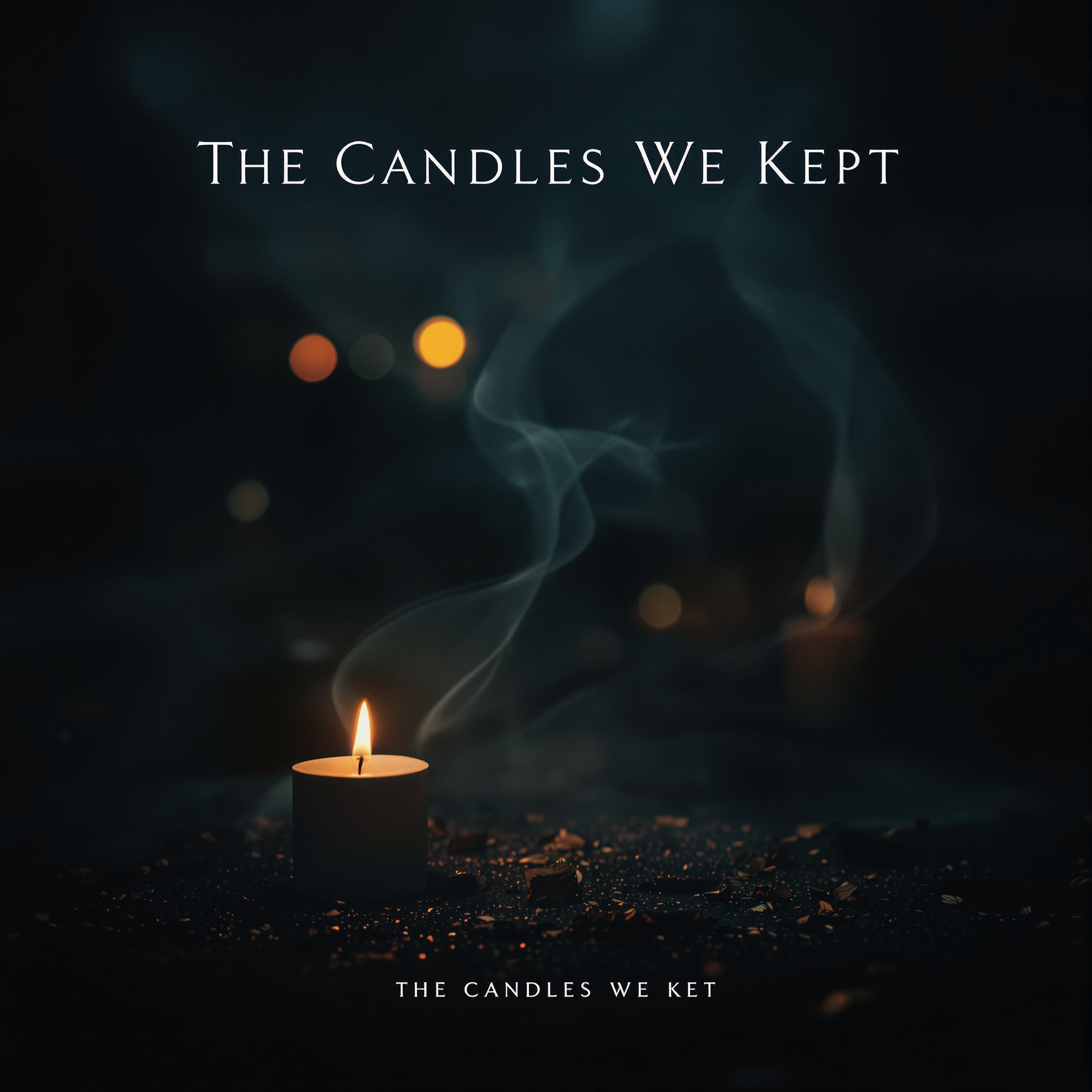
The Candles We Kept
Make this in Suno
Chamber folk, klezmer-inflected, Vienna 1942 period warmth. Duet vocal — male lyric tenor and female mezzo-soprano, intimate and unhurried, voices finding the same melody from different directions rather than harmonizing over each other. Acoustic guitar present but subordinate, providing gentle rhythmic pulse beneath the cello. Cello carries the primary melodic line, bowed slowly and warmly, breathing between phrases to let the lyric land. Klezmer clarinet enters sparingly as ornament — a single curling phrase after the refrain, retreating before the next verse begins. Candlelight piano in the low-mid register, sustaining chords rather than arpeggios. No percussion. Room acoustic: small, warm, close-miked, like a domestic dining room with one east-facing window. Reverb minimal — intimate, not cathedral. Tempo: ballad, 4/4, approximately 56 BPM. Key: D minor or F major. Dynamic arc: verse
Paste the style into Suno’s style field and the lyrics above into the lyrics box — the section markers and performance directives are Suno-ready.
The Coat by the Door
Make this in Suno
Through-composed art song, indie folk, sparse piano ballad, Vienna 1942 acoustic chamber setting. Male baritone vocal, intimate near-speech delivery, half-sung recitative passages alternating with slightly lifted arioso and one full aria section. Solo upright piano, left-hand only in recitative sections — sparse, unhurried, no sustain pedal overuse. Single cello enters at the arioso, bowed sul ponticello, shadowing the voice a half-step behind, providing dissonance rather than warmth. No percussion. No rhythm section. Soft Klezmer clarinet breath in the far distance of the final arioso, barely audible, more felt than heard. Production is dry and close — intimate room acoustics, minimal reverb, the voice recorded as if in a small apartment at 2am. The spoken word 'no.' lands in dead air. Final piano phrase resolves after the voice has stopped. BPM: 52, unmeasured, following vocal breath.
Paste the style into Suno’s style field and the lyrics above into the lyrics box — the section markers and performance directives are Suno-ready.
What I Put in His Hand
Make this in Suno
Art song, contemporary classical folk, chamber vocal, Viennese historical drama, 1940s period atmosphere. Female soprano lead vocal, intimate and restrained in aria sections, fractured breath in arioso, stripped bare in duet — no vibrato on final aria. Acoustic piano sustaining unresolved chords, cello bowed sul ponticello (near the bridge, producing a glassy, pressured tone), sparse Klezmer clarinet fading to near-silence by the second recitative. Spoken female voice overlaid in recitative sections — dry, unaccompanied, clipped consonants, no reverb. Overall production: close-mic'd, intimate room ambience, slight decay on the piano but no artificial reverb. Ballad tempo, 4/4, approximately 52–58 BPM. Key of D minor. Dynamic arc: warm and still in opening aria, fracturing in arioso, suspended and held in duet, relentless in second recitative, airless in final aria. No percussion. No
Paste the style into Suno’s style field and the lyrics above into the lyrics box — the section markers and performance directives are Suno-ready.
The Sky Through the Grate
Make this in Suno
Post-rock folk, chamber elegy, Vienna 1942 period atmosphere, Track 4 of 12 in a sustained narrative arc. Male baritone lead vocal, controlled and dry with one fractured moment mid-verse, half-spoken bridge delivery close-miked. Solo cello bowed sul ponticello throughout — cold, pressured, slightly dissonant, no warmth left in the string. A single cracked clarinet enters in the second chorus and does not complete its phrase. No acoustic guitar. No percussion except one struck low bell at the collapse entrance. Wide reverb on voice suggesting enclosed iron space. Production is sparse to the point of severity — the silence between lines carries as much weight as the notes. BPM approximately 56, 4/4 with fractured meter in the bridge and collapse. Key of D minor. Dynamics: verse at intimate near-whisper, chorus at controlled open declaration, bridge half-spoken close-miked, collapse fragmen
Paste the style into Suno’s style field and the lyrics above into the lyrics box — the section markers and performance directives are Suno-ready.
Her Name in My Mouth
Make this in Suno
Minimalist chamber folk art song, through-composed, operatic in structure with recitative and aria sections. Solo lyric baritone, documentary delivery in recitative — no vibrato, near-speech rhythm, clinical precision. Arioso sections warmer, chest voice softening. Duet section rhythmically strict, body-as-witness register. Aria sections open to full breath, collapsing to near-speech at 'She was not.' Final held note 'Mir—' sustained four seconds with no vibrato, no resolution chord, bleeding into complete silence before next track. Instrumentation: solo cello, single-note piano, dry room with minimal reverb — no ambient fill, no reverb tail. No percussion. BPM: unmeasured ballad, following breath points. Key: D minor, unresolved. Production: analog recording, close-mic'd, intimate documentary texture. Dynamic arc: spare arrival, widening at the coat, hardening at the arm, collapsing at
Paste the style into Suno’s style field and the lyrics above into the lyrics box — the section markers and performance directives are Suno-ready.
The Stone in My Pocket
Make this in Suno
Sparse chamber folk, Satie-inflected solo piano, mid-album stripped production. Deep male baritone, dry close-mic'd, near-speaking level, no vibrato, no dynamic swells — the voice is a held breath across all six couplets. Solo piano plays in the upper register only, single notes and sparse two-note intervals, never chords, never pedal sustain — each note isolated, deliberate, like a man choosing each step. Low cello sul ponticello enters beneath Couplet III, bowed at the bridge for a cracked, pressurized drone — not mournful, pressurized. At Couplet V the piano drops entirely; the baritone sings alone over the held cello drone. No percussion. No rhythm section. Extreme reverb decay on the cello only — 3.5 seconds — while the vocal remains dry and immediate. BPM: 52, free-time feel, couplets breathe as separate statements. Key: D minor. Atmosphere: compressed, interior, intimate to the ed
Paste the style into Suno’s style field and the lyrics above into the lyrics box — the section markers and performance directives are Suno-ready.
A Tuesday in Vienna
Make this in Suno
Contemporary art song and operatic folk, female mezzo-soprano vocal, intimate and close-miked, half-spoken delivery transitioning to restrained melody in aria sections, no vibrato until the final phrase. Sparse left-hand piano only, sustained whole notes in D minor, no right-hand melody until the ARIA TURN. Single cello sustaining sul ponticello throughout — bowed at the bridge, producing a tone near noise, never fully resolving to warm resonance. No percussion. No rhythm track. Deep studio reverb, long tail, as if recorded in a stone room. Tempo: free, no fixed meter, following breath and phrase. The ARIOSO section slightly drier in reverb, more spoken, more present — the memory becoming clearer before it burns. The final 'I was glad' lands in near-silence, piano releasing, cello fading to nothing, voice unaccompanied on the last syllable. Production arc: withheld warmth throughout, a s
Paste the style into Suno’s style field and the lyrics above into the lyrics box — the section markers and performance directives are Suno-ready.
Thirty Seconds of Sky
Make this in Suno
Ambient folk, chamber folk, Holocaust memorial cycle, sparse acoustic ballad. Deep male baritone vocal, chest voice, half-spoken verse with full pitch opening on refrain — dry, unadorned, zero vibrato on final lines. Instrumentation: solo upright piano carrying the harmonic weight, distant cello bowed sul ponticello beneath the vocal sections producing a low luminous drone, sparse distant choir entering only at the refrain's final line — wordless, remote, as though heard through walls. Extended instrumental coda twice the length of the sung portion: piano melody unfolds slowly over swelling string harmonics, cello theme from earlier album tracks returns in harmonics — ghostly, radiant, not restored but transfigured. No percussion. No guitar. No rhythm section. Spatial quality: large reverb tail on piano and strings suggesting a vast interior silence; vocal recorded dry and close, creatin
Paste the style into Suno’s style field and the lyrics above into the lyrics box — the section markers and performance directives are Suno-ready.
Only What You Can Do
Make this in Suno
Chamber folk duet, two male voices — baritone and tenor — unaccompanied except solo piano and single cello sul ponticello drone. Stripped silence production phase: no acoustic guitar, no rhythm section, no harmonic padding. Piano plays sparse single notes, never chords. Cello bowed sul ponticello throughout — thin, glassy, barely pitched, like a held breath. At the Duet section the cello drone rises a half-step — the only production event in the track. Baritone voice warm, deliberate, word-by-word placement; tenor voice thin, effortful, sentences breaking before completion. Both voices recorded close-mic, no reverb on the voice — the room's silence is the reverb. Extreme dynamic restraint: nothing above mezzo-piano until the Duet, where the cello's half-step rise is the emotional peak. Arioso resolves to piano alone, cello silent. 52 BPM. Key of D minor. Emotional atmosphere: vigil, argu
Paste the style into Suno’s style field and the lyrics above into the lyrics box — the section markers and performance directives are Suno-ready.
The Weight of Everything I Loved
Make this in Suno
Chamber folk, piano and cello, Vienna 1940s, historical dramatic vocal, acoustic chamber, sparse orchestration, radiant dissolution. Deep male baritone, weathered, unhurried, near-spoken in verses, opening into sustained notes on final lines. Solo upright piano carrying the melodic line, sparse and deliberate — single notes rather than chords in the opening section, widening to quiet chord voicings in the Crescendo. Cello playing the Track 1 theme in high harmonics, ghostly and luminous, entering only in the Inventory-Release. Lone clarinet reed, cracked and distant, appearing briefly in the Crescendo before falling silent at the boy-pivot. No percussion. Deep reverb on the piano, dry on the voice, creating spatial intimacy — the voice in the room, the instruments at a distance. 58 BPM. D minor resolving to F major in the final bars. Sparse, luminous, held. The production is a candle bur
Paste the style into Suno’s style field and the lyrics above into the lyrics box — the section markers and performance directives are Suno-ready.
The Nail in the Doorframe
Make this in Suno
dark chamber folk, cinematic neo-classical, haunting intimate vocal, raw emotion, weary, solo weeping cello, somber sparse piano, slow building tension, melancholic acoustic guitar, sacred atmosphere, antique reverb, solemn, grief-stricken, sudden cathartic crescendo, 72 bpm
Paste the style into Suno’s style field and the lyrics above into the lyrics box — the section markers and performance directives are Suno-ready.

Every Moment Chosen
Make this in Suno
Chamber folk finale, full ensemble reprise, Vienna 1942–1945 emotional world, valence 0.90 radiant dissolution. Male baritone lead vocal, half-spoken recitative in verses — intimate, unhurried, each syllable placed — rising to sustained arioso on the refrain, warm chest register, no vibrato excess. Four-part choir enters on the ensemble coda, beginning as a breath beneath the lead and expanding to full voicing, SATB, the Track 1 hummed melody now fully worded. Instrumentation: cello playing harmonics throughout — ghostly, luminous, not mournful — a single acoustic piano voicing open fifths on refrain downbeats, soft Klezmer clarinet threading between choir entries in the coda, struck bell marking the transition from second arioso to ensemble. No percussion rhythm track. Spatial production: dry close-mic on the baritone verse, expanding to cathedral reverb as the choir enters. BPM: 52, 4/
Paste the style into Suno’s style field and the lyrics above into the lyrics box — the section markers and performance directives are Suno-ready.
Next showcase album: The Grief Is Smaller Than the Room
One seed. A whole album of song-worlds.