Skip to content
← Showcase albums

Come to the Water

A soul's journey from silence to surrender — carried all along by grace.

Opens with bare acoustic guitar and a single voice — dry, close-miked, intimate. Gradually layers in cello, then piano, then sparse percussion as the story deepens. The midpoint pivot introduces electric guitar (tremolo, reverb-soaked) for the crisis. The final three tracks strip back to piano + strings, arriving at the finale with a single acoustic guitar and voice — mirroring track 1 but transformed. The sonic thread is water: from a drip (sparse plucked strings) to a river (full band) to an ocean (layered voices on the finale's outro). Hymn fragments surface as embedded motifs — half-heard, then fully sung by the finale.

11 tracksone concept · one palette
Read it as a song-novel →
Come to the Water Radio00 / 11

Loading…

0:00
0:00

Space play/pause · ← → seek 5s · J/L seek 10s · M mute · N/P next/prev
01 · Male vocalAcoustic folk / Americana
What I Stopped Saying cover art

What I Stopped Saying

Verse 1
I told myself I'd be there and gone before the sun got low
Five minutes, maybe — pull the weeds and check the stone
But October does a thing to a man who's standing on the ground
Where the woman that he prayed for every morning has been laid
I've been here forty minutes now and I could not tell you why
The cedar's grown up tall enough I can't see past it to the church
And I am glad
Refrain 1
I just came to check on the stone
Make sure the grass is cut and she's not cold and she's not —
I just came
Verse 2
Eight years since the last time that I asked for anything at all
Fourteen months, morning after morning, every prayer I'd say
I know the words, I know the tune, I know which prayer she'd ask for when she couldn't sleep
I packed all of that away with her and told myself to keep
From expecting — figured if I stopped, I'd stop the breaking too
And it has mostly held
Except for days like this
Except for you
Refrain 2
I just came to check on the stone
Make sure she's not —
I just
Bridge
Nora's window faces east
She prays while the school bus waits
I've stood out on the porch and watched
Not praying
Just watching her pray
Verse 3
There's a crow on Hank McDaniel's marker, three rows down the way
He doesn't have an opinion and I'm grateful for it today
I pull the last weed from the edge and then I hear myself —
Three notes of something Ruth would sing
A hymn I know by the scar of it
I cut it off before the fourth note
Stand there in the October wind
Like I've committed something
Refrain 3
I just came —

Make this in Suno

Acoustic Americana folk ballad, classic country storytelling tradition, present-day Southern setting. Solo steel-string acoustic guitar, dry close-miked with no reverb — intimate, every fret noise audible, sparse fingerpicked arpeggios in standard tuning. Deep male baritone vocal, unhurried, spoken-edge delivery in verses, near-melodic in refrains, voice drops to near-breath on the final three-word refrain. No drums, no bass, no electric instrumentation — Track 1 of an eleven-track song-novel, establishing the album's sonic DNA at its sparest. Long verse lines carry silence between them; the guitar fills those silences. Bridge delivered spoken-low over single held guitar notes. The emotional temperature is October-afternoon gray — not cold enough to hurt, just cold enough to remember. Hymn fragment surfaces once, involuntary, three ascending notes, then cut. BPM approximately 58-64

Paste the style into Suno’s style field and the lyrics above into the lyrics box — the section markers and performance directives are Suno-ready.

02 · Female vocalChamber folk / Hymn-inflected
The Water Will Find You cover art

The Water Will Find You

Eli, I've been drawn to your retreats —
the way you turn from windows
like a man who's lost the use of glass
There was a cup of water on that table
plastic, bendy straw
sat there three days
You never drank it
Somewhere on Gravel Church Road
we stood before a God you believed in
I wore my mother's lace
You said something about forever
I was not afraid of dying
I was afraid you'd tally it up
and God would come out owing
Hear me with the part that's not angry —
the part that drove me home
from choir rehearsal in the dark
every single rain
without being asked
The water will find you
I don't know where I heard it
I only know it came when the world went silver
and I had nothing left to call it but true
You said — I remember exactly —
"If this is how He loves us, Ruth,
I don't want it."
I know
I know
But I can't wait to see if it reaches you
That's the part I had to let go
Coda
Nora kneels in the quiet room
She doesn't know you watch her pray
but she does it anyway
when the house goes empty
That's not nothing, Eli
That's the whole thing

Make this in Suno

Chamber folk, hymn-inflected, through-composed art song. Female alto vocal — warm, unhurried, close-miked, breath audible throughout. Recitative sections half-spoken over solo cello, bowed slow and low, no vibrato — dry, intimate, as if heard through a hospital wall at night. Piano enters quietly at the Aria, single notes only, no chord clusters, leaving space between each strike. No percussion, no bass, no electric instruments. Reverb minimal on vocals — present-tense, immediate, not ecclesiastical. Cello carries the melodic weight; piano marks the emotional turns. Dynamic arc: very quiet opening, slight rise at Aria center, return to near-silence at Coda. Tempo rubato throughout — follows the speech rhythm of the lyric, never metronomic. Atmosphere: 3 AM hospital room, one lamp, a cup of water nobody drank. Hymn fragment surfaces once in the cello line under the Aria's final phrase

Paste the style into Suno’s style field and the lyrics above into the lyrics box — the section markers and performance directives are Suno-ready.
03 · Male vocalAmericana / Rock-leaning
Where Were You cover art

Where Were You

Verse 1
Ruth’s Bible’s still right where she left it on the third shelf
I pass it every morning like a dead man’s coat
That steeple white against the August sky
Half a mile of gravel and I can’t make myself cross over
Chorus
Come on down from there
If You got something to say to me, say it to my face
Come on down from there
I been standing in this driveway
Long enough to know You don’t answer
Come on down from there
Verse 2
I sat three feet away and watched You take her anyway
She was praying right up to the end, I couldn’t match her faith
Nora’s light is on again —
past midnight beneath her door
I keep walking like I don’t know
what keeps her up
You took her and I don’t know what You called it
I called it wrong
Chorus
Come on down from there
If You got something to say to me, say it to my face
Come on down from there
I been standing in this driveway
Long enough to know You don’t answer
Come on down from there
Bridge
“Dear God” — that’s how she starts —
I know because I listen through the wall
“He’s out there. He just don’t know it.”
She means me.
Chorus
Come on down from there
If You’re real, You already know what I can’t say
Come on down from there
I been standing in this driveway
Daring You to come down and face me
Come on down
I’m here

Make this in Suno

Americana country rock, Southern Gothic register, present-day small-town setting. Deep male baritone lead vocal, chest voice dominant, verse delivery half-spoken with compressed fury beneath controlled tone, chorus opening to full-throated confrontation — raw, not polished, the sound of a man who doesn't yell because yelling would mean losing. Electric guitar with tremolo and heavy reverb enters at the first chorus, driving acoustic rhythm guitar underneath throughout, bass entering at the chorus to land the low-end dare. Verses are sparse: dry acoustic, close-miked vocal, almost no reverb — intimate and suffocating. Chorus detonates: tremolo electric, bass, driving snare, open room reverb. Bridge strips to acoustic guitar and bass only, near-spoken vocal, one bar of near-silence after the final lyric before the final chorus re-enters. Tempo moderate-driving, around 88 BPM

Paste the style into Suno’s style field and the lyrics above into the lyrics box — the section markers and performance directives are Suno-ready.
04 · Female vocalIndie folk / Singer-songwriter
Little Altar cover art

Little Altar

Verse 1
It fit my palm the way I knew it would
I pressed it in my pocket past your chair
The kitchen dark the way it gets
After nine
I set it down
I didn’t look back
Chorus
I’m not giving up on you
I don’t know another way to say it
So I leave it where you’ll find it
Small enough to land
I’m not giving up on you
The way Mama never did
Not once
Verse 2
You set it aside — I know you did
I was already at the stair
My body moves like sixteen years of her
Before I even think
The way a hymn comes when you’re not trying
I didn’t plan it
It just came
Bridge
She left things too
Little and wooden and meant to be found
I felt the place her fingers had worn smooth
Before I put it down
Chorus
I’m not giving up on you
I don’t know another way to say it
So I leave it where you’ll find it
Small enough to land
I’m not giving up on you
The way she cradled you in the dark
Not once letting go

Make this in Suno

Indie folk singer-songwriter, intimate and still, sparse production with the warmth of a childhood hymn remembered wrong. Female soprano-to-alto vocal, young, unguarded, half-spoken in verses and lifting gently into full tone at the chorus — never forced, never strained, the emotion carried in restraint rather than volume. Acoustic guitar fingerpicked with minimal attack, close-miked and dry, each note given space to decay. Glockenspiel enters at the chorus with a high, fragile shimmer — single notes, not chords, ringing in the upper register like a child's music box. Bridge strips to guitar alone, the glockenspiel absent, the voice at its lowest and most exposed. Final chorus reintroduces glockenspiel with a single cello note held underneath, barely audible, adding warmth without weight. No percussion, no bass, no electric instruments. Reverb minimal — room sound only

Paste the style into Suno’s style field and the lyrics above into the lyrics box — the section markers and performance directives are Suno-ready.
05 · Male vocalPiano-driven folk / Sparse
The Price of Quiet cover art

The Price of Quiet

Second morning running.
Eggs gone cold on the plate outside her door.
I set it there at six — the yellow plate,
the one Ruth bought at the vintage market off Route 9,
painted daisies chipping at the rim —
and I waited at the end of the hall
long enough to know she wasn’t coming.
Picked it up.
Walked it back.
Scraped the eggs into the sink and let the water run.
The steeple at the end of the gravel road
sits in the window like it always has.
I look at the drain.
I haven’t said Nora’s name in three weeks.
Nora.
Like if I say it out loud I have to see her.
And if I see her — really see her —
I have to know what I’ve been doing to this house.
She moves through the hallway like she’s sorry
for the space she takes.
Ruth used to walk in talking before the door was open.
Nora’s folding herself smaller every day
and I built the mold.
She said to me, three weeks back,
setting her backpack by the door —
“Dad, you don’t have to make breakfast anymore.”
I told her sure I do.
She didn’t argue. Just went.
And I stood in the kitchen after
and I thought: that’s fine.
That’s her growing up.
I was wrong.
I made this for you.
I won’t knock.
I’m afraid of the answer.
But I’m here.
I’ve been standing at the end of the hall
every morning for eight years
waiting on someone to come through a door
and nobody comes.
But you’re on the other side of this one, Nora.
You’re there.
And making eggs
is the only prayer I remember.
Ruth, I don’t know how to —
I don’t know how to —
Third morning.
I knock.

Make this in Suno

Piano-driven sparse folk, intimate testimony, Southern Americana, contemporary singer-songwriter. Male baritone vocal, deep chest voice, begins as near-speech with almost no melodic contour — dry, close-miked, breath audible — gradually resolving into involuntary melody as confession builds, then receding back to spoken flatness for the final two lines. Solo upright piano, sparsely voiced, long silences between phrases — single notes rather than chords in the opening, wider voicings entering only at the climactic confession. No percussion. No bass. No guitar. The piano is the only instrument. Production is intimate and dry — minimal reverb, close-room acoustic, slight natural resonance from piano body. BPM unmeasured — tempo follows breath, not grid. Key of D minor, resolving to D major on 'I knock' — one chord, final, unresolved then resolved.

Paste the style into Suno’s style field and the lyrics above into the lyrics box — the section markers and performance directives are Suno-ready.
06 · Female vocalGospel-folk / Emotional crescendo
Every Night, Every Night cover art

Every Night, Every Night

I was eight.
Catch him.
He burned the dinner. Again.
Let him carry the heat that stays.
He called me Ruth.
Find me. Find me.
I quit writing Amen.
The prayers keep anyway.
Daddy —
if you're reading this —
I wasn't praying for you to come back to church.
I was praying for you to come back —

Make this in Suno

Gospel-folk song fragment, female adolescent soprano, unadorned and crystalline with no vibrato in early sections, voice slightly fuller and warmer by the final entry. Single sustained cello or pipe organ drone underneath the entire fragment — one held note, never resolving, providing the only harmonic foundation. No percussion, no guitar, no layering until the final two lines where a second vocal harmony enters one step above the melody, very quietly, as if another voice has been listening all along. Intimate, close-miked, dry acoustic space — the room is small and private. Rhythmic speech delivery for the first three journal entries, transitioning to fully sung melodic line for the final two lines. Tempo: unmeasured, breath-driven. Key: D minor. The drone holds the whole fragment in suspension. BPM: unmeasured. Atmosphere: confessional, private, achingly still.

Paste the style into Suno’s style field and the lyrics above into the lyrics box — the section markers and performance directives are Suno-ready.
07 · Male vocalAmbient folk / Hymn-inflected
She Kept the Candle cover art

She Kept the Candle

Verse 1
I stepped over the line of gold beneath her door
A hundred nights running
I thought she couldn’t sleep
The journal was open on the kitchen table
Her hand so careful, small and even
Page after page, the same beginning:
Daddy, I pray you find your way
Refrain 1
She was already praying
All the while I was walking away
She was already praying
Verse 2
Eight years of entries, dated and faithful
She wrote my name down every night like it was scripture
A sixteen-year-old girl — carrying everything
her father let go of
I pressed the journal flat against the table
She was keeping vigil
If Ruth could see what our girl has carried —
Refrain 2
She was already praying
All the while I was walking away
She was already praying
Every night she brought my name before the altar
Every night while I sat in my stillness
She was already praying
Bridge
The water was moving through Nora
I just couldn’t feel it from where I was standing
She carried my name to a God I stopped trusting
She was the prayer I couldn’t pray
Refrain 3
She was already praying
All the while I was walking away
She was already praying
Every night she brought my name before the altar
Every night while I sat in the quiet
And God — I think I hear it now
The hymn I left unfinished
She was already praying

Make this in Suno

Ambient folk hymn, contemporary worship, slow devotional, intimate confessional. Deep male baritone, close-miked, dry and spoken-quality in verses — barely above speech, the sound of a man alone in a kitchen at midnight. Refrains swell into full-voiced melody without manufactured triumph, the voice lifting because it cannot stay down. Lap steel guitar enters softly at the second refrain — wide reverb, single sustained notes, the quality of sound in a large quiet sanctuary at night. Sparse piano, ambient pad underneath — barely audible, more felt than heard. No percussion until the final refrain, where a brushed frame drum enters at half-tempo. BPM approximately 58. Key of G major with modal inflections toward Dorian. Spatial treatment: enormous room reverb on the lap steel, dry close-mic on the voice — creating the sensation of one man in a vast acoustic space.

Paste the style into Suno’s style field and the lyrics above into the lyrics box — the section markers and performance directives are Suno-ready.
08 · Female vocalContemporary Christian / Intimate pop-folk
You Stayed cover art

You Stayed

Verse 1
I woke and found you in the chair —
your head tipped into the wood.
I watched the window going from black to gray
like I always prayed you would.
Just come back.
Just be in this room.
Chorus
You stayed.
Gray shifts in the window.
You stayed.
I won't move.
You stayed, Daddy.
Just stay.
Verse 2
Your jacket lay folded on your knee —
the same way Mama used to fold her own.
I don't know how long I watched you sleep.
Long enough that the shaking stopped.
Long enough to think
maybe she sent you.
Chorus
You stayed.
Gray shifts in the window.
You stayed.
I won't move.
You stayed, Daddy.
Just stay.
Bridge
Before this, I was eight years old.
You carried me out of that hall.
You said: she's gone, baby.
And I thought: now I've got to hold us both.
I've been carrying both of us ever since.
Your jacket lay folded now
and the window's going pale
and maybe I can put it down.
Just for now.
Just tonight.
Chorus
You stayed.
Gray shifts in the window.
You stayed.
I prayed.
You stayed, Daddy.
Just stay.
Outro
Sleep, Daddy. Just sleep.
I prayed for you to find me.
I prayed for you every night.
And here you are.
Here you are.

Make this in Suno

Contemporary Christian folk ballad, intimate singer-songwriter, acoustic Americana. Female alto vocal, girlish clarity with slight breathiness, conversational verse delivery opening to restrained warm chest on chorus peaks, near-spoken bridge and outro — never belted, always close-miked. Acoustic steel-string guitar fingerpicked sparsely, leaving deliberate silence between phrases. Solo cello carries the emotional countermelody beneath the verse, answering each vocal phrase with a single long bow stroke. Viola enters on second verse, adding warmth without density. No percussion. No bass. Reverb minimal and dry — bedroom close, not cathedral wide. BPM approximately 58, 3/4 feel with unhurried rubato in the bridge. Key of D major resolving to Bm at emotional weight points. The arrangement breathes — space between notes matters as much as the notes. Dawn stillness. Pale window light.

Paste the style into Suno’s style field and the lyrics above into the lyrics box — the section markers and performance directives are Suno-ready.
09 · Male vocalGospel-Americana / Driving acoustic
I'm Coming In cover art

I'm Coming In

Verse 1
Eight years of gravel under my boots
I turned around at the gravel’s end
How many Sundays I got this close
then let the road take me home again Nora’s in there
She’s been in there for me
Every night on her knees
The cross was on the table
I set it aside
It found its way into my coat
Chorus
I walk through
I walk through this door
I walk through what I blamed
I walk through what I swore
The floor’s the same wood
Ruth walked on in white
I walk through
I walk through tonight
Verse 2
The air in here holds
Same wood, same pull
Nora sees me — she doesn’t move
She waits like she knew
Like the waiting never stopped I’m not here because I’m fixed
I’m not here because I’m sure
I’m here because she stopped eating
I’m here because she prayed
And the cross was already at the door
Chorus
I walk through
I walk through this door
I walk through what I blamed
I walk through what I swore
The floor’s the same wood
Ruth walked on in white
I walk through
I walk through tonight
Bridge
I pull it out of my coat
Nora’s cross — the kitchen table one
The altar cross up there is big and fixed and certain
This one fits in my fist
I kneel
And something — not a word —
Something catches
Chorus
I walk through
I walk through this door
I walk through what I blamed
I walk through what I swore
The floor’s the same wood
Ruth walked on in white
I walk through
I walk through I prayed.
Nora heard me.

Make this in Suno

Gospel-Americana driving acoustic country, deep male baritone vocal, gravelly chest voice with full-throated chorus delivery and near-spoken verse intimacy, voice cracks authentically on emotional peaks without melodic ornamentation, driving acoustic rhythm guitar strumming like a march cadence with steady four-on-the-floor bass drum and snare on two and four, acoustic guitar carries the forward momentum throughout, sparse electric guitar enters on second chorus with subtle tremolo and light reverb for emotional weight, piano underpins the bridge with single sustained chords, no production gloss, dry close-miked vocal in verses opens to slight room reverb in chorus, tempo 96 BPM, key of G major with a D pedal throughout, hymn-inflected chord progressions

Paste the style into Suno’s style field and the lyrics above into the lyrics box — the section markers and performance directives are Suno-ready.
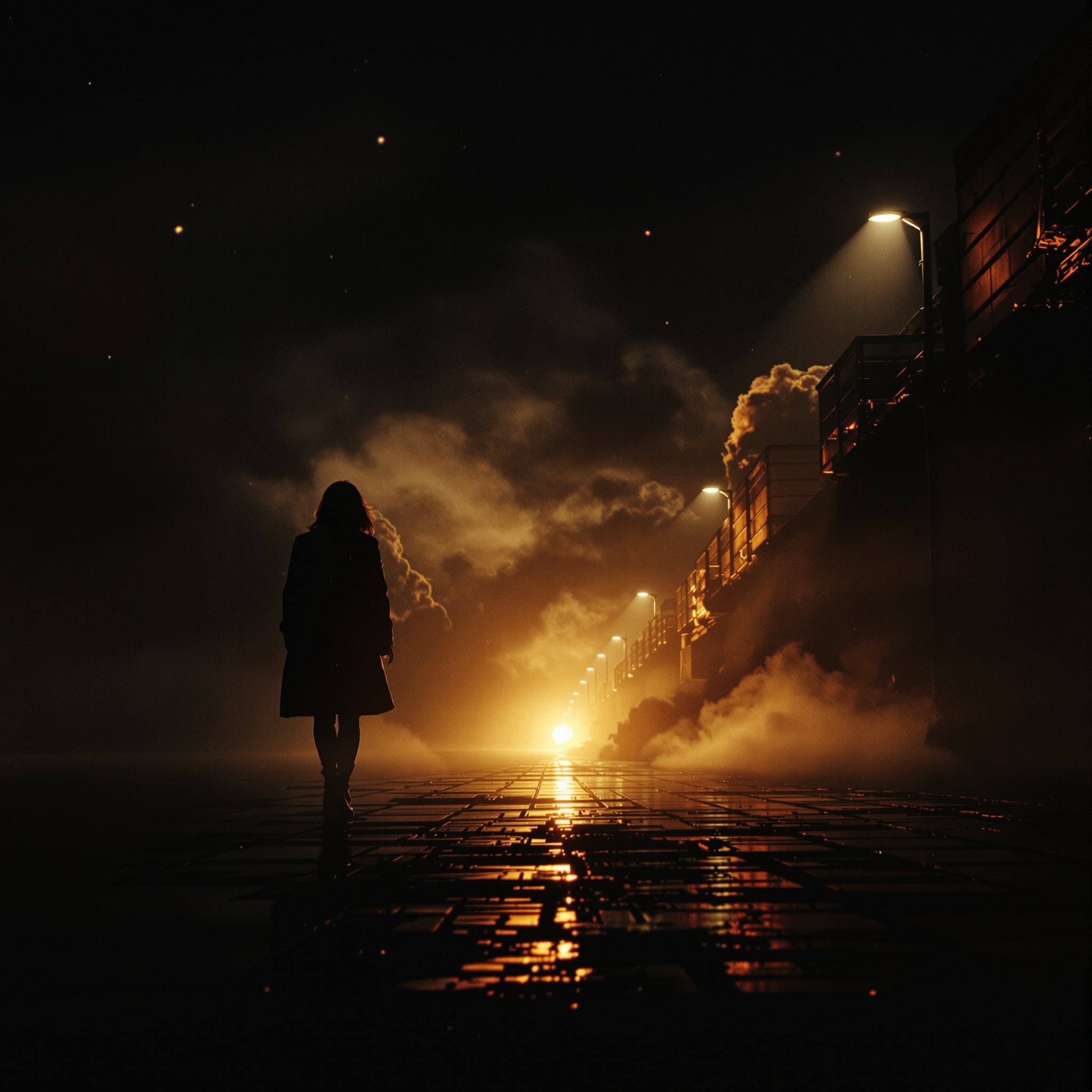
10 · Female vocalGospel pop / Bright and full
He's Talking to You cover art

He's Talking to You

Verse 1
Gravel under my shoes, I chase him down the road
White church at the end, and the door swings wide
Old wood, candle wax — eight years I came alone
I never thought I'd see him here before me
I walk in and he's already on the floor
Cross pressed into his knuckles, head bent low
Chorus
He's calling out to God
I hear it rise and break
My daddy found his knees
He's calling out to God
And every year I prayed alone
Is finally answering me
He's calling out to God
Bridge
I hear him say
Lord I don't
I don't know how to
I've been so
I got a girl
She never
She kept going when I
I'm here
I'm here
I'm here
Chorus
He's calling out to God
I hear it rise and break
My daddy found his knees
He's calling out to God
I've been praying you home since I was eight
And I drop to my knees beside him
He's calling out to God

Make this in Suno

Contemporary gospel pop, CCM, praise and worship, Southern gospel influence. Female alto lead vocal, sixteen-year-old register, intimate and conversational in verse, fully open and emotionally unguarded in chorus. Voice cracks authentically on the bridge and the confessional line before the final chorus. Verse production: sparse acoustic piano, close-miked vocal, dry room, intimate — the sound of a girl alone in a pew. Chorus erupts: full gospel organ, piano, kick drum, tambourine, four-part choir entering on 'My daddy found his knees.' Bright, warm, full — not bombastic but joyful and wide. Bridge strips back to near-nothing: single sustaining organ note, Nora's half-spoken voice eavesdropping on her father's broken prayer, fragments of choir breath beneath. Final chorus returns at full gospel intensity — organ swell, choir full, tambourine driving

Paste the style into Suno’s style field and the lyrics above into the lyrics box — the section markers and performance directives are Suno-ready.

11 · Male vocalHymn / Acoustic folk
Come to the Water cover art

Come to the Water

I did not come to this on my own.
Eight years — I built a wall of not-asking
and called it surviving.
I told myself: the man who expects nothing
cannot be broken twice.
I was wrong about that.
I was wrong about most of it.
There is a cross in my hand —
same wood Nora left on the table that morning.
I can feel every ridge of it —
worn smooth by the pocket, not by prayer.
I stood at that door a long time
before my legs did what my mouth would not.
And then I heard her —
not Ruth —
Nora, in the back pew,
who had been praying in a dark room
every night, every night, every night —
For me.
I opened my mouth and something came out
that was not words.
The water found me.
Not a flood — just this:
plain glass and morning, a kneeling man,
a cross worn smooth, in the chapel air.
I sang the first line and the walls held it.
I sang the second and the second held too.
Eight years of quiet
pouring off eaves after rain.
And the hymn — the hymn I stopped
the morning we buried her —
I sang it whole.
Every word.
Not for the dead.
For what is real right now.
For the girl in the back pew
who never stopped.
Coda
The water found me.
That is all I know to say.
Ruth whispered it once — that last morning —
and I spent eight years
not ready to hear it.
This cross in my hand.
This pew. This plain glass.
This is not the end of grief —
only the end of hiding from it.
The water found me.
And I let it.

Make this in Suno

Contemporary worship hymn, acoustic folk-gospel, through-composed song-cycle finale. Male baritone lead vocal, close-miked, dry and intimate — begins half-spoken with near-zero reverb, voice cracking on first full note, opening to warm full resonance by the aria section. Solo steel-string acoustic guitar fingerpicked with sparse single-note runs, warm mid-register, intimate room sound. Single cello enters at the arioso, sustained long tones, no vibrato, low in the mix — presence, not swell. No percussion. No electric instruments. No pad or atmospheric synth. Sparse reverb on cello only — church-room natural decay, 1.2 seconds, no pre-delay. Dynamic arc: spoken intimacy (recitative, 1/10) → melodic emergence (arioso, 4/10) → full hymn voice (aria, 8/10) → grounded quiet (coda, 5/10). BPM: 52-56, rubato, breath-led. Key: G major. Atmosphere: dawn light through plain glass, wood grain

Paste the style into Suno’s style field and the lyrics above into the lyrics box — the section markers and performance directives are Suno-ready.