Skip to content
← Showcase albums

Beneath the Ordinary Sky

A family's last morning, preserved in ash and song.

The album opens with warm, tactile acoustic textures — plucked cithara-style guitar, hand percussion, a solo female voice over a bed of morning ambience (market sounds, birdsong, distant laughter). Strings enter gradually, first as single sustained tones beneath dialogue-like vocal phrases, then swelling into full chamber arrangements. Low taiko-influenced drums appear at Track 4, growing more seismic and sub-bass heavy as the eruption nears. A recurring choral texture — a wordless SATB choir — is introduced as a whisper in Track 3 and becomes a roar in Track 9. By the final act (Tracks 10–12), the acoustic warmth is stripped away: only strings, choir, and a solo voice remain, the production deliberately thinned to feel like something half-buried. The album ends in near-silence, a single guitar note and a breath. The sonic arc is: warm → uneasy → trembling → catastrophic → still.

12 tracksone concept · one palette
Beneath the Ordinary Sky Radio00 / 12

Loading…

0:00
0:00

Space play/pause · ← → seek 5s · J/L seek 10s · M mute · N/P next/prev

01 · Female vocalCinematic folk
The Weight of the Jar cover art

The Weight of the Jar

Verse 1
Fire low, the coals glow from last night—
I press one palm against the clay jar, cool and certain,
and the clay gives nothing back
but the morning, whole.
Nico sleeps somewhere past the curtain, slow and even,
one arm thrown across the blanket.
The flour is already soft against my palms,
the stone floor pale with first light.
Verse 2
Marcus left before dawn with his sandals in his hand,
said Drusus would save him a place beside the figs.
He kissed the boy without waking him,
then took the words between us out into the street.
I work the dough until my wrists find their own rhythm,
the bread beginning somewhere behind the oven door.
The city turns beneath the roofline,
one shutter, one cartwheel, one sparrow at a time.
Verse 3
His mother Tertia passes—silver beads at her throat—
crosses toward the cistern without meeting my eyes.
Her fingers close around the amber once,
then let it fall against her dress.
I set Marcus’s plate where he sits every morning.
The sky goes gray, then nearly rose.
I press the bread. I feel the dough give way.
The day receives me, exact and whole.
Outro
In this kitchen at the edge of dark,
my shoulders carry what my throat cannot say.
I press my palm into the dough like a seal into wax—
and somewhere behind me,
Tertia’s beads touch once.

Make this in Suno

Cinematic folk, chamber opera, ancient Mediterranean atmosphere. Female mezzo-soprano lead vocal, warm and unhurried, conversational in early stanzas deepening into sustained legato. Production sparse and breath-aware: solo acoustic guitar (nylon string, fingerpicked but not arpeggiated — single melodic lines between vocal phrases), low cello drone beneath each stanza, subtle frame drum pulse at 60 BPM in 4/4, no snare. Key of D minor. Reverb is room-sized — stone and plaster, not cathedral — intimate and close. No electric instruments. No percussion fills. Dynamic arc: stanza one near-spoken, stanza four beginning to expand, stanza seven at full vocal sustain, instrumental bridge eight bars of cello and guitar only, final five lines pulled back to near-whisper. Atmosphere: pre-dawn, domestic, ancient, the last ordinary morning before the world ends. Cinematic but never sweeping — the sc

Paste the style into Suno’s style field and the lyrics above into the lyrics box — the section markers and performance directives are Suno-ready.
02 · Male vocalChamber pop
What I Meant to Say cover art

What I Meant to Say

Verse 1
The debt sits between us like a third plate at the table —
Gaius and his interest, the pride I swallowed whole.
Tonight I’ll walk back through that door
and say the words I should have said before the ground could answer.
Pre-Chorus
Every flagstone pulls at my feet: wait.
Every vendor calls out: there’s still time.
Chorus
Tonight I’ll say it — the money, the fear, your name.
I’ll lay the debt down plain before the lamp goes out.
Livia, I was wrong. I was small.
Tonight I’ll say it all
before the oil runs dry.
Verse 2
The forum opens like it always does — wide and loud.
Drusus waves from the stall; I lift my hand and keep walking.
The argument was nothing, I know that now.
But I let three days of silence grow between us like a wall.
Pre-Chorus
Every flagstone pulls at my feet: wait.
Every vendor calls out: there’s still time.
Chorus
Tonight I’ll say it — the money, the fear, your name.
I’ll lay the debt down plain before the lamp goes out.
Livia, I was wrong. I was small.
Tonight I’ll say it all
before the oil runs dry.
Bridge
If I had turned at the fuller’s wall,
if I had gone back those few steps —
Nico in the doorway, you at the oven —
what kind of morning would I have walked into instead?
Final Chorus – quieter, more raw
Tonight I’ll say it.
The money. The fear.
Your name.
Before the oil runs out.
Before anything else can take the words from me.

Make this in Suno

indie folk-rock with alternative undertones, emotionally raw male vocal with a warm baritone that roughens on the high notes and softens to a whisper in vulnerable moments, dynamic delivery building from hushed confessional verses to soaring belt-it-out choruses, fingerpicked acoustic guitar foundation layered with ambient electric guitar swells and subtle palm-muted rhythms, upright bass providing earthy warmth, brushed drum kit with soft tambourine accents on the backbeat, understated piano fills between vocal phrases, lo-fi analog production with tape warmth and natural room reverb creating an intimate living-room-at-midnight atmosphere, close-mic'd vocals where you can hear every breath, wide stereo field with instruments gently panned to surround the listener, 82 BPM in the key of D minor, melancholic yet hopeful like watching the first light after a long sleepless night, dynamic ar

Paste the style into Suno’s style field and the lyrics above into the lyrics box — the section markers and performance directives are Suno-ready.
03 · Female vocalSparse chamber folk
The Sparrow Will Not Sing cover art

The Sparrow Will Not Sing

Verse 1 — Tertia
The sparrow sat while all the swallows flew.
I watched it lock its feet on painted wood.
The dogs went quiet at the well before it,
before the ground remembered it could move.
Verse 2
A pale grit settled on the basin rim.
The air held close around the courtyard wall.
I named the fear once. Then I named it twice.
They said old women always fear it all.
Verse 3
This amber bead has warmed against my skin
through births and funerals, drought and winter rain.
My mother pressed it into my hand
and said, “Some things outlive the ones who name.”
Bridge
Nico watches pigeons at the trough.
He has his father’s eyes when he is still.
The mountain stands where it has always stood.
That is the part that frightens me the most.
Outro
I am not afraid. I am tired.
I have been tired since the first time
a wall moved beneath my hand
and no one else looked up.

Make this in Suno

Sparse chamber folk, ancient world setting, single female mezzo-soprano voice aged and knowing, near-speech recitative delivery alternating with restrained melodic aria passages, solo cello as the only accompaniment — no guitar, no percussion, no bass. Cello bowing is slow and sustained in recitative sections, rising to a low melodic line in the aria, dropping to near-silence on the arioso command. No reverb beyond natural room resonance — the sound is close, intimate, as if recorded in a stone courtyard. Key of D minor. Tempo: slow ballad, approximately 52 BPM. 4/4 time. Atmosphere: prophetic dread held in restraint, the sonic equivalent of smoke before fire. Dynamic arc: recitative sections at minimal volume, aria at moderate warmth, arioso beginning with sudden urgency on 'Nico — run' then collapsing to near-whisper for the final couplet. No chorus, no refrain — couplet form throughou

Paste the style into Suno’s style field and the lyrics above into the lyrics box — the section markers and performance directives are Suno-ready.
04 · Duet + choirIndie folk
Do the Gods Sleep cover art

Do the Gods Sleep

Verse 1 — Nico
Tertia, where do the gods go when the sun gets hot?
Do they sit on the mountain
like my uncle on his step?
Verse 1 — Tertia
They go beneath. They push the ground up
the way you press mud flat when the cistern spills.
Street buckles here—
you’ve stepped on a god’s toe.
Verse 2 — Nico
Where does the fire go, the fire in the mountain?
Is that the gods cooking,
or is that something else?
Verse 2 — Tertia
Older than the gods, child.
Older than the stories we tell.
The Sarno carries stone older than us all.
Fire finds the cracks and fits.
Verse 3 — Nico
Does it hurt—the dying?
Or is it quick,
the way a pigeon drops off the trough?
Verse 3 — Tertia
I do not know, and I will not lie.
Take my hand. Stay where I can find you.
Whatever comes, you stay near your mother.
Whatever comes, you stay.
Bridge
The mountain sky has gone the color of old bronze.
Tertia lifts her wool basket, squints, and walks.
Nico watches pigeons settle on the trough lip.
He watches them settle.
Outro
The narrow street between the walls
holds the morning a little longer
than either of them knows.

Make this in Suno

Paste the style into Suno’s style field and the lyrics above into the lyrics box — the section markers and performance directives are Suno-ready.

05 · Male vocalCinematic art rock
A Strange Light on the Mountain cover art

A Strange Light on the Mountain

Verse 1
Drusus calls a price I don’t hear.
Cartwheels grind where the stones have sunk.
The sun hits the awning wrong — too yellow, too still.
I count the coins and feel the mountain watching.
Refrain
The cloud on the mountain does not move.
Verse 2
Smoke from the baker’s drifts sideways across the street.
Dogs at the fountain sit with their heads low.
The light on the flagstones has turned the color of old bone.
I look up once and the whole sky feels heavier.
Refrain
The cloud on the mountain does not move.
Verse 3
A roof tile cracks somewhere behind the stalls.
People step around it without looking up.
The noise of the market thins — just for a moment —
like the city itself is holding its breath.
Refrain – bigger
The cloud on the mountain does not move.
Bridge
I should go home.
I should go now.
Livia is kneading dough.
Nico is probably chasing pigeons again.
Outro
I think I should go find them.
I think I should go —
home.

Make this in Suno

Cinematic ancient-world folk noir, led by a weathered adult male baritone—plainspoken, close-mic’d, controlled, with fear gradually entering the voice but never becoming theatrical. Slow, sparse 4/4 pulse built from muted hand drum, low cello drone, plucked lyre or oud, distant bowed metal, and subtle market ambience fading away. Minor-key melody with short, restrained phrases; the refrain “The cloud on the mountain does not move” should land low, still, and ominous each time. No big chorus, no modern pop drums, no heroic orchestral swell. Let tension accumulate through thinning instruments and widening silence. At the bridge, pull nearly everything away so “I should go home” feels like an instinct arriving too late. Final “home” almost spoken, with a faint low string note unresolved.

Paste the style into Suno’s style field and the lyrics above into the lyrics box — the section markers and performance directives are Suno-ready.
06 · Female vocalOrchestral rock
I Will Not Leave This Door cover art

I Will Not Leave This Door

Verse 1
The light went strange—a yellow without name.
The mountain opened, something older than before.
The first pale stones tapped once against the tile.
Then Nico pressed his fist against my side.
Tertia pulled her shawl across her hair.
The roof took another blow.
I dug my palm into the frame and stood
with the street turning white beyond the door.
Chorus
I will not go—not without Marcus.
Call it fear, call it love.
I will not go—the sky is not enough.
I will not go—not without Marcus.
Call it whatever you want.
The door is where he’ll find us if he comes.
Verse 2
I reached for Tertia; she reached for Nico.
I called Marcus into the falling air.
The street gave back no answer but its own noise,
no footsteps, no voice, no one there.
Chorus
I will not go—not without Marcus.
Call it fear, call it love.
I will not go—the sky is not enough.
I will not go—not without Marcus.
Call it whatever you want.
The door is where he’ll find us if he comes.
Bridge
The argument is finished now.
The debt, the pride, the words I made him carry—
the mountain strips them down
until all that remains is: come to me.
Tertia says, “Go, child. Go.”
Nico says, “Mama, please.”
I leave the door open
and look toward the market.
Outro
I will not go—
but the door stays open.

Make this in Suno

Orchestral rock, cinematic epic, ancient world drama. Female mezzo-soprano lead vocal — powerful chest register with controlled urgency in verses, full unguarded belt in choruses, half-spoken opening line in bridge cracking into raw chest voice on the summons. No soft acoustic intro — opens with low distorted guitar and kettle drums under rising strings. Orchestral arrangement: full string section (cellos driving the verse, violins surging at each chorus), brass punctuation at chorus peaks, kettle drums marking the fragmentation. Distorted electric guitar functions as a second emotional voice — grinding and deliberate in verses, unleashed at chorus detonations. BPM approximately 88 in verse, chorus locked at 4/4 with driving momentum. Key of D minor shifting toward F at bridge. Production spatial: wide reverb on strings, dry close vocal in bridge to maximize intimacy. Dynamic arc: tightl

Paste the style into Suno’s style field and the lyrics above into the lyrics box — the section markers and performance directives are Suno-ready.
07 · Duet + choirCinematic chamber pop
The Ash Falls Like Snow cover art

The Ash Falls Like Snow

Verse 1 — Marcus
The ash lands on my hand like flour
from the cloth Livia shakes over the table.
That’s what I’m thinking while I run —
not the mountain, not the sky,
just the way she always wipes her hands on her apron.
Verse 2
I saw Gaius under the colonnade,
his ledger pressed to his chest like armor.
His mouth shaped my name.
I saw it. And I kept running.
Pre-Chorus
The whole city is running now.
My house is somewhere inside the white.
Chorus
The road goes where it goes.
The ash falls where it falls.
I have no debt but distance,
no name but the two I’m calling.
Verse 3
A child cries beneath a tipped cart.
A woman covers her mouth with cloth already gray.
I don’t know who makes it through.
I only know I have to reach the door.
Chorus
The road goes where it goes.
The ash falls where it falls.
I have no debt but distance,
no name but the two I’m calling.
Bridge
Livia. Nico.
The door is somewhere past this falling sky.
I do not stop. I cannot stop.
The ash keeps falling like it means to bury everything.
Outro
Livia.
Nico.
I’m coming.

Make this in Suno

Cinematic disaster-folk ballad set in ancient Pompeii, led by a raw adult female alto with a low, urgent, emotionally cracked delivery. She is a mother and sister trying to hold her family together as ash falls; sing close and human, never polished or theatrical. Begin with sparse low cello, muffled frame drum, trembling nylon-string guitar, distant bowed lyre, and subtle falling-stone percussion. Build the chorus into a restrained but powerful plea—not a pop anthem—with layered female harmonies and a faint child voice answering only around “Mama, please.” Keep the rhythm like a racing heartbeat under control. At the bridge, strip the arrangement nearly bare for “come to me,” then let the final refrain swell with strings and drums before collapsing to one exposed female voice on “but the door stays open.” Dark, intimate, historical, devastating, unresolved.

Paste the style into Suno’s style field and the lyrics above into the lyrics box — the section markers and performance directives are Suno-ready.
08 · Male vocalDriving orchestral rock
Which Way Is Out cover art

Which Way Is Out

Recitative — Marcus
I found the open door.
I found you through the falling white.
Livia — we go now.
Aria — Livia
The road to Nuceria runs east.
Higher ground. Clear air.
Forget the house. Forget the debt.
The roof is already speaking in cracks.
Recitative — Marcus
The Sarno landing — boats may still be there.
South. The river. The sea.
Duet
Livia: East, Marcus. While the road still holds.
Marcus: South. The boats won’t wait.
Livia: The river will choke first.
Marcus: Every road feels wrong. Both:
We carry the boy and we move while we still can.
I will not die choosing between two kinds of dying.
Aria — Marcus
Livia, tell me one thing that won’t move.
Tell me one road that stays beneath us.
Tell me the ground remembers how to hold.
Recitative — Tertia
East.
Keep the mountain at your back.
Go while you still have light.
Trio
Nico: My cart—
Livia: Leave it, love.
Marcus: Take my hand.
Tertia: Go while I can stand here.
Outro
The house behind them is already filling with gray.
The road ahead narrows into white and dark.
They move.

Make this in Suno

Chamber-opera disaster scene set in ancient Pompeii, blending intimate classical vocals with cinematic folk instrumentation. Marcus: weathered dramatic baritone, urgent but controlled. Livia: strong lyrical mezzo-soprano, practical and emotionally fierce. Tertia: low, steady contralto. Nico: soft clear boy soprano, natural and frightened, not theatrical. Start with sparse recitative over low cello, bowed lyre, distant frame drum, and ash-like percussion. Let Livia’s aria rise into aching sustained melody; Marcus’s aria should feel exposed, almost prayerless. The duet must sound like two parents arguing over survival, overlapping but intelligible. Build the trio with layered voices and swelling strings, then cut the arrangement back sharply for “They move.” No Broadway belting, no trailer choir, no modern pop beat—historical, intimate, tense, and devastating.

Paste the style into Suno’s style field and the lyrics above into the lyrics box — the section markers and performance directives are Suno-ready.

09 · Female vocalChoral orchestral
The Amber Bead cover art

The Amber Bead

Recitative — Livia
She said: go.
The road is ash and we pause.
Tertia stands with both hands at her sides,
calm as the threshold behind her.
Aria — Tertia
You cannot carry me and carry him.
My knees are full of stone.
Do not make the boy remember
his father bent beneath my weight.
I have crossed enough hard ground
to know when feet are finished.
Take him east. Take him where the air is open.
Do not turn around for me.
Verse
She lifts the cord from around her collar,
the bead worn smooth by forty years.
She draws it over Nico’s head
and presses it beneath his shirt.
Duet — Tertia and Nico
Tertia: Keep this.
Nico: Will you come?
Tertia: Keep this.
Nico: Will you come?
Tertia: Tell them I stayed.
Final Trio
Marcus: Mother—
Livia: Tertia—
Tertia: Go.
Marcus: We’ll come back—
Tertia: No.
Livia: I love you.
Tertia: Then go.

Make this in Suno

Intimate chamber-opera farewell set in ancient Pompeii. Tertia: low, aged contralto—steady, warm, physically exhausted, never fragile or sentimental. Livia: restrained mezzo-soprano, grief held tightly in the throat. Marcus: weathered baritone, breaking only at “Mother.” Nico: clear young boy voice, natural and frightened, not Broadway-style. Begin nearly unaccompanied: low cello drone, sparse bowed lyre, distant wind, soft ash-like percussion. Tertia’s aria should rise slowly from plain speech into a grave, tender sustained melody. For the bead scene, use a single plucked string motif and silence around the dialogue. The Tertia/Nico duet should be devastatingly simple, with “Keep this” repeating like a prayer neither can finish. Build the final trio with close, overlapping voices and restrained strings, then cut everything away after Tertia says “Go.” End unresolved in near silence. Historical, human, restrained, catastrophic.

Paste the style into Suno’s style field and the lyrics above into the lyrics box — the section markers and performance directives are Suno-ready.
10 · Duet + choirIntimate orchestral folk
The Loaf on the Sill cover art

The Loaf on the Sill

Verse 1 — Marcus
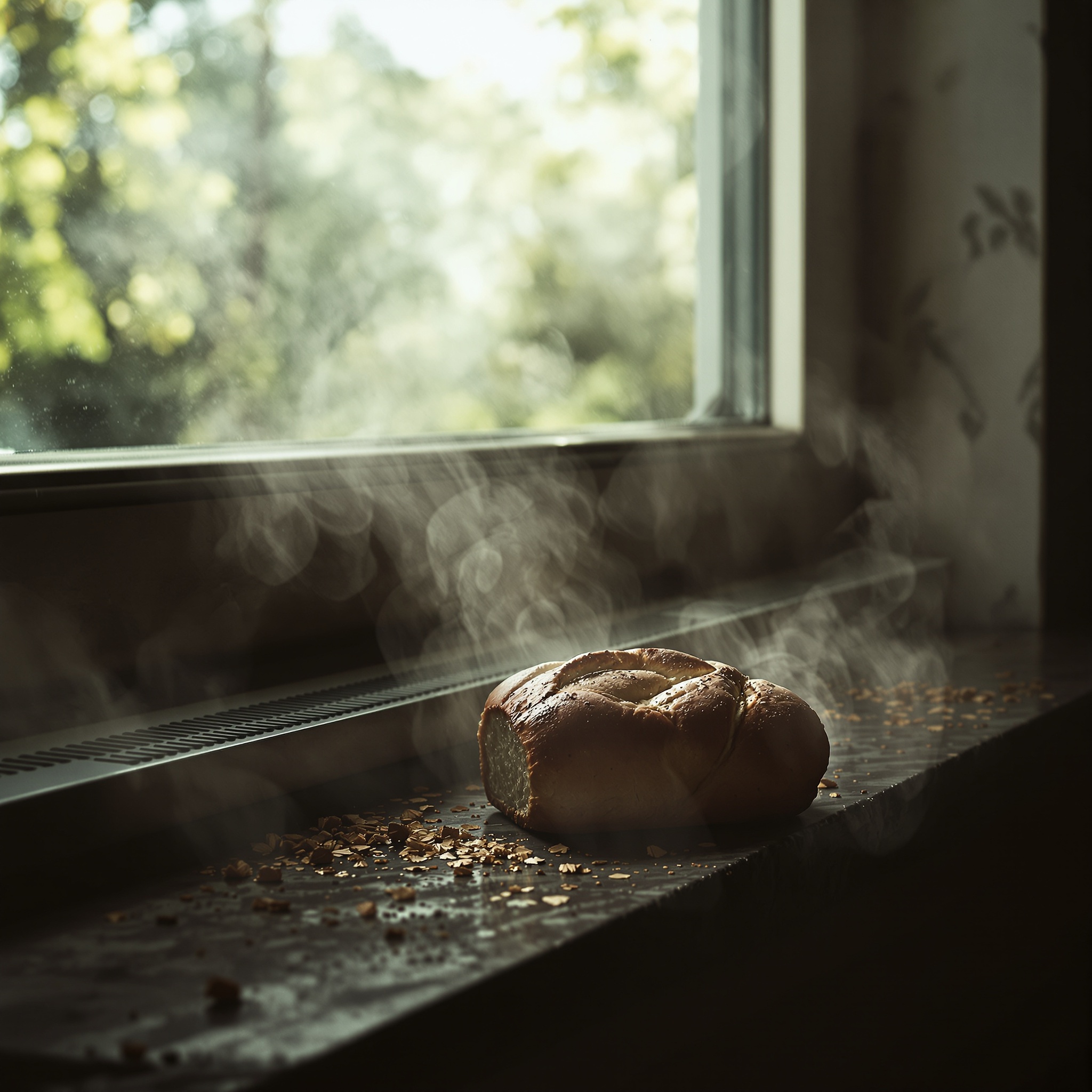
The loaf was there on the sill when we ran.
Warm—I could read it from the color, the crust.
A water jug half-filled, the handle toward the wall.
Everything ready for an ordinary day.
Verse 2 — Livia
The sandal Nico left beside the bed.
The mat we wove that winter rolled at the foot.
The fig we left uncut upon the table.
I did not look back. I did not look back.
Duet
Marcus: There was a word I meant to say this morning.
Livia: I heard you start it. Then the ground moved.
Marcus: I meant to say—
Livia: Nico, hold on to me.
Both:
The city made a sound we had no words for.
And there the bread.
Verse 3 — Marcus
A child’s toy cart with one wheel gone.
The neighbor’s name I never learned to say right.
The oil lamp, the blue cup, the wool on the chair.
Every small thing waiting for night.
Verse 4 — Livia
The bead is warm beneath his shirt.
The road is rough beneath our feet.
Keep moving. Keep moving.
We are moving.
Outro — Both
Everything there.
Everything there when we left it.
The world keeps its old shapes.
We left with no time to say goodbye.

Make this in Suno

Paste the style into Suno’s style field and the lyrics above into the lyrics box — the section markers and performance directives are Suno-ready.
11 · Female vocalSparse neoclassical
The Handprint cover art

The Handprint

Recitative — Livia
The road ran out at a fallen wall.
Marcus found a break between the stone.
I pressed Nico close against my chest,
his back against the wall, my arms his shelter.
Aria
Smoke—and under smoke, his hair,
fig and bread and something living there.
I put my mouth against the top of his head.
I breathe him in. I make it slow.
Duet — Livia and Nico
Nico: Mama.
Livia: I’m here.
Nico: Mama.
Livia: I’m here.
Nico: The bead hurts.
Livia: Your hand is holding it too hard.
Nico: Don’t let it go.
Livia: I won’t.
Verse
The amber bead has opened a small mark
where his fist will not release.
I loosen one finger, then another,
until his hand can breathe.
Aria
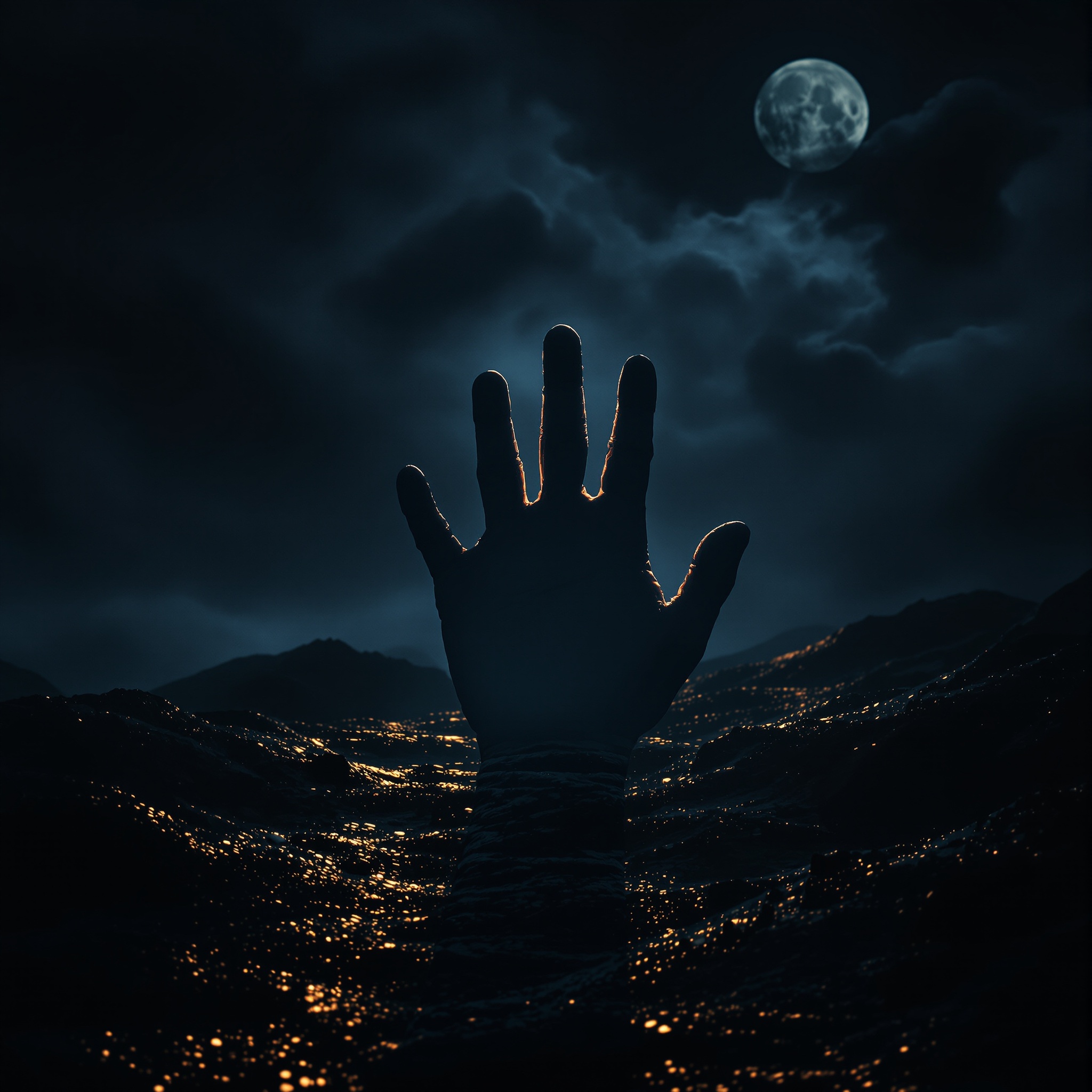
My palm rises to the wall.
Flat. Pressed.
Ash fills the lines of my hand
and makes a map of where we stood.
Marcus calls from the broken edge:
“Here. The road is here.”
Outro
I lift my son.
I take my husband’s hand.
Behind us, the city disappears.
Ahead, one road gives us enough room
to keep going.

Make this in Suno

Intimate chamber-opera lullaby during the escape from Pompeii. Livia: warm, low mezzo-soprano with exhausted tenderness; she sings close to the microphone, controlled, protective, never theatrical. Nico: soft natural boy voice, frightened but quiet. Marcus: distant weathered baritone, heard only briefly from beyond the broken wall. Begin almost bare: low cello drone, sparse plucked lyre or nylon-string guitar, faint wind and ash ambience, soft heartbeat-like frame drum. Livia’s aria should move slowly and gently, as if she is trying to memorize her son’s scent while the world collapses. The “Mama / I’m here” duet must be extremely simple, intimate, and repeated like reassurance. For the bead scene, use only a few plucked notes and breathing space. Build modestly when Marcus calls “Here. The road is here,” adding restrained strings and a quiet forward pulse. End with Livia, Marcus, and Nico moving together, unresolved but carrying a small sense of survival. No pop beat, no heroic trailer swell, no Broadway vocals—historical, tender, devastating, human.

Paste the style into Suno’s style field and the lyrics above into the lyrics box — the section markers and performance directives are Suno-ready.
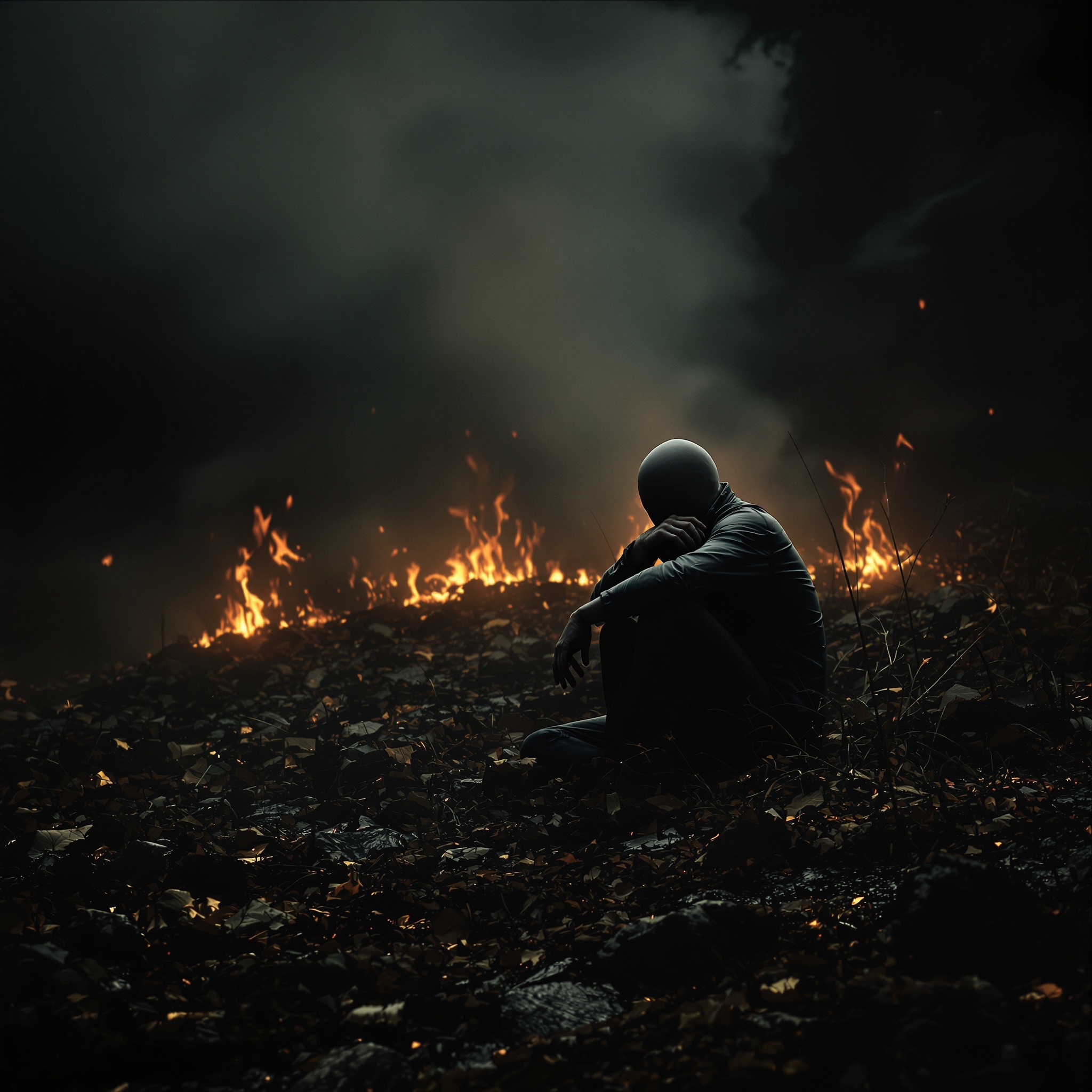
12 · Female vocalChoral cinematic folk
What the Ash Keeps cover art

What the Ash Keeps

Verse 1 — Livia
The road went east and then the road was gone.
We walked until the darkness gave us morning.
Nico asked me if the gods were watching.
I said a thing I cannot now recall.
Verse 2 — Marcus
But light persisted against the ash.
The cord Tertia tied around his neck.
The argument we never finished
became the life we had left.
The bread on the windowsill,
the handprint on the wall,
the cup, the oil, the wood knots—
the ash pressed everything it could.
Chorus — Livia and Marcus
We were here—we were breathing and alive.
We argued and we loved and we survived.
The mountain took the city, not the names.
The handprint says we stood before the flame.
Bridge — Nico, Years Later
I kept the cord.
I kept the names Tertia gave me.
Not because the gods remembered.
Because someone had to tell.
I tell them of the loaf on the sill.
I tell them of my mother’s hand.
I tell them of my father running
through a city turning white.
Final Chorus — Nico
We were here—we were breathing and alive.
We argued and we loved and we survived.
The ash kept what it could beneath the sky.
We kept the rest.
We kept the rest.

Make this in Suno

Paste the style into Suno’s style field and the lyrics above into the lyrics box — the section markers and performance directives are Suno-ready.